
Troubleshooting Ant Moats: Why Water Evaporates and How to Keep Ants Away
An ant moat empties fast because it is a very small volume of water with a lot of surface exposed to sun and wind — the same reason a saucer dries out faster than a bucket. In hot, dry, breezy weather a small moat can go dry in a single day, and the moment it does, the ants are back within hours. The fix is a larger or shaded moat plus a refill habit tied to something you already do daily, not a different liquid.
Why the water disappears so fast
Evaporation scales with exposed surface area, air temperature, air movement, and how dry the air is. A shallow ring of water a couple of inches across is almost all surface and almost no depth, so it loses a large fraction of its volume every hot afternoon. Add wind and low humidity and a moat that lasted three days in May empties before dinner in August.
| Condition | Effect on a small moat | What helps | |---|---|---| | Direct afternoon sun | Fastest loss; can empty in a day | Move the feeder to morning sun and afternoon shade | | Hot, dry wind | Loss nearly as fast as full sun | Shelter the hanging spot from the prevailing breeze | | Low humidity | Steady daily loss even in shade | Use a deeper moat with less exposed surface per volume | | Humid, still, overcast | Slow loss; may last several days | Check twice weekly instead of daily | | Freezing nights | Water expands as it freezes | Empty the moat if a hard freeze is coming |
The important point is that evaporation is not a defect and no additive slows it meaningfully. Depth and shade are the two real levers.
How long should a full moat last?
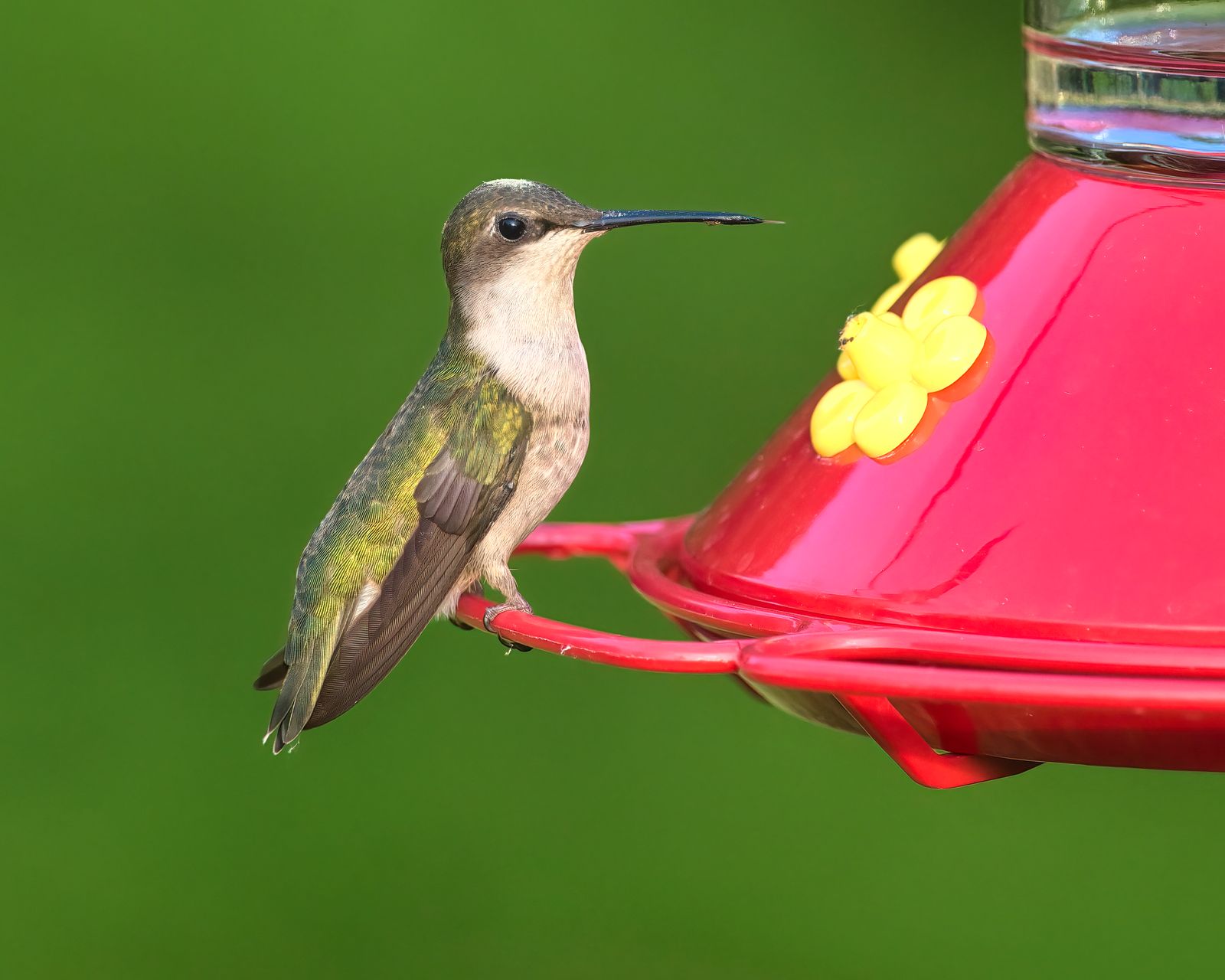
Photo by pete weiler on Pexels
In mild spring or fall weather, a small moat commonly holds water for two to four days. In a heat wave with dry wind, plan on daily topping off. Once you have watched yours for a week you will know your own interval, and that interval is worth learning because ants exploit the gap immediately — a colony that finds a dry moat re-establishes a trail the same day.
Depth is the single best upgrade. A moat that holds noticeably more water with a similar opening will outlast a shallow one by days, simply because it starts with more volume behind the same evaporating surface.
Rain, debris, and the bridge problem
Rain refills a moat for free, which is convenient, but weather also introduces the failure that people miss. Anything that spans the water becomes an ant bridge:
- A fallen leaf or petal floating across the gap
- Pine needles or seed hulls stacking up at the edge
- Overflow that leaves a wet, walkable film down the hanger
- Spider webbing strung from hook to feeder
- A vine, branch tip, or fence board touching the feeder body
A refill routine that actually sticks
The reason moats run dry is rarely ignorance — it is that topping off is a separate errand nobody remembers. Fold it into the routine you already keep.
Making a bigger or shadier moat
If daily refills are not realistic — you travel, or the feeder hangs somewhere awkward — change the geometry rather than the habit.
Go deeper before you go wider: a taller cup with the same mouth diameter holds more water without exposing more surface. Move the whole assembly so the moat sits in afternoon shade, which can double its interval on its own. Keep the moat under the eave line of a pergola or a high branch so rain still reaches it but sun does not sit on it all afternoon. And keep the feeder's own exterior clean, because a dry moat matters far less when there is no sticky trail leading to it in the first place.
That last point deserves emphasis. Ants come for a scent trail. Fresh nectar mixed at one part plain white sugar to four parts water, wiped-dry glass, no red dye, no honey, and no drips on the ground means far fewer ants testing your defenses at all.
Does a moat breed mosquitoes?
Photo by Veronika Andrews on Pexels
It can, if you let it sit undisturbed. Mosquitoes need standing water for several days to complete the larval stage, so a moat you top off and periodically dump never gets there. A moat you fill in June and forget until August is a different story.
The weekly dump-and-rinse in the routine above handles this completely, and it also clears the algae film that makes a moat look neglected. If the water ever looks green or has visible wrigglers, empty it, rinse it, and refill with clean water.
When ants get in anyway
Work through the causes in order of likelihood. The moat ran dry — check the water first, every time. Something is bridging the water — clear floating debris and check for touching foliage. The moat is below or beside the feeder rather than above it, leaving a route that never crosses water. The feeder is dripping, which means ants are arriving at a wet base rather than climbing at all; a leak in ant season is urgent. Or the trail is simply established, in which case moving the hook several feet resets the search while your hummingbirds follow the feeder without hesitation.
For the daytime side of the equation — reducing how much a single feeder has to attract in the first place — the comparison of live nectar plants and glass solar feeders is a useful read, and the piece on hand-blown glass versus plastic construction covers how each material handles the constant wiping this routine involves.
FAQ
Can I add anything to the water to slow evaporation? No. Oils, soaps, and sprays all risk contaminating feathers or nectar, and none of them meaningfully change evaporation rate. Use plain water and either a deeper moat or a shadier spot.
Will a moat still work if it is only half full? Usually not for long. Ants will reach across a low water line from the rim, so a moat is only reliable when the water is high enough that no dry ledge spans the gap.
Does an ant moat keep wasps and bees away too? No. Flying insects ignore it entirely. Wasps are handled by keeping the exterior dry, fixing drips, filling the reservoir less, and relocating the feeder if pressure gets heavy.
Should the moat be emptied in winter? Yes. Freezing water expands, and a moat left full through a hard freeze can crack. Empty it when the feeder comes down or when the first deep freeze is forecast.
A practical next step
Time your own moat this week: fill it to the top on a hot afternoon and note how long the water lasts. That number tells you whether you need a daily habit or a weekly one — and if the answer is under 24 hours, move the feeder into afternoon shade before buying anything.
Cover photo by Veronika Andrews on Pexels.