When to Take Your Hummingbird Feeder Down in Fall (and When to Leave It Up All Winter)
Leave a hummingbird feeder up for about two weeks after the last bird you see, then take it down. Feeders do not keep hummingbirds from migrating — departure is triggered by changing day length and internal rhythm, not by whether food is available — so a late-season feeder helps stragglers rather than trapping them. In parts of the country where hummingbirds overwinter, the answer flips entirely and the feeder stays up all year with a plan for freezing nights.
Do feeders stop hummingbirds from migrating?
No. This is the most persistent myth in backyard birding, and the biology is settled: migratory hummingbirds respond to photoperiod, the shortening of daylight, which drives the hormonal and fat-storage changes that precede a long flight. A full feeder does not override that signal any more than a stocked refrigerator changes the season.
What a feeder does do in early fall is genuinely useful. Migration is metabolically brutal, and birds moving through need to refuel along the way. Some of the birds at your feeder in September are not the birds you watched all summer — they are travelers from farther north, and a reliable stop matters to them. Pulling the feeder the moment your own regulars leave removes a fuel station right when traffic peaks.
The two-week rule, and how to apply it
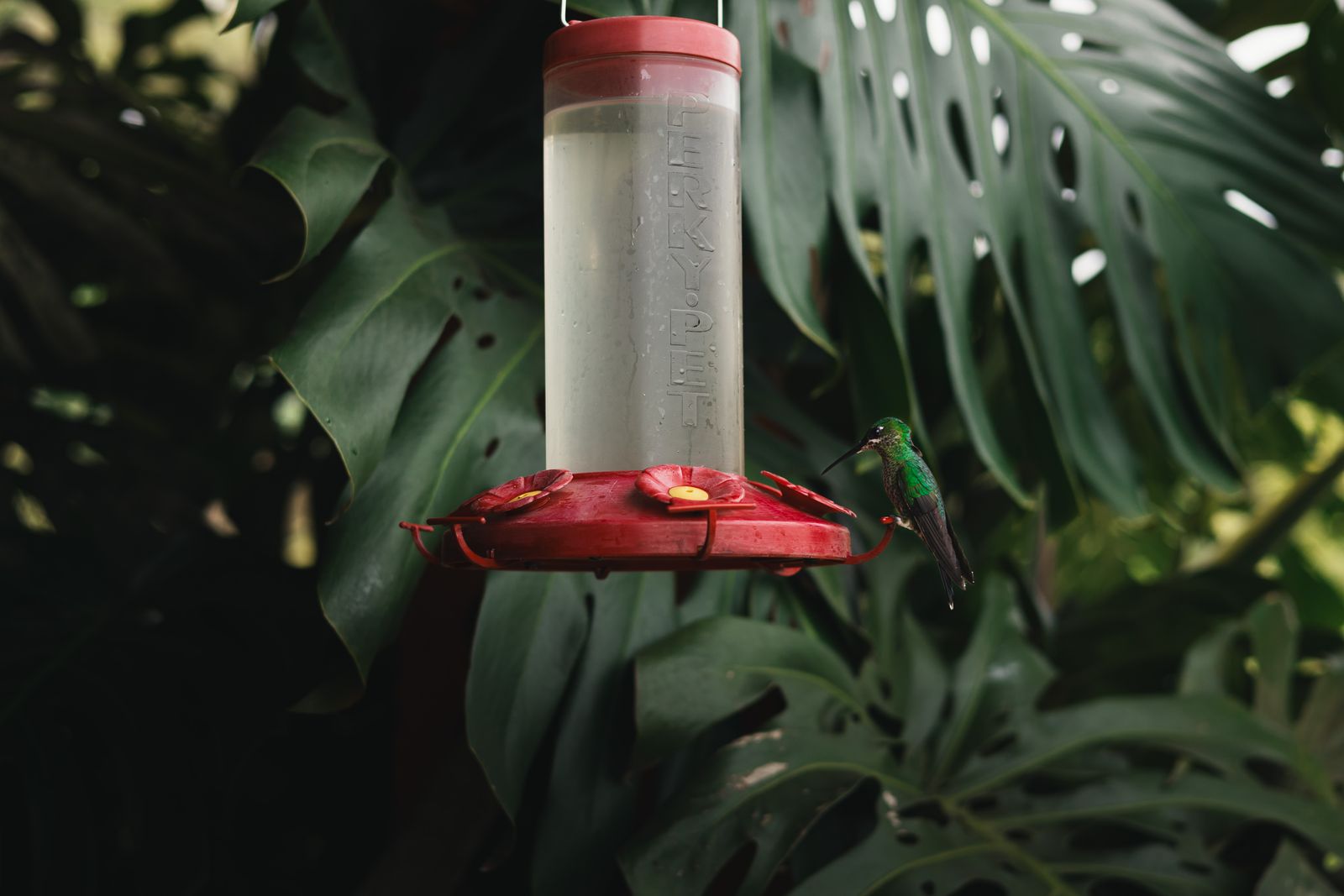
Photo by Dante Muñoz on Pexels
Watch for your last sighting and mark the date. Keep the feeder up, with fresh nectar, for roughly two weeks past it. If a bird appears during that window, reset the clock and keep going.
A few practical adjustments make the tail end of the season easier:
- Fill less. Traffic drops off, and a partially filled reservoir wastes less nectar. The see-through glass makes a small fill easy to judge.
- Keep the change interval honest. Cooler weather slows spoilage, so every 4 to 5 days is usually fine, but scrub at every change regardless.
- Do not change the recipe. One part plain white sugar to four parts water stays correct in fall, with no red dye, no honey, and no brown sugar. There is no reason to strengthen the mix for cold weather.
- Keep one feeder rather than several. Consolidating to a single, well-placed feeder as traffic thins keeps the nectar turning over.
When the answer is "leave it up"
Not every hummingbird leaves. Along the Pacific Coast and into the Northwest, Anna's hummingbirds are year-round residents, and a small number of birds — rufous hummingbirds in particular — regularly winter along the Gulf Coast and in the Southeast. In those regions a winter feeder is a real resource, not a trap.
| Where you are | Typical approach | Main concern | |---|---|---| | Northern and interior states with hard freezes | Take the feeder down about two weeks after the last sighting | Frozen nectar and freeze damage to a glass reservoir | | Mid-latitude states with occasional freezes | Keep it up into late fall; take it down when nights stay below freezing | Overnight freezing on cold snaps | | Pacific Coast and Northwest | Keep it up year-round for resident birds | Keeping nectar liquid through cold mornings | | Gulf Coast and Southeast | Keep it up through winter for overwintering strays | Long stretches with little traffic; watch freshness | | Desert Southwest | Often year-round, depending on local species | Heat in shoulder seasons, occasional hard frost |
If you are unsure about your own area, the honest answer is to watch your yard rather than a calendar. Local sighting patterns beat any general rule.
Protecting glass and nectar from freezing
Nectar freezes at a slightly lower temperature than plain water because of the dissolved sugar, but not by much — a night in the mid-20s will freeze a feeder solid. Frozen liquid expands, and expansion inside a rigid reservoir is exactly the stress you do not want on hand-blown glass or on a sealed base.
What winter does to the solar light
Expect shorter evenings, and know that nothing is broken. The lights run for up to 8 hours after a full recharge, and a full recharge requires a full day of strong, direct sun. Winter delivers a low sun angle, short days, and frequent overcast, so the same feeder that glowed most of a July night may run an hour or two in January.
Two things you can control help. Keep the plastic solar cap clear — it is built to shield the nectar from sunlight, rain, and snow, but a cap under a layer of snow or leaf litter collects nothing, so brush it off after a storm. And re-check the hanging spot for winter shade, because the low seasonal sun puts shadows from fences and rooflines in places they never fall in summer.
Off-season storage that protects the feeder
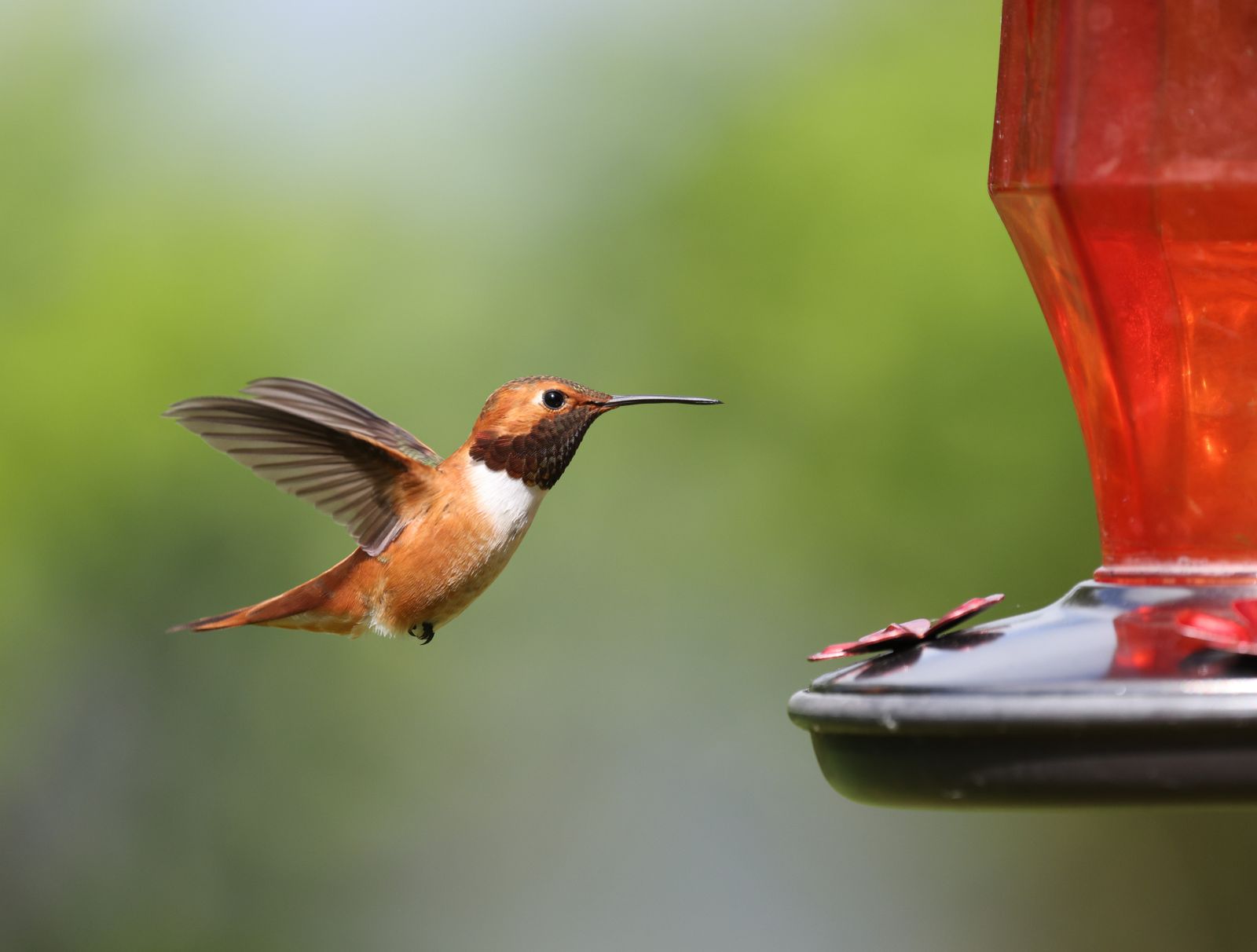
Photo by Veronika Andrews on Pexels
If you do take the feeder down for the season, spend fifteen minutes doing it properly.
- Empty any remaining nectar and rinse the reservoir with hot water and a bottle brush, including the ports.
- Take the base apart, rinse the sealing ring and its groove, and check the ring for hardness or a flat spot.
- Wipe the plastic solar cap with a soft damp cloth only — no dishwasher, no solvents, no abrasive pads, all of which haze the panel permanently.
- Dry every part completely before assembly. Trapped moisture is how a clean feeder grows something over winter.
- Store the glass upright and padded rather than stacked, since hand-blown reservoirs are individually shaped and their curves do not nest.
- Reassemble loosely instead of cranked tight, so the gasket is not held under compression for months.
- Keep the whole unit somewhere cool, dark, and out of freezing temperatures if possible.
Spring: when it goes back out
Hang the feeder a week or two before you expect the first arrivals, since early scouts remember locations from previous years and reward a feeder that is already there. Give the solar cap a few hours of sun before the first night you want light, because a cell that sat discharged all winter needs a charge cycle or two to deliver a normal evening.
Fresh nectar from the first day matters more in spring than at any other time. A bird that finds a spoiled feeder on arrival may not check back for weeks.
FAQ
Will leaving my feeder up in October strand a bird? No. Migration is driven by day length and internal timing, not food supply. Birds still in your yard in late fall are either passing through or, in some regions, staying for the winter by nature.
Should I make the nectar stronger for cold weather? No. Stick with one part plain white sugar to four parts water. A heavier mix is harder on birds and does not meaningfully resist freezing.
Can I leave a glass feeder outside through a hard freeze? It is not worth the risk. Freezing liquid expands and stresses both the reservoir and the seal, so empty it or bring it in before a deep freeze.
How do I know if hummingbirds winter in my area? Local sightings are the reliable test. Watch your own yard into late fall, and if birds are still appearing after the usual departure period, plan for a winter feeder.
A practical next step
Put two dates in your calendar this fall: the day of your last sighting, and that date plus 14 days. That second date is your take-down day unless a new bird shows up, and it makes the decision automatic. While the feeder is down, the piece on live nectar plants beside glass solar feeders is a good planning read for next season's plantings, and the comparison of hand-blown glass and plastic construction covers how each handles winter storage.
Cover photo by Skyler Ewing on Pexels.