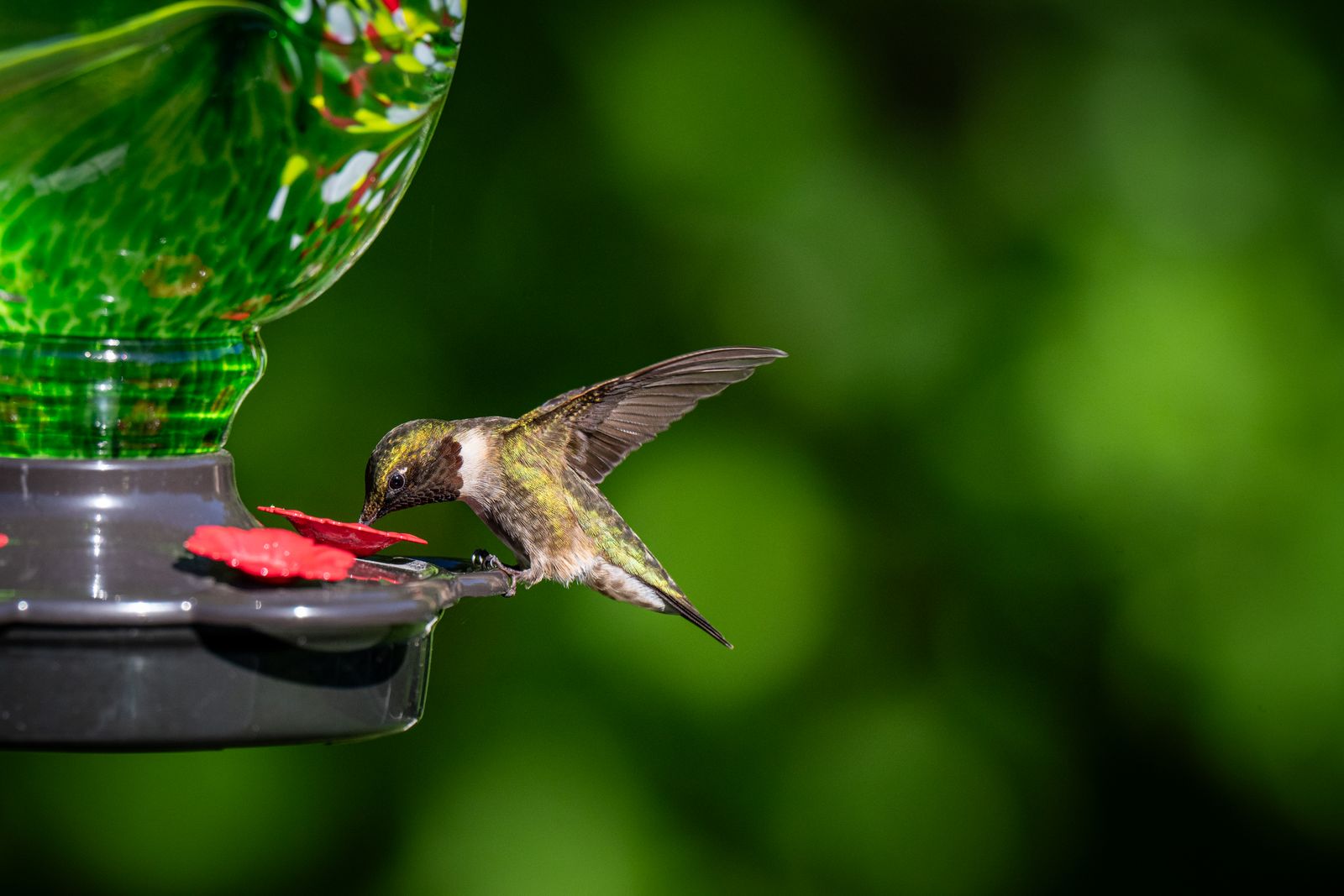
How to Keep Insects Away From Solar Hummingbird Feeders Naturally
To naturally deter insects without harming hummingbirds or blocking solar charging, surround your feeder base with low-growing aromatic herbs like peppermint, spearmint, thyme, and marigolds. Keep tall plants at least 24 inches away to ensure unshaded sunlight reaches the top solar cap, and never apply essential oils directly to feeding ports.
Visual Troubleshooting: Identifying & Deflecting Your Feeder Pests
- What primary pest is disturbing your solar hummingbird feeder? → Yes: If crawling up the pole -> Go to Ant Defense. No: If flying near ports or night lights -> Check Flying Pests.
- Is the issue crawling ants scaling the hook or pole? → Yes: Ant Defense: Place potted peppermint or spearmint ring (0-6 inches) around pole base + hang water ant moat.. No: Go to Flying Pests.
- Are yellow jackets, wasps, or bees swarming nectar ports during the day? → Yes: Wasp/Bee Defense: Plant French marigolds or lavender 18-24 inches from pole; wipe ports clean of sugar residue.. No: Go to Nocturnal Bug Defense.
- Are moths or night bugs gathering around the solar LED light after sunset? → Yes: Night Bug Defense: Plant potted thyme or basil beneath feeder; ensure feeder RGB light operates on multi-color spectrum.. No: Re-inspect feeder for hidden nectar leaks at the base seal..
Pest-to-Plant Deterrent Troubleshooting Matrix
Photo by Veronika Andrews on Pexels
| Scenario / Pest Threat | Primary Botanical Defense | Placement & Proximity | Solar Clearance Requirement | Action Items |
| --- | --- | --- | --- | --- |
| Crawling Ants on Pole | Peppermint, Spearmint, Catnip | 0-6 inches from pole base (potted) | Maintain foliage height under 12 inches to prevent pole climb | Crush fresh mint leaves around base ring daily during severe ant marches. |
| Hovering Wasps & Yellow Jackets | English Lavender, French Marigold, Eucalyptus | 18-24 inches from pole base (ground bed) | Keep plant tops 2 feet below solar cap height | Prune tall flower stalks to prevent side-shading on the solar cap during afternoon sun. |
| Honey Bees at Nectar Ports | German Chamomile, Sweet Basil | 12-18 inches from pole base (potted) | Keep foliage clear of flight paths into feeder ports | Ensure feeder base is 100% leak-proof and wipe spills with white vinegar water. |
| Nocturnal Moths & Night Bugs at Solar LED | Lemon Thyme, Rosemary, Citronella Grass | 6-12 inches from pole base (potted ring) | Ensure low growth habit never casts shadows on solar cells | Enjoy up to 8 hours of soft RGB light while aromatic oils naturally disperse upward. |
Use this scenario matrix to match specific insect threats with effective natural repellents and solar-safe placement rules.
Botanical Barrier Setup Checklist
- [ ] Identify insect pests visiting your solar feeder (ants climbing pole, yellow jackets hovering, or night moths near solar LED).
- [ ] Verify that your solar feeder's top solar cap receives at least 6 hours of unshaded direct sunlight daily.
- [ ] Select low-growing herbs (mint, thyme) for container pots placed directly at the base of the shepherd's hook.
- [ ] Plant taller deterrents (lavender, marigolds, rosemary) in ground beds 18-24 inches away from the feeder pole.
- [ ] Inspect feeding ports daily to ensure nectar is free of drips that attract flying insects.
- [ ] Prune companion plant growth monthly to prevent leaves from creeping up into the solar panel charging path.
Pro Tip: Essential Oil Safety & The 24-Inch Solar Rule
While plants naturally emit subtle aromatic oils that deter insects, never apply concentrated essential oils directly onto glass feeder reservoirs, metal bases, or feeding ports. Undiluted essential oils can coat a hummingbird's feathers during feeding, ruining their natural waterproofing and interfering with preening. Furthermore, harsh concentrated oils can degrade silicone seals and cloud handcrafted glass finishes.
Always rely on live potted companion plants. Position low-growing herbs (like mint and thyme) in pots around the ground base, and keep taller flowering herbs (like lavender) at a strict 24-inch perimeter distance. This preserves a clear visual flight path for hummingbirds while ensuring zero shadows fall across the top-mounted solar cap on premium hand-blown glass feeders like the LUJII Solar Hummingbird Feeder.
Plant Selection Decision Tree for Solar Feeders
- Is your solar feeder mounted on a shepherd's hook over a patio/deck or in a garden bed? → Yes: Patio/Deck Setup -> Use Potted Herb Ring System. No: Garden Bed Setup -> Go to Soil & Clearance Check
- Patio/Deck Setup: Are crawling ants your primary issue? → Yes: Potted Mint Ring: Place 8-inch pots of potted peppermint around hook base; mint stays contained and deters ants.. No: Potted Herb Trio: Combine dwarf marigolds, lemon thyme, and basil in low pots 12 inches from hook base.
- Garden Bed Setup: Does the bed receive 6+ hours of full sun? → Yes: Full Sun Garden Bed: Plant lavender and marigolds 24 inches away; use potted mint at pole base to prevent spreading.. No: Partial Shade Garden Bed: Plant sweet woodruff and potted mint near base; ensure feeder hook extends above surrounding shrubs for maximum solar intake.
Immediate Action Plan for an Insect-Free Station
Your decision: Determine your primary insect threat (crawling ants, aggressive wasps, or solar LED night bugs) and assess your solar feeder's sunlight access.
Do this next: Plant a potted base ring of low-growing mint or thyme around your solar feeder hook, keeping taller lavender plants at least 24 inches away to maintain direct sunlight on the solar cap.
- Read next: How to Hang Your Solar Hummingbird Feeder to Block Ants and Crawling Insects
- Read next: Best Ant Moats for Hummingbird Feeders: Built-In vs. Hanging Hooks
Upgrade to the LUJII Hand-Blown Glass Solar Hummingbird Feeder featuring a sealed leak-proof base and vibrant solar RGB light cap.
Take these concrete steps today to protect your solar hummingbird feeder and enjoy vibrant, pest-free garden visits.
Core Principles of Botanical Feeder Defense
Keep these essential botanical defense rules in mind for a thriving hummingbird sanctuary:
Botanical Defense Method Selection Guide
Selecting the right natural insect deterrence strategy depends on your primary pest (ants vs. wasps vs. nocturnal moths) and whether your solar feeder is hung from a tree branch, pole, or shepherd's hook.
Best choice for
- Low-Growing Potted Mint & Thyme Base Ring — Keeps aggressive spreading herbs contained in pots directly at the pole base while releasing ant-repelling menthol scents upward.
- Two-Tiered Perimeter Defense (Potted Base Mint + Ground Marigolds) — Creates an outer 24-inch boundary against yellow jackets while protecting the immediate pole base from crawling ants.
- Botanical Plants + Sealed Hand-Blown Glass Feeder — Combines natural aromatic deterrents with a leak-proof feeder design like LUJII to eliminate nectar drips entirely.
- Avoid applying undiluted essential oils directly to feeder feeding ports or plastic solar caps, as oils degrade plastics and harm bird feathers.
- Avoid planting tall invasive shrubs directly under the feeder pole that grow taller than the solar charging panel.
- Water-Filled Hanging Ant Moat — Ideal instant physical barrier for pole-crawling ants when live companion plants are still establishing early in spring.
Recommended Solar Feeders & Compatible Garden Gear
Enhance your sanctuary today with hand-crafted blown glass art combined with solar illumination and robust pest resistance.
🌟 LUJII Solar-Powered Hummingbird Feeder 🌟
Photo by Veronika Andrews on Pexels
Elevate your backyard birdwatching with the LUJII Hand-Blown Glass Solar Hummingbird Feeder. Handcrafted at 2,300 degrees Fahrenheit by master glass artists, each 32 fl. oz. reservoir features a rich, translucent pattern that lets you monitor nectar levels effortlessly. The sealed, leak-proof metal base prevents sticky drips that attract wasps and ants, while the anti-rust finish withstands seasonal weather.
At nightfall, the top-mounted solar panel powers an automatic RGB light display for up to 8 hours on a full charge, casting a magical glow across your garden without overheating nectar. Pair it with a potted herbal defense ring for the ultimate pest-free birdwatching experience!
Botanical Plant Characteristics & Defense Capabilities
| Plant Species | Growth Form & Height | Target Insect Repelled | Sun & Water Needs | Solar Panel Obstruction Risk |
| --- | --- | --- | --- | --- |
| Peppermint (Mentha x piperita) | Low Spreading (12-18 in max in pots) | Crawling Ants, Spiders | Full Sun to Part Shade; Medium Water | Low (When kept in base pots) |
| French Marigold (Tagetes patula) | Bushy Compact (6-12 in) | Wasps, Yellow Jackets, Whiteflies | Full Sun; Low-Medium Water | Very Low (Ideal low-profile border) |
| English Lavender (Lavandula angustifolia) | Upright Perennial Shrub (18-24 in) | Moths, Fleas, Mosquitoes | Full Sun; Low Water / Well-Drained | Medium (Plant 24 in away to avoid shade) |
| Lemon Thyme (Thymus citriodorus) | Mounding Creeper (4-8 in) | Night Moths, Gnats, Mosquitoes | Full Sun; Dry to Medium Soil | None (Stays low below pole) |
| Rosemary (Salvia rosmarinus) | Woody Shrub (24-36 in) | Flies, Mosquitoes, Moths | Full Sun; Low Water | High (Requires regular pruning near solar caps) |
Compare popular pest-repelling companion plants to choose the right height, light, and deterrent profile for your solar feeder station.
Step-by-Step Guide: Designing a Solar Feeder Botanical Defense Perimeter
Follow these five steps to create a gorgeous, insect-resistant garden layout that maximizes sunlight for your solar feeder.
5 Mistakes That Attract Insects or Block Solar Charging
Avoid these frequent errors when setting up natural pest control around solar hummingbird feeders:
Explore Related Guides in the Pest-Free Feeding Pillar
Deepen your backyard bird care knowledge with these helpful resources:
- How to Hang Your Solar Hummingbird Feeder to Block Ants and Crawling Insects
- Best Ant Moats for Hummingbird Feeders: Built-In vs. Hanging Hooks
- Hot Weather Nectar Ratios: How to Keep Hummingbird Food Fresh in Summer
- How to Clean and Maintain Your Hand-Blown Solar Hummingbird Feeder
Frequently Asked Questions About Natural Pest Repellents for Solar Feeders
Get answers to common questions about using botanical repellents and solar feeder lighting.
Cover photo by Chris F on Pexels.