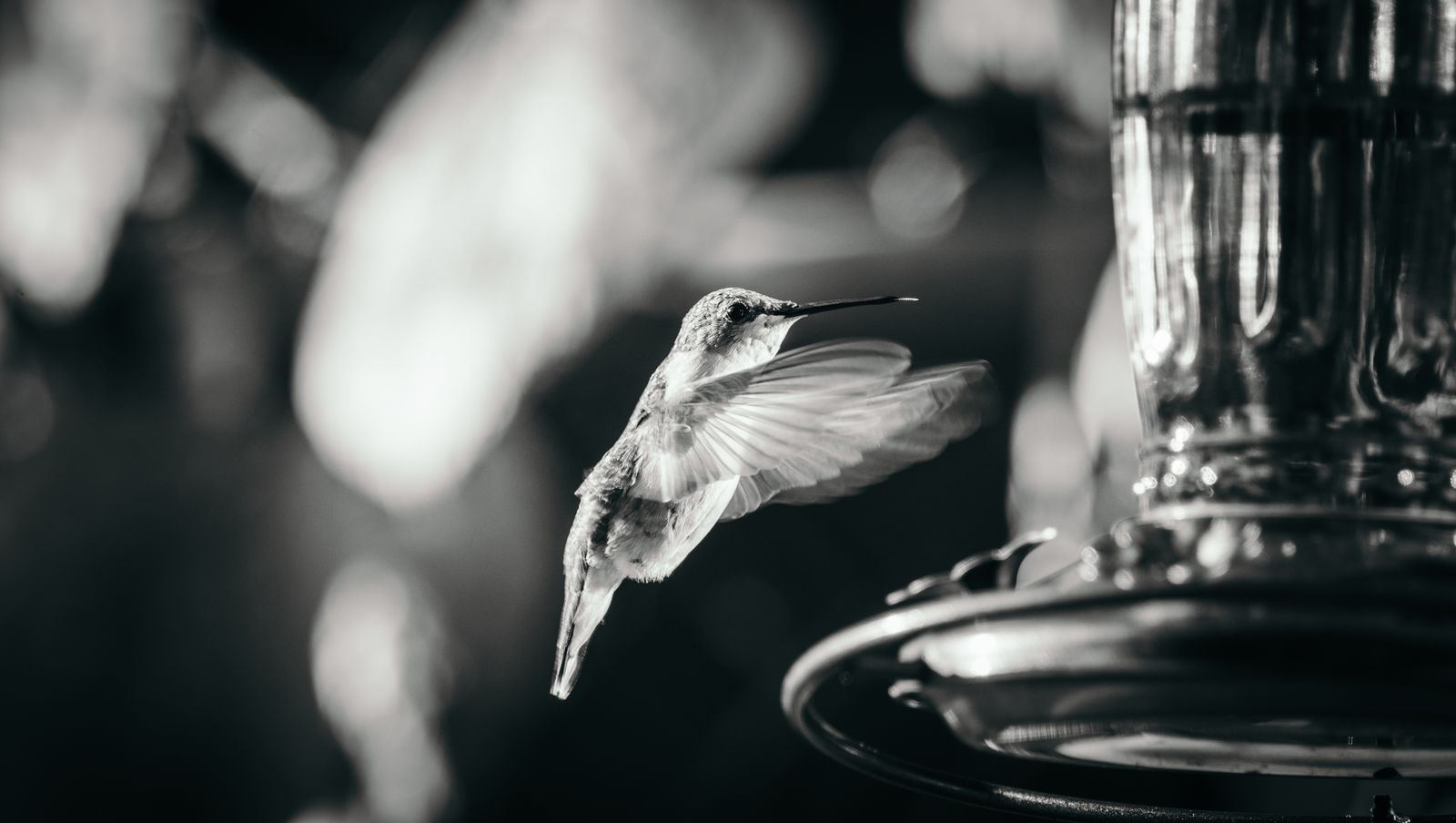
Solar Lighted Hummingbird Feeders vs Standard Glass Feeders: Upgrading Your Eco-Friendly Yard
Solar lighted hummingbird feeders combine daytime feeding with soft nighttime garden illumination, operating up to 8 hours on a solar charge. Standard glass feeders offer traditional beauty without electronic components. Choose solar models for dual-purpose patio decor in sunny spots, and standard glass for deep-shade locations.
Side-by-Side Feature Comparison
| Feature / Criterion | Solar Lighted Glass Feeder | Standard Unlit Glass Feeder |
| --- | --- | --- |
| Daytime Visual Attraction | Hand-blown translucent colored glass refracts natural sunlight into vibrant garden hues. | Hand-blown colored glass offers classic artistic beauty in direct light. |
| Nighttime Garden Aesthetics | Integrated solar panel powers multi-mode RGB LED lights for up to 8 hours after dark. | No illumination; dark profile at night unless external garden spotlights are directed at it. |
| Power Source & Energy | 100% solar-powered rechargeable battery; zero wiring or external electrical cost. | Passive non-powered ornament requiring no ambient solar exposure. |
| Base Mechanics & Leak Prevention | Sealed anti-rust metal base with precision rubber gaskets prevents nectar drips. | Standard metal or plastic base; sealing quality depends on manufacturer design. |
| Cleaning & Housing Maintenance | Requires wiping solar cap with a damp cloth; glass body and base submerge safely. | Entire unit can be submerged in warm soapy water without electrical precautions. |
| Yard Placement Requirements | Requires 4 to 6 hours of direct daily sunlight to recharge solar battery fully. | Can be placed anywhere, including full-shade dense forest canopies or deep covered porches. |
| Gift Appeal & Versatility | Exceptional dual-purpose garden decor; functions as a daytime feeder and night accent light. | Charming traditional gift primarily focused on daytime wild bird watching. |
This criteria-row matrix highlights the core distinctions between solar-illuminated glass feeders and traditional standard glass feeders.
Pros and Cons Breakdown
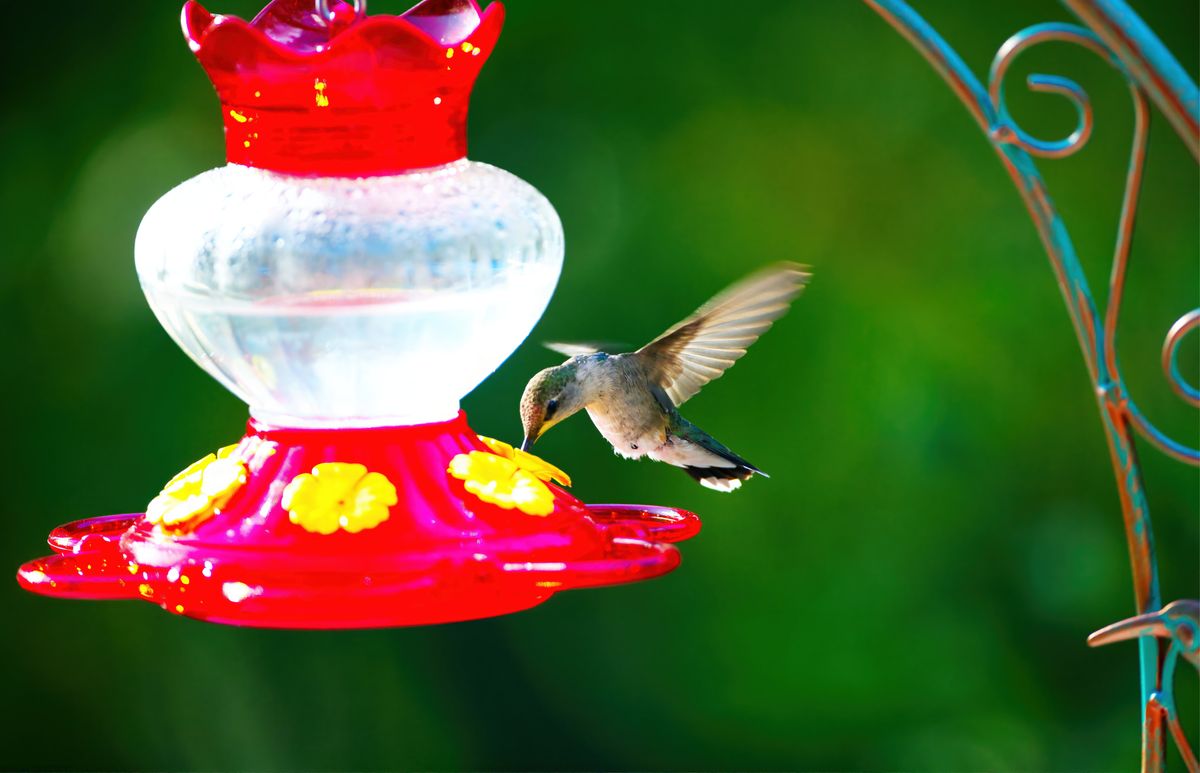
Photo by DANNIEL CORBIT on Pexels
Pros
- Solar models provide dual functionality as daytime wild bird feeders and evening RGB ambient garden decor.
- Hand-blown glass crafted at 2,300°F ensures long-lasting color intensity that never fades or peels.
- Sealed bases with powder-coated anti-rust metal prevent nectar leakage and insect intrusion.
- Solar caps protect nectar from direct solar heat, rain dilution, and winter snow accumulation.
- Solar caps require wipedown care and must not be fully submerged underwater.
- Requires at least 4 to 6 hours of direct sunlight for maximum 8-hour nighttime LED lighting.
Which Feeder Is Right for Your Garden?
If your patio or flowerbed receives 4 or more hours of direct daily sunlight and you love enjoying your garden during twilight hours, the solar-powered lighted feeder is the superior choice. It offers the exact same daytime feeding efficiency as traditional glass, while adding a magical RGB ambient glow after dusk.
Expert Insight: Avian Safety & Solar Care
Hummingbirds go into torpor (a deep sleep state) high in tree branches at night and do not feed after dark. Soft RGB LED illumination will not disrupt their sleep cycles or attract unwanted nocturnal pests. When cleaning solar models, unscrew the glass reservoir and wash it separately, using a damp microfiber cloth to gently clean the solar cap panel.
Immediate Setup Action Plan
Your decision: Choose the solar lighted feeder if your hanging spot gets afternoon sun and you want evening garden ambiance.
Do this next: Hang the feeder 5 feet above the ground near flowering plants in an area receiving at least 4 to 6 hours of unshaded sunlight.
Related resource: Learn more about the heritage craft of 2,300°F hand-blown glass in our detailed artisan guide.Discover the LUJII Solar-Powered Hummingbird Feeder with multi-mode RGB illumination and leak-proof metal base.
Follow these practical steps to position and prepare your feeder for optimal performance.
Key Comparison Takeaways
Here are the primary points to keep in mind when choosing between solar and standard glass feeders:
Frequently Asked Questions
Common questions regarding nighttime illumination, battery performance, cleaning, and seasonal weather safety.
Technical Specification Matrix
| Technical Specification | Solar Lighted Glass Feeder | Standard Glass Feeder |
| --- | --- | --- |
| Nectar Capacity | 32 fl. oz (950 ml) | 16 to 32 fl. oz |
| Glass Construction | Hand-blown at 2,300°F with embedded color pattern | Hand-blown or machine-molded colored glass |
| Base Material | Powder-coated anti-rust metal with rubber sealing gasket | Painted metal or molded plastic |
| Light Source | Multi-mode RGB LED ambient module | None |
| Solar Panel Type | Weather-sealed monocrystalline cap module | N/A |
| Runtime Per Charge | Up to 8 hours (with 4-6 hours direct daylight charge) | N/A |
| Weather Shielding | Protective cap shielding against direct sun, rain, and snow | Basic hanging cap or exposed hook |
Detailed engineering specs comparing solar lighted glass feeders with standard non-illuminated glass models.
Seasonal Cleaning & Care Schedule
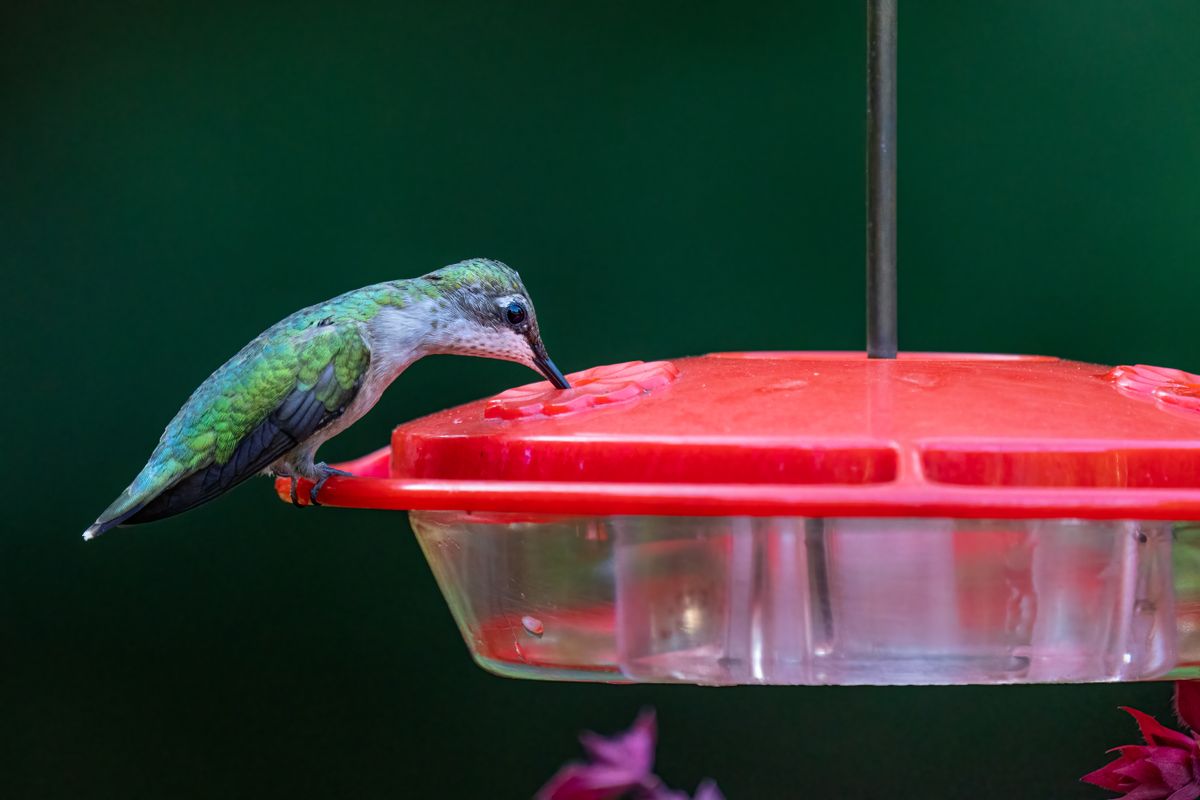
Photo by Skyler Ewing on Pexels
- Every 3 to 5 Days (Summer) — Empty remaining nectar. Wash glass bottle and metal base with warm water. Wipe top solar cap with a damp cloth.
- Bi-Weekly — Inspect rubber base gasket for tight seal. Check solar panel surface for dust, pollen, or water spots and wipe clean.
- Monthly — Soak glass bottle in a 1:10 white vinegar solution to eliminate mineral buildup and mold spore micro-deposits.
- Late Autumn / Winter Frost — Clean thoroughly, dry completely, and store indoors during hard freezing temperatures to prevent glass cracking.
Decision Support Framework
Choose a solar lighted hummingbird feeder if you want dual-purpose day and night garden decor without sacrificing hummingbird safety. Choose standard unlit glass if your hanging spot receives no direct sunlight.
Best choice for
- Solar Lighted Hand-Blown Glass Feeder — Provides daytime hummingbird visits and transforms into a soft RGB glowing lantern for night relaxing.
- Standard Hand-Blown Glass Feeder — Operates independently of solar sunlight exposure under thick shade trees.
- You plan to submerge the entire top cap underwater during routine bucket washing.
- The feeder will hang under a covered porch receiving less than 2 hours of direct daily sunlight.
- Standard Glass Feeder + External Landscape Spotlight — Allows strategic illumination from distance solar spotlights if the feeder hangs in deep shade.
Real-World Backyard Scenarios
Sunny Backyard Garden Bed with Flowers — Ideal for solar feeders. Receives 6+ hours of sunlight for a full 8-hour nighttime RGB light display.
Shaded Porch Overhang — Standard glass feeder is preferable unless you hang the solar model from an extended hook beyond the roof drip line.
High-Wind Suburban Patio — Solar models with slender hand-blown glass, heavy metal bases, and tight gasket seals prevent fluid sloshing.
How solar lighted glass feeders perform across common outdoor living environments.
The Visual Science of Hummingbird Attraction
Hummingbirds possess extraordinary visual acuity. Their eyes contain specialized cone photoreceptors that allow them to perceive deep ultraviolet spectrums invisible to human eyes. Brilliant, multi-colored hand-blown glass mimics natural floral patterns, catching direct sunlight and drawing inquisitive hummers from across the neighborhood.
Crafted by glass artisans at temperatures reaching 2,300°F, hand-blown glass incorporates rich mineral pigments directly into the molten structure. Unlike painted plastic or factory-printed glass feeders that peel under harsh summer solar rays, hand-blown glass retains its vivid contrast indefinitely.
The Dual-Function Innovation of Solar Integration
While standard glass feeders excel during daylight hours, solar-powered models elevate your outdoor living space well after sunset. Integrated monocrystalline solar caps charge an internal battery during daylight. As dusk falls, automatic sensors trigger energy-efficient RGB LED lighting embedded within the housing.
The soft light diffuses through the translucent glass patterns, casting gentle colored reflections across flowerbeds, decks, and patio railings. According to field research from avian specialists, low-intensity night lighting does not attract harmful night pests or disrupt hummingbird roosting, provided nectar is kept fresh and free of synthetic red dyes. To explore more about safely preparing food for your feathered visitors, read our guide on how to make safe DIY hummingbird nectar.
Leak-Proof Base Engineering and Weather Protection
One common challenge with traditional hummingbird feeders is liquid leakage caused by heat expansion. As ambient temperature rises during mid-day, air trapped inside the reservoir expands, forcing liquid nectar out through the feeding ports.
Modern solar feeders like the LUJII Solar-Powered Feeder solve this with a slender reservoir neck, heavy-duty anti-rust metal base, and precision rubber gasket seal. The plastic solar cap doubles as a protective umbrella, preventing direct sunlight from over-heating liquid nectar and blocking rainwater from diluting your sugar solution. For more on maintaining nectar purity in high summer heat, consult our guide on hot weather nectar ratios.
Related Guides & Hand-Blown Glass Resources
- Do Hummingbirds Feed at Night? Understanding Dusk Behavior Around Illuminated Feeders
- Best Solar-Powered Garden Accent Lights for a Magical Evening Glow
Featured Solar Glass Hummingbird Feeder
Bring magical illumination and hungry hummingbirds to your garden with our top-rated hand-blown solar feeder.
Final Recommendations & Next Steps
Your decision: Determine your outdoor hanging location's daily sunlight hours to ensure sufficient solar charging.
Do this next: Order a hand-blown solar hummingbird feeder to enjoy vibrant daytime birds and magical multi-color evening illumination.
Related resource: Explore our complete gallery of heritage hand-blown glass feeder styles.Visit solarhummingbirdfeeder.com to claim your LUJII Solar-Powered Hummingbird Feeder today!
Transform your backyard into a morning feeding haven and evening sanctuary.