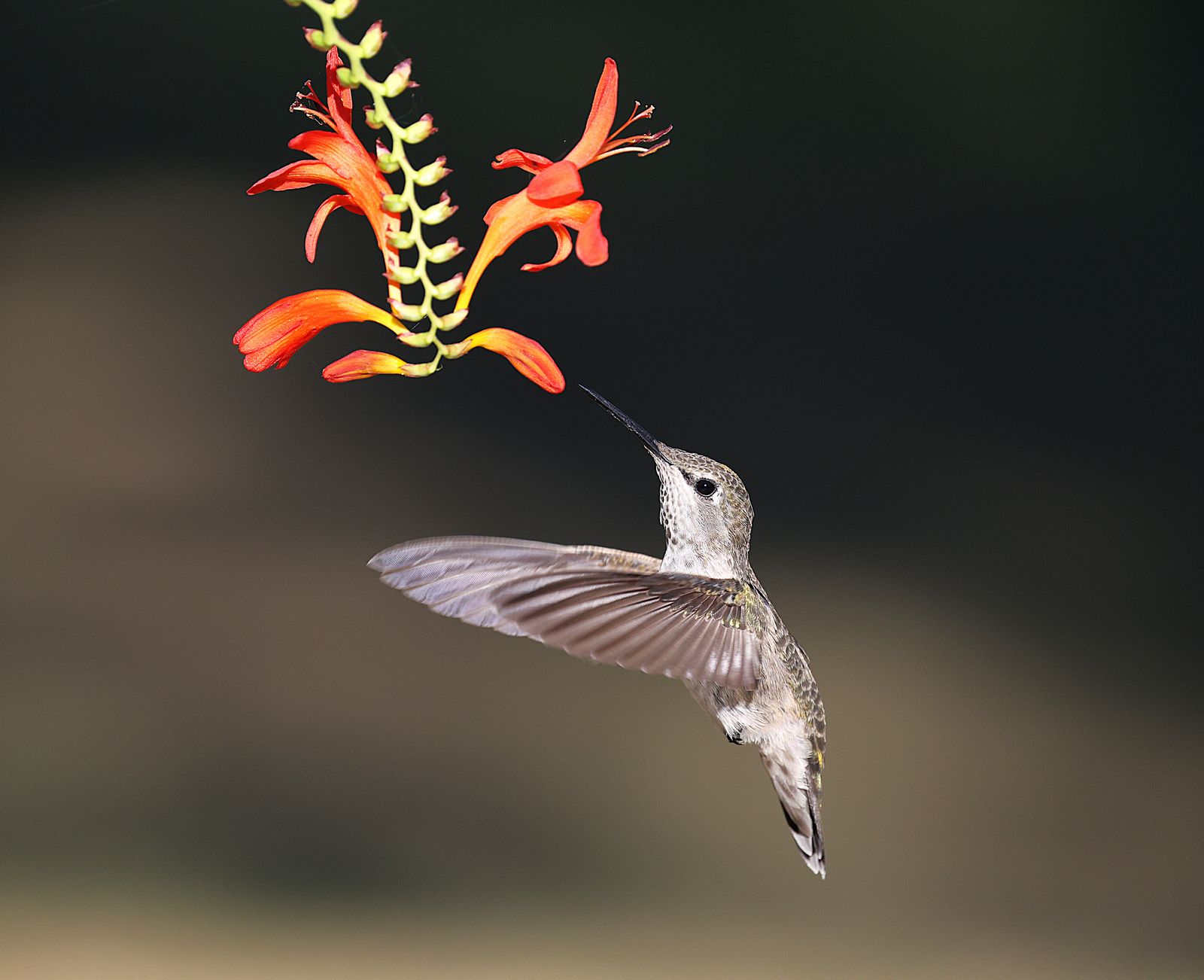
Nighttime Garden Safety for Roosting Hummingbirds: Autumn Twilight Feeding Tips
Hummingbirds do not fly at night. They settle onto a sheltered twig before full dark, drop into a deep energy-saving state called torpor, and stay there until morning — which means autumn evenings are less about feeding them after sunset and more about making sure the last hour of daylight is calm, fed, and predator-free. Get that hour right and you have done nearly everything a garden can do for a roosting bird.
Where do hummingbirds sleep, and what makes a yard safe?
They roost in dense cover, usually on a thin interior twig within a shrub or evergreen, out of wind and out of the open. A bird in torpor is genuinely vulnerable: its body processes slow dramatically, and it cannot simply wake and dart away the instant something disturbs it. Rousing takes time.
That single fact drives every safety decision in an autumn garden:
- Keep dense shrubs and evergreens intact through fall. Cover is the roost. Late-season heavy pruning removes it right when it is needed.
- Keep cats indoors at dusk and overnight. A torpid bird in a shrub is the easiest possible target.
- Do not disturb shrubs after dark. No shaking branches, no trimming, no leaf blowers near dense cover in the evening or early morning.
- Leave a windbreak. A roost site sheltered from prevailing wind loses far less heat than an exposed one.
- Go easy on bright light aimed into cover. Illuminate the feeder or the path, not the interior of the hedge where birds are settled.
Why does the last hour of daylight matter so much in autumn?
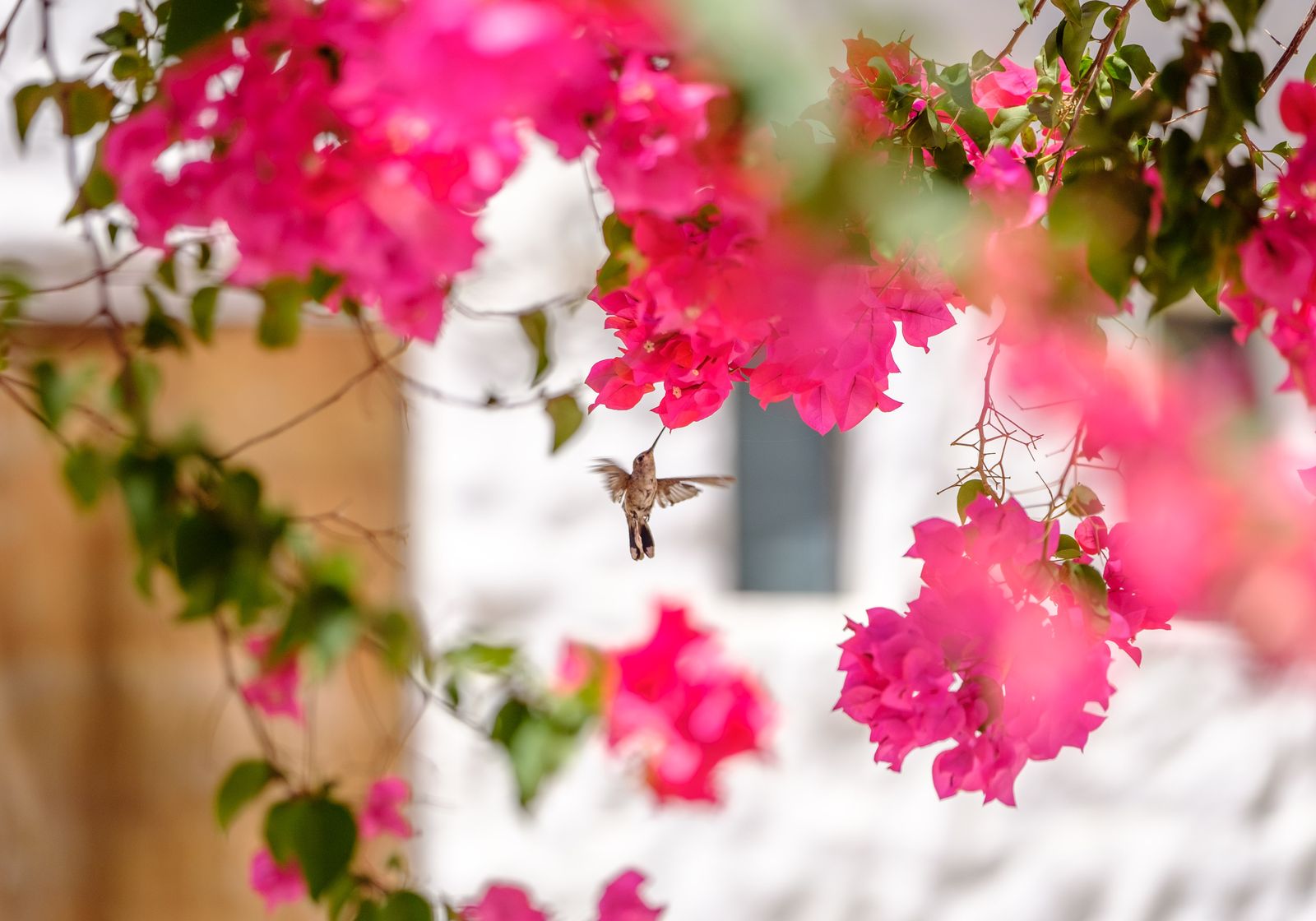
Photo by Ludvig Hedenborg on Pexels
Because a hummingbird has to enter the night with enough fuel to survive it. Birds feed heavily in the final stretch before roosting, topping off before a long fast, and autumn compounds the pressure: nights are longer and colder than in summer, and many of the birds passing through are migrants with additional demands on their reserves.
Practical version: your feeder should be full, clean, and undisturbed during the final hour of light. That is the wrong time to be refilling it, rearranging the hook, or standing beside it with a hose. Do maintenance in the middle of the day and leave the evening to the birds.
Late-season traffic can also be heavier than you expect, with local birds and migrants using the same feeder. Watch the level in the reservoir rather than assuming a fill will last as long as it did in June — a see-through glass body makes this a glance from the window rather than a trip outside.
Should feeders stay up in the fall?
Yes. The old worry that a feeder keeps birds from migrating does not hold up: migration is triggered by day length and internal cycles, not by the availability of a feeder. What a late feeder does provide is fuel for birds moving through and for stragglers that need it most.
The standard guidance is to leave the feeder up for a couple of weeks past your last sighting, then a while longer if you are willing. Fresh nectar late in the season is more useful than a feeder taken down early.
Two autumn adjustments:
An autumn evening routine
| Time of day | What to do | Why | |---|---|---| | Mid-morning | Check the level and clarity | Traffic is high; you have time to react | | Midday | Refill, wash, and reposition if needed | Lowest visit rate; least disturbance | | Late afternoon | Stop all yard work near the feeder and cover | Birds are fueling for the night | | Last hour of light | Watch only; no maintenance | Peak pre-roost feeding | | After dark | Keep pets in; keep light off dense cover | Birds are in torpor and slow to rouse | | First light | Have the feeder out and full | Birds need fuel immediately on waking |
Does an illuminated feeder disturb roosting birds?
Not if it is aimed at the feeder rather than into cover. Hummingbirds settle at dusk and do not feed at night, so a feeder that lights up after dark is decoration for you rather than a food source for them. The thing worth avoiding is spilling light into the shrubs and evergreens where birds are actually roosting.
A few sensible habits: point the glow at the feeder body, keep it away from dense hedges, and prefer a fixed low-key setting over a cycling one in the part of the yard closest to roosting cover. A feeder with a hand-blown glass reservoir that runs for a period on solar charge is naturally suited to this, because the light source sits in the feeder itself rather than on a stake shining upward into branches.
What about nectar care as the season turns?
The recipe stays the same year-round: one part plain white sugar to four parts water, no red dye, and never honey or brown sugar. What changes is the interval. Cooler weather slows spoilage compared with midsummer, so you get a little more time between changes — but "a little more time" is not "indefinitely," and a regular cleaning schedule still applies. Cloudy liquid or dark specks mean dump, wash, and refill.
If you use an ant moat, keep filling it with plain water only, right through the end of the season.
Autumn is also when a yard's natural food supply thins out, which is exactly when a feeder matters most. The relative contribution of planting and feeders through the season is covered in this comparison of live nectar plants and glass solar feeders, and if you are choosing a feeder that will sit outdoors through changeable autumn weather, the glass and plastic durability comparison is worth reading before you buy.
How do you tell a roosting bird from a bird in trouble?
A torpid hummingbird can look alarming: motionless, sometimes hanging oddly from a twig, unresponsive to nearby movement. In most cases this is normal overnight or cold-weather torpor, and the right response is to leave it completely alone and check again once the day has warmed.
Signs that genuinely warrant concern are a bird on the ground rather than on a perch, obvious injury, or a bird that remains unresponsive well after the morning has warmed and other birds are active. In those cases contact a licensed wildlife rehabilitator rather than attempting to warm, feed, or handle the bird yourself.
FAQ
Do hummingbirds ever feed after dark? Effectively no. They finish feeding around dusk and roost for the night. Occasional exceptions occur in unusually lit environments, but a garden feeder should be planned around daylight visits.
Should I bring the feeder in on cold autumn nights? It is a reasonable habit once nights get near freezing, both to prevent the nectar thickening and to keep the feeder in good condition. Put it back out at first light, because birds feed early.
Will leaving a feeder up delay migration? No. Migration timing is driven by day length and internal cycles. A late feeder supports birds that are already on the move.
Is it safe to prune in the fall? Light shaping is fine, but hold off on heavy cutting of dense shrubs and evergreens, which are exactly the structures birds use as overnight roosts. Save major work for late winter.
A practical next step
Walk your yard at dusk this week and identify the densest, most wind-sheltered shrub or evergreen you have. Leave it unpruned for the rest of the season, keep outdoor lighting off its interior, and move your feeder maintenance to the middle of the day so the last hour of light stays quiet.
Cover photo by Veronika Andrews on Pexels.