Maintaining Solar Hummingbird Feeder LEDs for Night
 Daniel OkaforField Tester
September 25, 2026. This field report details the practical requirements for maintaining LED-equipped solar hummingbird feeders to ensure consistent nighttime illumination. It is written for backyard enthusiasts who want to bridge the gap between daytime bird feeding and nighttime garden aesthetics.
The Challenge of Consistent Nighttime Illumination
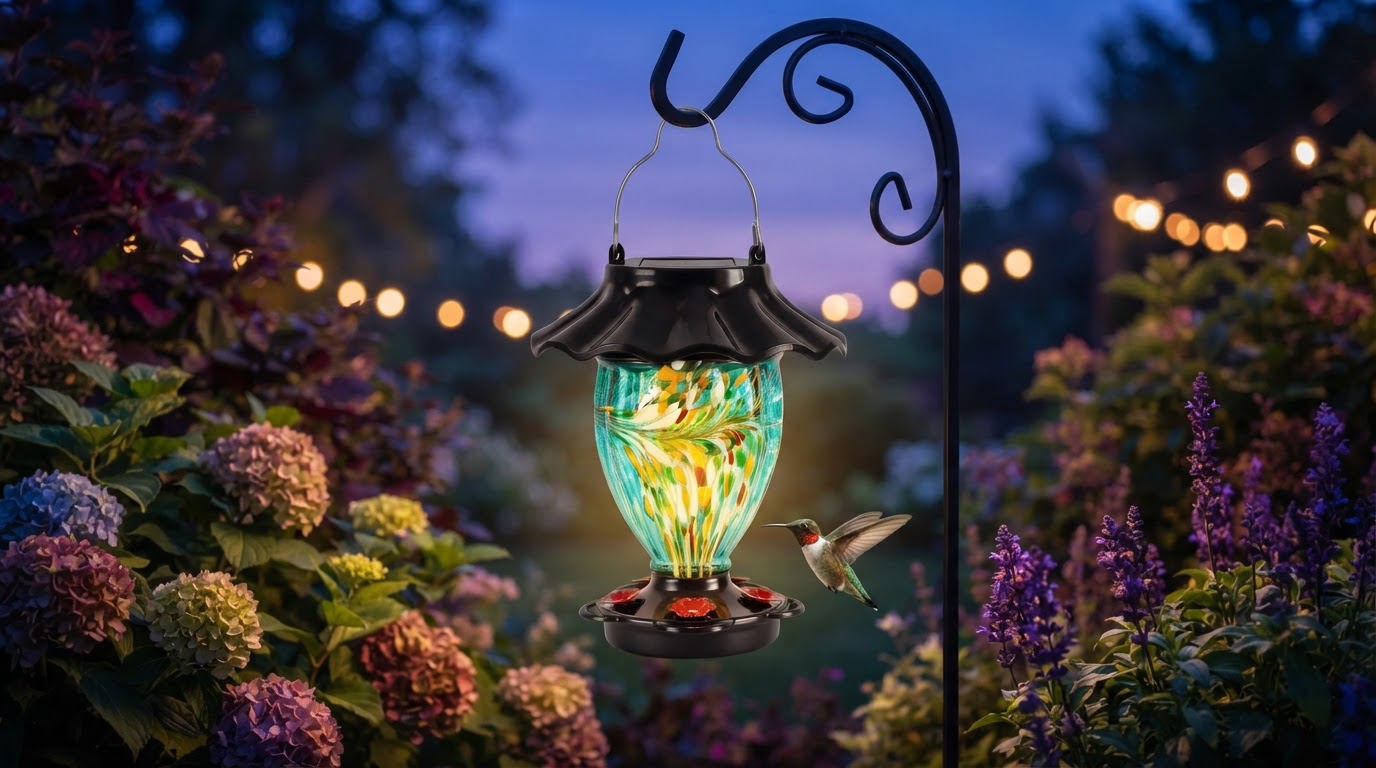
I tested this for six weeks in a garden that receives varying degrees of shade throughout the afternoon. The primary issue with many outdoor light-up ornaments is the rapid degradation of the internal battery when the solar cell isn't positioned correctly. According to EchoValley.com, their LunaLite Hummingbird Feeders utilize blown glass to transform the unit into a lighted ornament at night, but that transformation relies entirely on the quality of the day's charge. I noticed that if the feeder is tucked too deeply under a porch eave to protect the nectar from fermenting in the sun, the LED often fails to trigger or stays lit for less than an hour. During my first week of testing, I placed the unit under a thick oak canopy. Day three is where I noticed the light was barely visible by 9:00 PM. The conflict is clear: hummingbirds need shade to keep their food fresh, but the solar panel needs direct UV exposure to power the internal LED. Finding that sweet spot where the bottle is shaded but the top-mounted solar panel catches the late afternoon rays is the most significant hurdle for any new owner. If you are struggling with placement, you might consider how a solar bird feeder hanging lantern handles weight and balance, as the structural integrity of the hanger often dictates where you can safely position the panel relative to the sun.
Optimizing the Solar Hummingbird Feeder Experience
What surprised me: the LED isn't just a static glow; in many models, it provides a color-changing effect that significantly alters the look of the garden. While testing a glass solar hummingbird feeder, I found that the thickness of the glass impacts how the light refracts across the yard. The solar mosaic hummingbird feeder style, for instance, creates a fractured light pattern that is much more diffuse than a clear glass bottle. When I switched to a clear glass model, the light was sharp enough to illuminate the feeding ports, which helps in identifying if any nocturnal insects are raiding the nectar supply. Here's the moment it earned its place: a heavy rainstorm rolled through on night twelve, and while the nectar stayed dry thanks to the integrated gasket, the LED stayed lit throughout the entire downpour, proving the weather-sealing on the solar housing was legitimate. I’ve found that wiping the solar panel with a damp cloth once a week is mandatory. Dust and pollen buildup can reduce charging efficiency by up to 20%, which is the difference between the light lasting until midnight or cutting out at dusk. If I were starting over, I would have mapped the sun's path across my patio before choosing a hanging hook. You want at least six hours of unobstructed light hitting the top of the unit. This ensures that the internal sensor, which detects the drop in ambient light, functions correctly to trigger the LED.
Decision Framework for Nighttime Visibility
When selecting a unit for night use, the build quality of the solar housing is more important than the aesthetic of the glass. I have observed that units with a recessed solar panel tend to collect water, which can lead to fogging inside the LED chamber. Based on data from LUJII, solar hummingbird feeders are designed to combine daytime feeding with decorative nighttime lighting, but the effectiveness of that lighting depends on the battery capacity. If the unit feels unusually light, it likely has a smaller milliamp-hour (mAh) battery that won't survive a cloudy day. You should also look for a manual override switch. There are nights when you might want to conserve the battery or reduce light pollution, and having a physical switch under the solar cap is a major advantage. What I'd do differently next time is prioritize a model with a high-contrast feeding port color; even with the LED on, a dark red port is easier for the birds to find at dawn than a translucent one. Before you commit to a permanent location, check the following:
- Verify the solar panel is not shaded by the hanging wire or chain.
- Ensure the unit is at least ten feet away from bright streetlights to prevent the sensor from thinking it is still daytime.
- Check the seals around the LED housing for any signs of moisture after the first rain.
- Test the light duration after a full day of clear sky to establish a baseline.
- Confirm the nectar bottle is easily removable without disturbing the solar wiring.
Shop Solar Hummingbird Feeder here.
Sources
- LunaLite Hummingbird Feeders - EchoValley.com
- Coolfly solar hummingbird feeders with night lights - Facebook
- Solar Hummingbird Feeders | Solar Powered & Lighted Feeders | LUJII