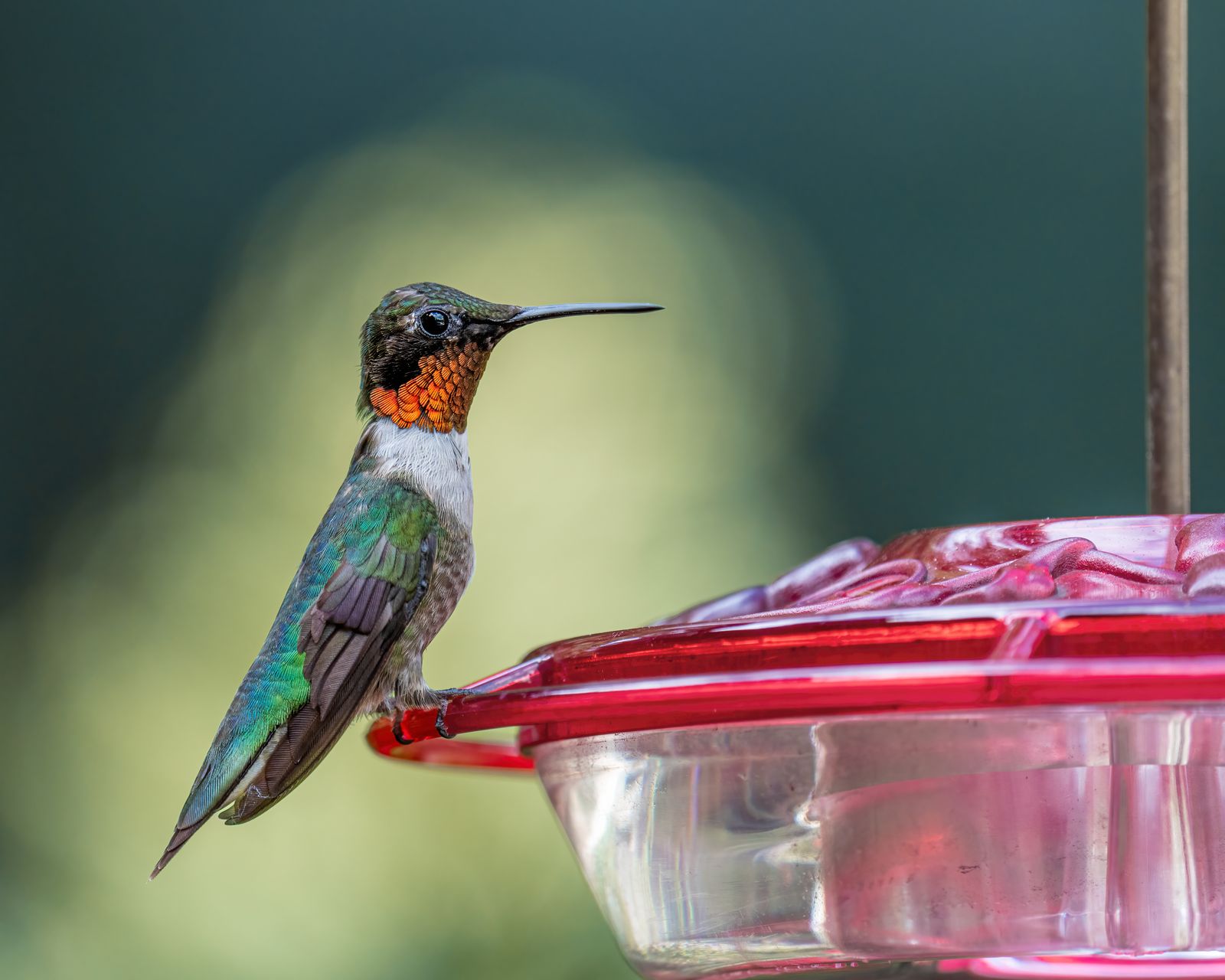
Letting Children Help With Hummingbird Feeder Care: What to Hand Over and When
Children can genuinely run most of a hummingbird feeder routine, and the tasks divide cleanly by age. Younger children measure, stir, and watch. Older children wash the reservoir and refill it. Adults keep the hot water, the glass handling, and the ladder work, and adults stay responsible for the schedule. The point is a real job, not a token one.
Why the schedule stays with an adult
Hand over tasks freely, but keep ownership of timing. Nectar has to be changed on a rhythm set by the weather, and a missed change in hot weather means spoiled nectar that harms birds. A child can do every step of the job and still not be the person who remembers it is Wednesday.
The practical arrangement that works is simple. An adult decides when, a child does what. That keeps the standard high while leaving the interesting parts to the person who actually wants to do them.
Write the recipe somewhere visible: one part plain white sugar to four parts water, nothing else. Children are literal, which is an advantage here. A child who has been told no dye, no honey, and no brown sugar will not improvise, whereas a helpful adult sometimes will.
Which tasks suit which age
| Task | Roughly 3 to 5 | Roughly 6 to 9 | Roughly 10 and up | |---|---|---|---| | Watching and counting birds | Yes | Yes | Yes | | Measuring sugar and water | With help | Yes | Yes | | Stirring until dissolved | Yes | Yes | Yes | | Carrying the empty reservoir | No | With help | Yes | | Washing the reservoir in warm water | No | With help | Yes | | Scrubbing the ports | No | With help | Yes | | Carrying a full reservoir outdoors | No | No | With supervision | | Hanging or unhooking the feeder | No | No | With supervision | | Refilling the ant moat with water | With help | Yes | Yes | | Handling hot water | No | No | No |
Treat the table as a starting point rather than a rule. A careful eight-year-old may handle more than a distracted eleven-year-old, and you know which you have.
The jobs that stay with adults
- Hot water. Cleaning works best with hot water, and hot water plus a slippery glass reservoir is an adult job in every household.
- Ladder or high-reach work. If the feeder needs a step to reach, an adult reaches it.
- Assessing spoilage. Judging whether nectar has turned is a skill, not a checkbox. An adult should look before every refill.
- Hardware checks. Inspecting the mount, hanger, and seal for wear is easy to overlook and consequential when it fails.
- Carrying glass across hard surfaces. A filled hand-blown glass reservoir is heavy and slick when wet.
A routine a child can own
Step five is the one children tend to do better than adults, because holding a glass reservoir up to the light and hunting for residue is inherently interesting. Lean into that.
Rules worth stating out loud
Say these plainly and repeat them. They are the ones children ask about, and a clear answer prevents a well-meant mistake.
- Nectar is sugar and water only. No food coloring, no honey, no brown sugar, no juice.
- Never top off old nectar with new. Always empty, rinse, then refill.
- Do not touch the birds, and do not reach for a bird that lands nearby.
- Stay a few steps back once the feeder is hung, and stay still rather than quiet. Movement is what unsettles birds.
- Tell an adult if the nectar looks cloudy, stringy, or dark rather than filling it anyway.
- Wash hands after handling the feeder, before and after.
Turning it into something they keep doing
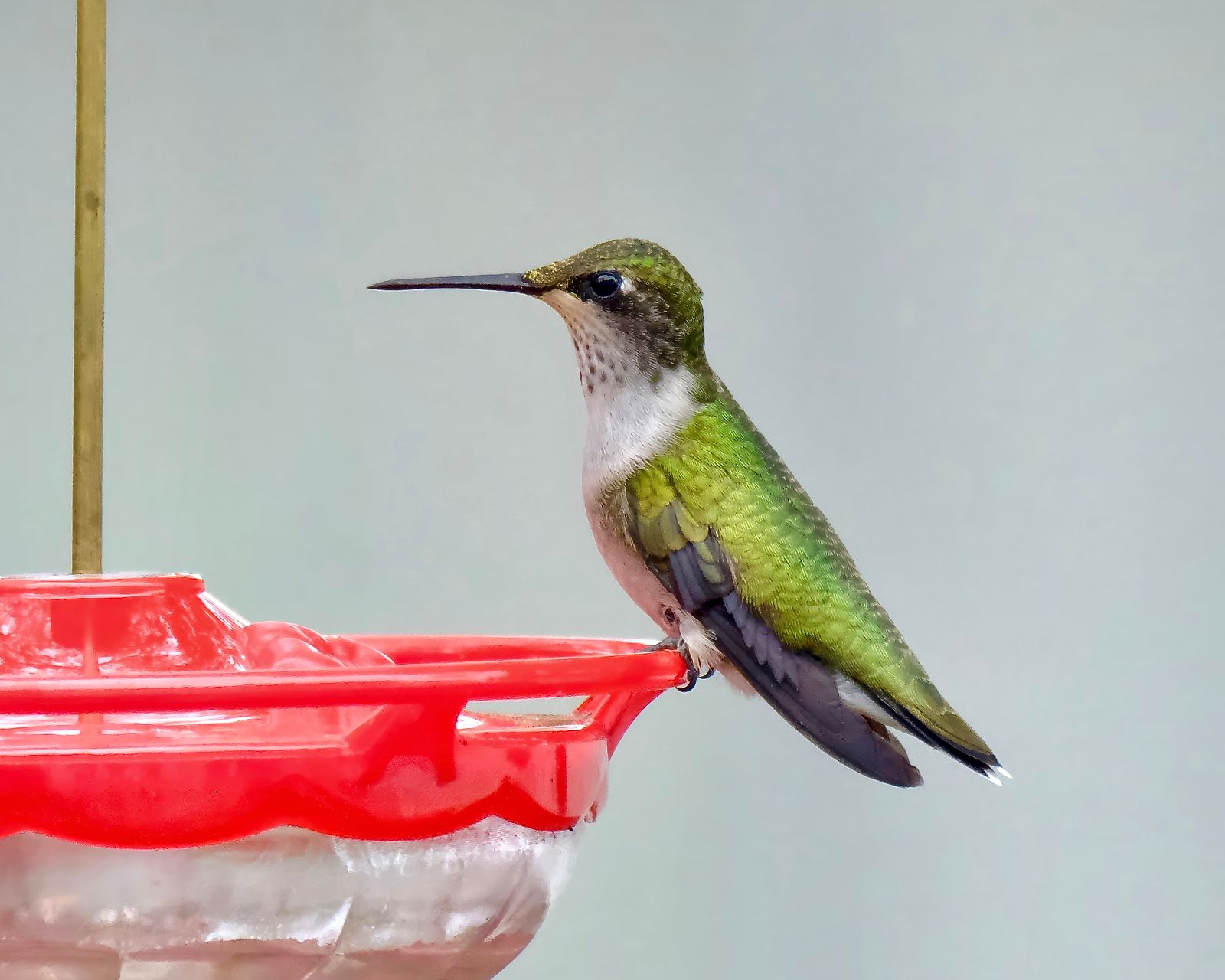
Photo by A. G. Rosales on Pexels
The feeder holds attention longer if the child has a record to build. A small notebook by the window with a date, a rough count, and a note about weather turns watching into a project, and it also gives you useful information about whether the feeder is busy enough to need more frequent changes.
Evening is the other hook. A feeder with RGB lighting and multiple mode options gives a child something to check after dark as well as during the day, and choosing the night's lighting mode is a small decision worth handing over entirely.
Planting is the third layer. Growing a nectar plant in a pot the child looks after connects the feeder to the wider garden, and the trade-offs between live nectar plants and glass solar feeders make a good starting point for choosing what to plant beside it.
Where children commonly go wrong
Overfilling is the most frequent error, and it is harmless. Stopping short of the very top reduces spill during rehanging and makes the reservoir easier to carry.
Rinsing too briefly is the error that matters. Sugar film is invisible when wet and obvious when dry, so the habit to teach is rinse, look, rinse again. Holding the reservoir up to the light makes this concrete rather than abstract.
The third is standing too close for too long. Children want to be near the feeder, and a bird arriving at a feeder with a person two feet away is unusual. Set a watching spot a sensible distance back and treat that as part of the job.
FAQ
What age can a child mix the nectar alone? Many children can measure and stir accurately from around six with the ratio written down, though an adult should still check the mix. The limiting factor is usually carrying and washing, not measuring.
Should children handle the glass reservoir? Older children can carry an empty reservoir with supervision. Filled, wet, or over hard surfaces, it is better left to an adult, since a hand-blown reservoir is the hardest part to replace.
Is it safe for children to be near a hummingbird feeder? Yes, with normal caution. Keep hands off the birds, wash hands after handling the feeder, and expect some insect interest, which is a reason to use a water-only ant moat rather than any spray.
How do you keep a child interested past the first week? Give them the record-keeping and the evening lighting choice. A count in a notebook and a nightly decision are small ongoing responsibilities, which last longer than novelty does.
Where to start
Pick one task for this week rather than handing over the whole routine at once. Measuring and stirring the nectar is the natural first job: it is the part that visibly matters, it is impossible to get badly wrong once the ratio is written on the jug, and it leads naturally into the rest.
Cover photo by Skyler Ewing on Pexels.