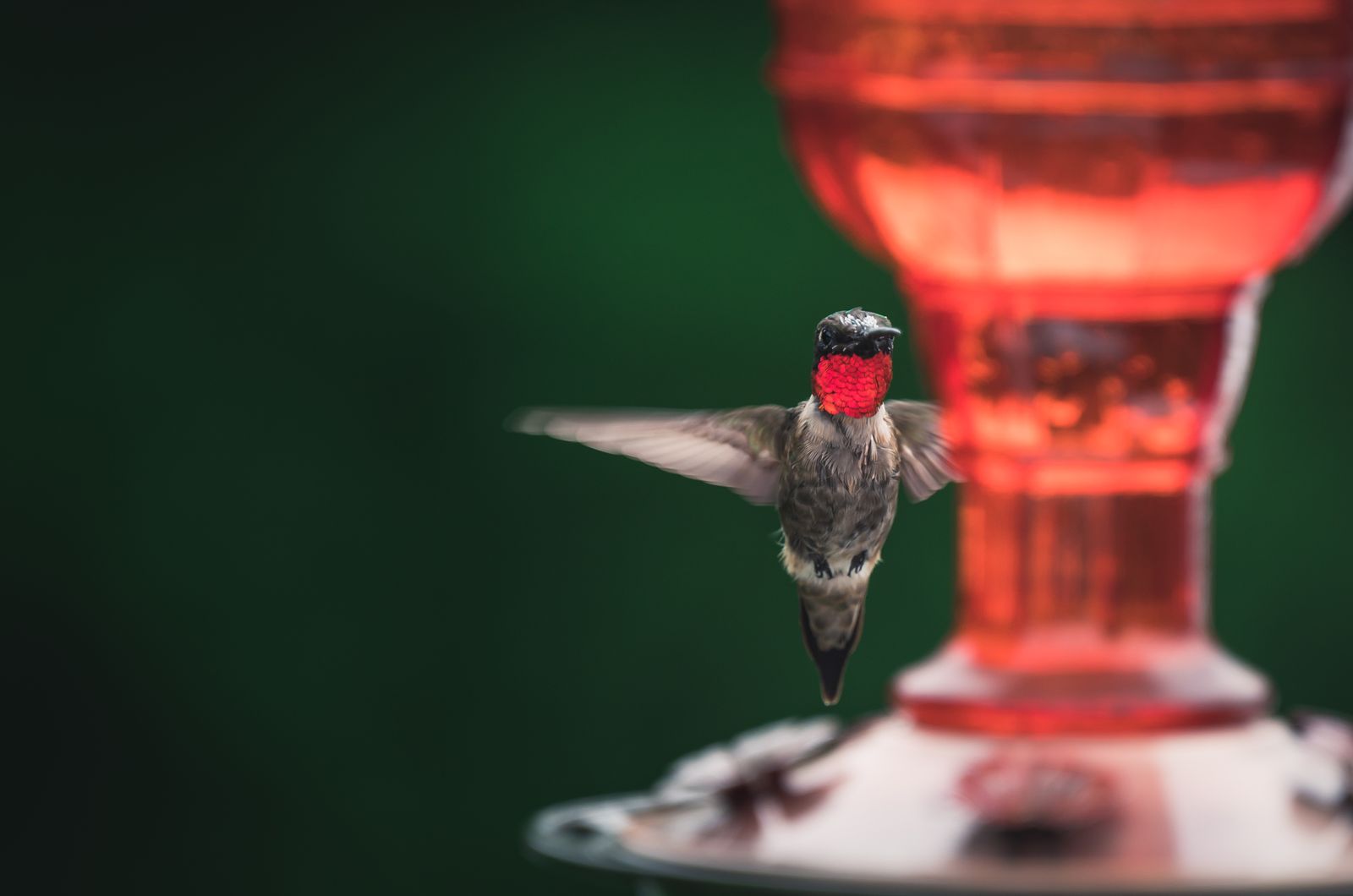
Hanging a Hummingbird Feeder in a Windy Yard: Placement That Holds
A hummingbird feeder in a windy yard needs three things: a short, rigid mount instead of a long chain, a position with something solid upwind of it, and less liquid inside than you would use in a sheltered spot. Wind is a placement problem far more than a product problem. Birds will feed happily in a breeze, but they will not commit to a feeder that swings unpredictably, and a swinging feeder is also the one that spills and gets damaged.
Why do hummingbirds avoid a swinging feeder?
Hovering next to a moving target costs energy and precision. A hummingbird approaching a feeder has to hold position within a fraction of an inch of a port; if the port is drifting several inches in each direction, every visit becomes work. Birds will still use a moving feeder when they have no alternative, but given a choice between a steady feeder and a swinging one, they consistently pick the steady one.
The other cost is spillage. Liquid sloshing inside a reservoir works against the seal at the base, and a feeder that pendulums in a gust throws nectar out of the ports even when nothing is wrong with the design. Reducing movement solves both problems at once.
Where is the best place to hang a feeder in a windy yard?
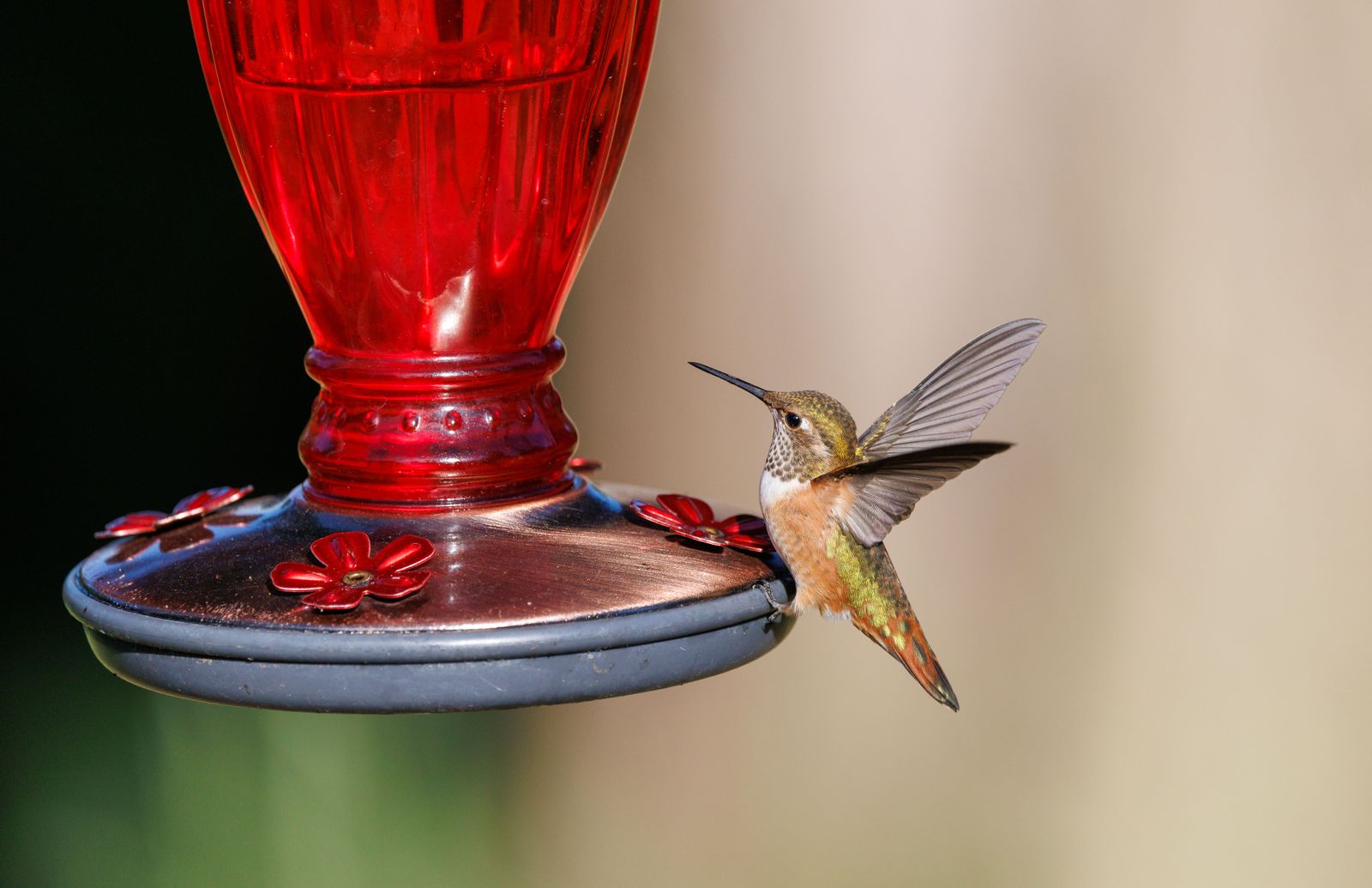
Photo by Veronika Andrews on Pexels
Look for shelter on the side the wind comes from, not shelter overhead. Spend a few minutes noticing which direction your prevailing wind arrives from — most yards have one dominant direction, and everything follows from knowing it.
The best positions in order of usefulness:
- The lee side of the house. The wall itself is the windbreak. Position a few feet out from it so the feeder is sheltered but still visible from open air.
- Inside a corner formed by two structures. An L between a house and a garage, or a house and a fence, is one of the calmest spots on most properties.
- Behind a dense evergreen or hedge. Planting diffuses wind rather than blocking it, which produces less turbulence than a solid barrier.
- Under a deep eave or covered porch. Very sheltered, but check that the spot still gets several hours of direct sun, since a solar feeder needs daylight on its cap to charge for evening lighting.
- Low against a raised bed or retaining wall. Wind speed drops close to the ground and behind mass.
How do you mount a feeder so it does not swing?
Rigidity beats weight. A heavy feeder on a long chain still swings; a lighter feeder on a short, stiff mount does not.
Mount options for exposed sites
| Mount | Stability in wind | Refill convenience | Notes | |---|---|---|---| | Wall or fence bracket | High | Good | Best all-round choice for exposed yards | | Short hook with base tether | High | Good | Cheapest effective retrofit | | Post-mounted rigid arm | High | Good | Strong, but needs a solid post set deep | | Weighted shepherd's hook in a pot | Moderate to high | Very good | No drilling; depends on real ballast | | Deck hook over a railing | Moderate | Good | Verify the hook cannot lift free in a gust | | Long chain from a branch | Low | Fair | The classic swinging setup; shorten or tether it |
Does wind change the nectar routine?
Indirectly, in two ways. Wind carries dust, pollen, and plant debris, and an exposed feeder collects more of it around the ports — so plan on wiping the ports at every refill and washing the reservoir on the regular schedule rather than stretching it. Wind also speeds evaporation from an ant moat, so check that it still holds plain water; a dry moat does nothing.
The recipe itself does not change: one part plain white sugar to four parts water, no red dye, never honey or brown sugar, refreshed more often during hot weather. Small, frequent fills suit an exposed site well, because less liquid inside means a steadier feeder and less waste when debris does get in.
A protective solar cap helps in exposed positions by shielding the top of the reservoir from driven rain and blown grit while keeping the panel where it can charge. It reduces what gets in; it does not replace regular cleaning.
Do glass feeders work in windy locations?
Yes, provided the mount is right. The material is not the deciding factor — clearance is. A glass reservoir on a rigid bracket with a hand's width of clearance from every hard surface is a stable, long-lived setup. The same reservoir on a two-foot chain beside a metal railing is a matter of time.
Two points in glass's favor in exposed sites. A sealed base and slender body reduce the amount of nectar that gets thrown out during movement, and a see-through reservoir lets you spot debris and cloudiness quickly, which matters more when the wind is delivering material into the feeder. The durability and handling tradeoffs are covered in this comparison of hand-blown glass and plastic feeders.
A planted windbreak is worth the wait if your yard is genuinely exposed. Dense shrubs upwind of the feeding area calm the air, provide the cover birds want between visits, and can supply nectar of their own — the way planting and feeders complement each other is covered in this comparison of live nectar plants and glass solar feeders.
FAQ
Should I take the feeder down before a storm? Yes. Bring it inside ahead of high winds, wash it while it is in, and rehang it once conditions settle. Birds return quickly to a familiar spot.
Will a windbreak stop birds from finding the feeder? No, as long as the feeder stays visible from open air on at least one side. Shelter the upwind side and leave the approach clear.
Is a heavier feeder more stable? Only if the mount is rigid. On a chain or cord, extra mass increases momentum and makes the swing worse rather than better.
Do coastal yards need anything different? Same principles, plus salt. Rinse the exterior more often, since salt spray accumulates on hardware and on the solar cap, and a dirty panel charges poorly.
A practical next step
Stand in your yard on a breezy day and note which direction the wind is coming from. Find the calmest spot on the downwind side of a wall, fence, or hedge that still gets a few hours of direct sun, and remount the feeder there on a short rigid bracket — or tether its base if you are keeping the hook. Then fill it halfway and watch whether visits get longer.
Cover photo by Chris F on Pexels.