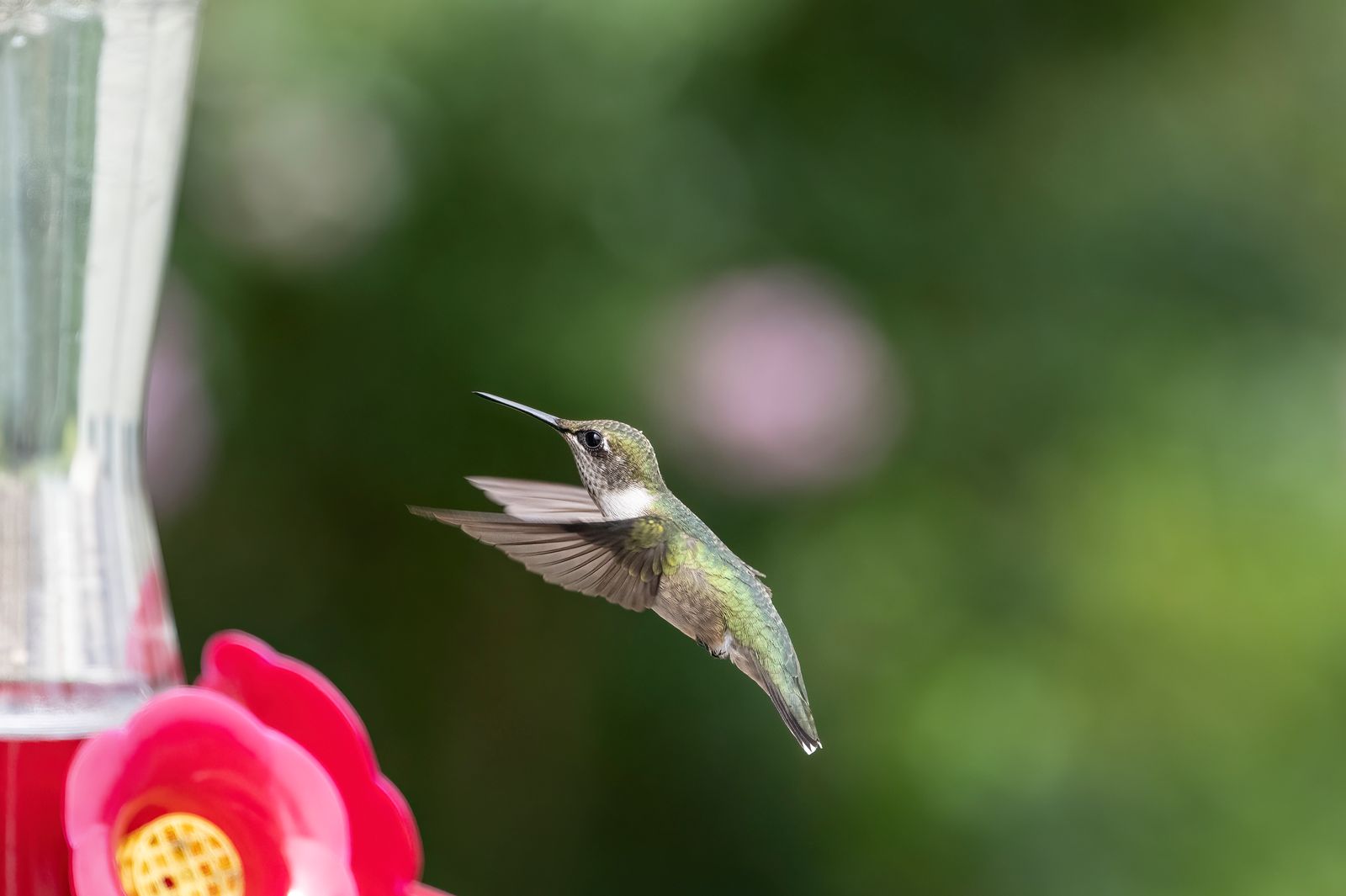
Placing a Hummingbird Feeder Near a Window Without Causing Strikes
A feeder placed very close to a window, within about three feet of the glass, or well away from it, beyond roughly thirty feet, is safer than one in the middle range. Close in, a startled bird cannot build up enough speed to be hurt. Far out, the glass is not part of its flight path. The distance to avoid is the comfortable-looking middle, where birds accelerate straight toward a reflection.
Why the middle distance is the dangerous one
Window collisions happen because glass reflects sky and plants, so a bird reads the reflection as open air or as somewhere to escape to. The damage depends on speed, and speed depends on how much room the bird had to accelerate.
That produces a counterintuitive result. A feeder hung right against the glass looks alarming and is actually among the safest placements, because a bird leaving it in a hurry travels only a few inches before contact. A feeder fifteen feet out is the worst case: far enough to build speed, close enough that the glass is directly in the escape path.
Hummingbirds add a specific risk of their own. They chase each other in fast, low arcs and back away from a feeder in reverse before turning, so a disputed feeder generates more sudden high-speed departures than a quiet one.
Safe distances at a glance
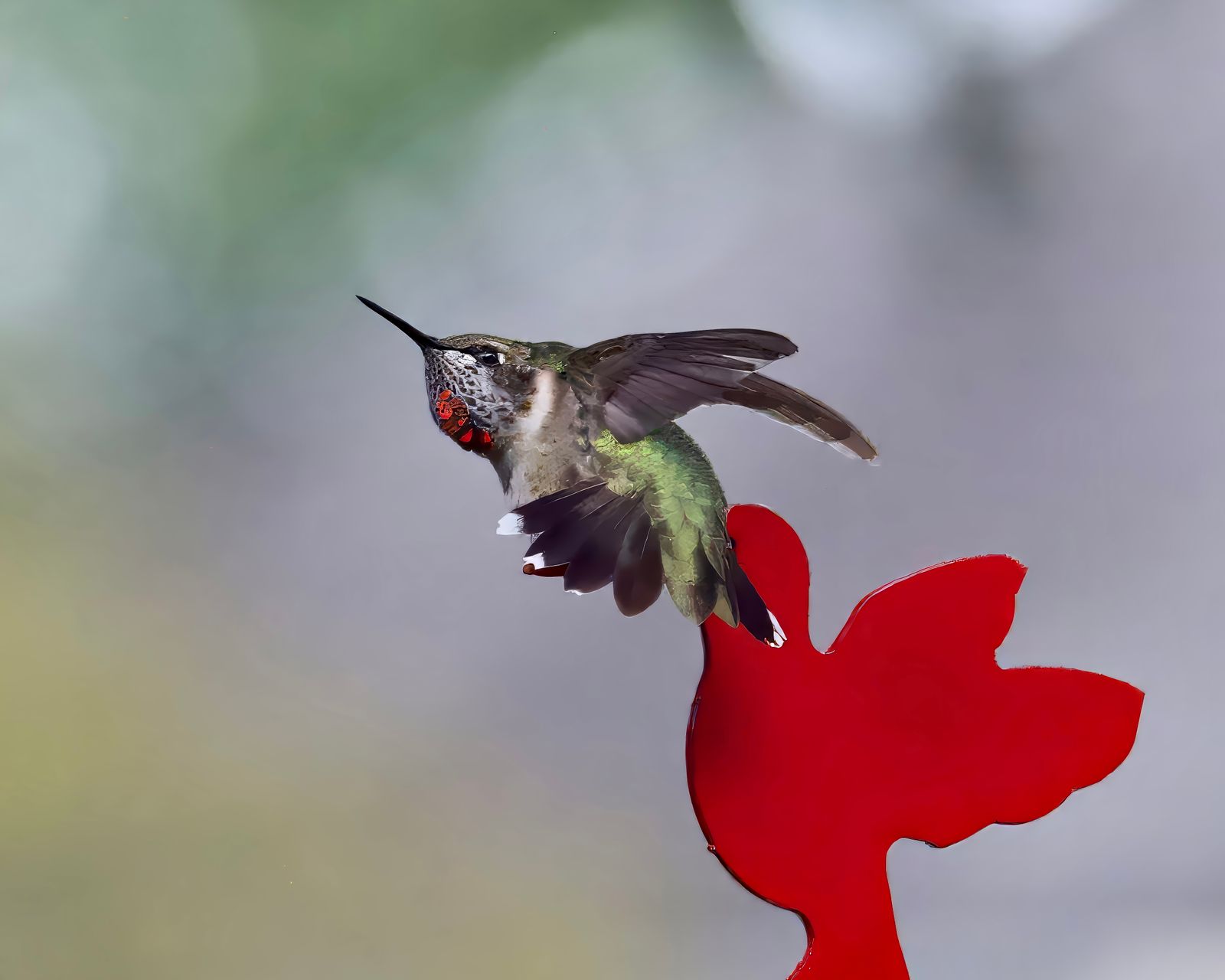
Photo by A. G. Rosales on Pexels
| Distance from glass | Risk level | Why | |---|---|---| | Under 3 feet | Low | Too little room to reach damaging speed | | 3 to 10 feet | Moderate | Birds accelerate and the glass is in the path | | 10 to 30 feet | Highest | Full speed with the window as the escape route | | Over 30 feet | Low | The window is no longer part of the immediate flight path |
If your only viable spot falls in the moderate or highest band, treat the glass rather than accepting the risk. Moving the feeder is usually cheaper and always more reliable, but glass treatments genuinely work when applied correctly.
Treating the glass, not just the feeder
The principle behind every effective treatment is the same: break up the reflection with markings dense enough that a bird reads the surface as solid. Sparse decals do very little, which is why a single hawk silhouette has such a poor reputation.
- Dense external patterns. Dots, stripes, or cord spaced a few inches apart across the whole pane, applied on the outside where the reflection forms.
- External screens or netting. The most effective option, because it removes the reflection and cushions any contact.
- Insect screens left in place. Free, already installed on many windows, and effective for the same reason.
- Tape strips in a grid. Inexpensive, easy to remove, and effective when the spacing is tight rather than decorative.
- Interior blinds and curtains. Helpful at reducing see-through corridors, but they do nothing about outward reflection on a bright day.
Reducing the departures that cause strikes
Placement and glass treatment cover the physics. The other half is reducing how often birds leave the feeder in a panic.
A feeder that is stable, well shaded from harsh glare, and easy to feed from generates calmer traffic. Give birds somewhere to retreat to on the far side of the feeder from the house, so the natural escape direction points away from the glass rather than across it. A shrub, small tree, or trellis eight to ten feet out on the far side does this well.
Cover also matters at night. A feeder with a solar cap that lights up after dark draws attention to that part of the garden, and a lit feeder close to a lit window creates a confusing bright zone. Keeping indoor lights dimmer or curtains drawn on the side facing the feeder reduces the see-through effect that catches birds out at dusk and dawn.
The other half of the equation is what surrounds the feeder. Nectar-bearing plantings spread activity across a wider area instead of concentrating every arrival and departure on one point near the house, which is one practical argument in the comparison of live nectar plants and glass solar feeders.
A step-by-step placement check
Window-mounted and very close placements
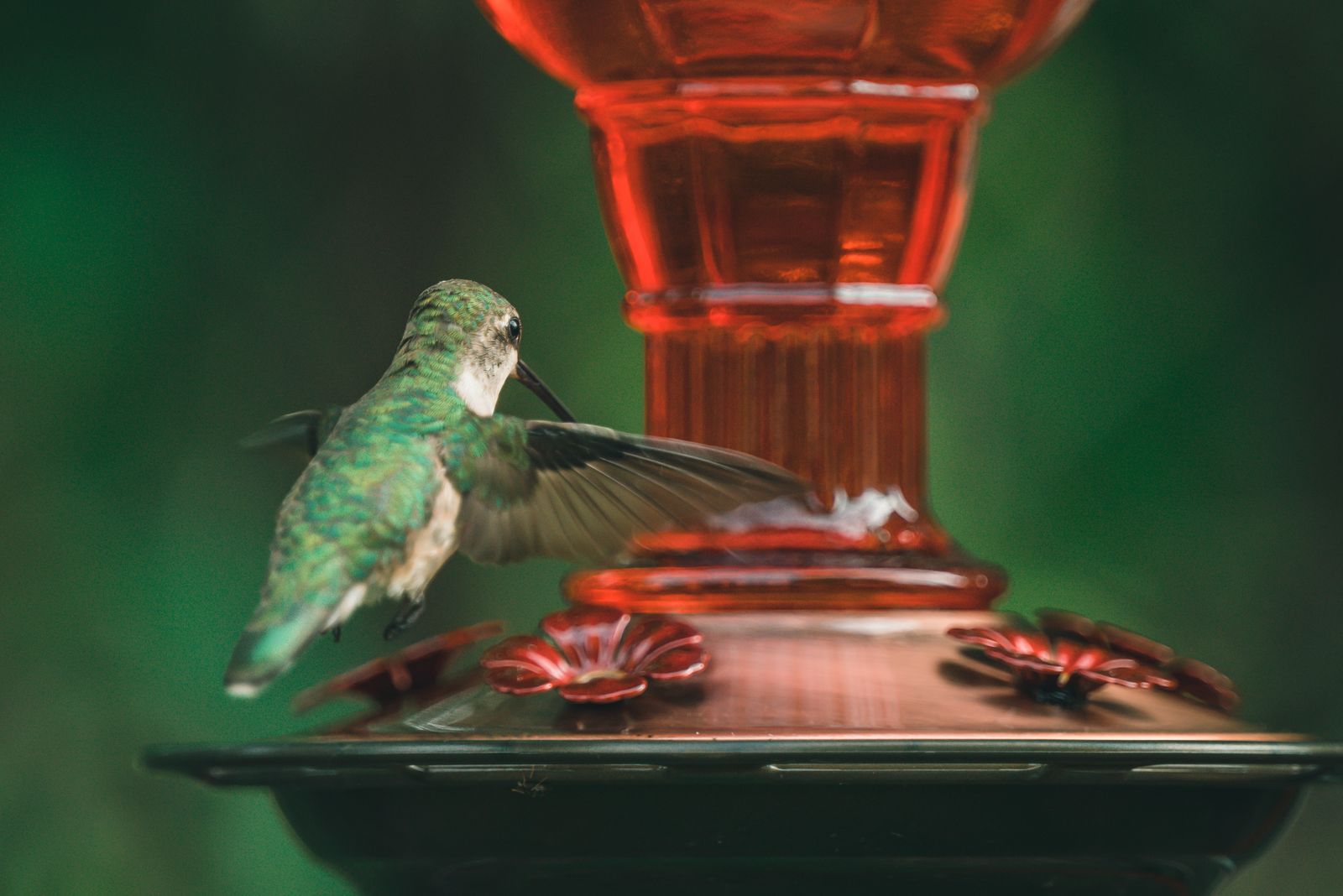
Hanging within arm's reach of the glass gives the best view and the lowest collision speed, but it comes with practical trade-offs worth knowing before you commit.
Refilling happens directly against the house, so any drip lands on the wall or sill rather than on soil. A design with a sealed base and a slender profile that minimizes drips matters more here than anywhere else in the garden. Being able to see the nectar level through the reservoir also helps, since you are less likely to lift a feeder in an awkward spot to check it.
Close placement also means the feeder is within easy reach of window ledges and sills that cats use, so a very close hang should be paired with an honest look at whether anything can sit beside it. And a spot tight against the house may sit in the building's shade for much of the day, which limits how much daylight a solar cap collects and shortens how long it lights at night.
Material choice affects how a close-in feeder handles the knocks that come with a busy, confined position, and the comparison of hand-blown glass and plastic hummingbird feeders covers how each behaves when it gets bumped during refills.
What to do if a bird hits the glass
Most birds that strike a window are stunned rather than injured, and the correct response is quiet and minimal. Leave the bird alone in a sheltered spot away from cats and let it recover on its own. Do not offer food or water, and do not handle it more than necessary to move it out of danger.
If a bird does not recover within a short time, or is visibly injured, contact a licensed wildlife rehabilitator rather than attempting treatment. Then fix the cause: one strike at a given window almost always means more will follow unless the placement or the glass changes.
FAQ
Is hanging a feeder right on the window really safer? Yes. A bird leaving a feeder a few inches from the glass cannot reach a damaging speed. The intuition that closer is more dangerous holds for large open panes with no feeder, not for a feeder mounted against them.
Do hawk silhouette decals work? A single decal does very little. What works is dense coverage across the whole pane, with gaps of only a few inches, applied on the outside surface.
Should the markings go inside or outside? Outside. The reflection a bird reacts to forms on the outer surface of the glass, so interior markings are largely hidden behind it during daylight.
Does a lit feeder increase the risk after dark? Lighting itself is not the problem, but a lit feeder next to brightly lit interior glass creates a confusing zone at dusk. Dimming that room or closing the curtains on that side is a simple fix.
Where to start
Go outside at mid-morning and look at the window from the height a bird would fly. If it shows a clean mirror of the sky and the garden, move the feeder in close or push it well out, and treat the glass if neither is an option. That one look tells you more than any general rule about distance.
Cover photo by David Dibert on Pexels.