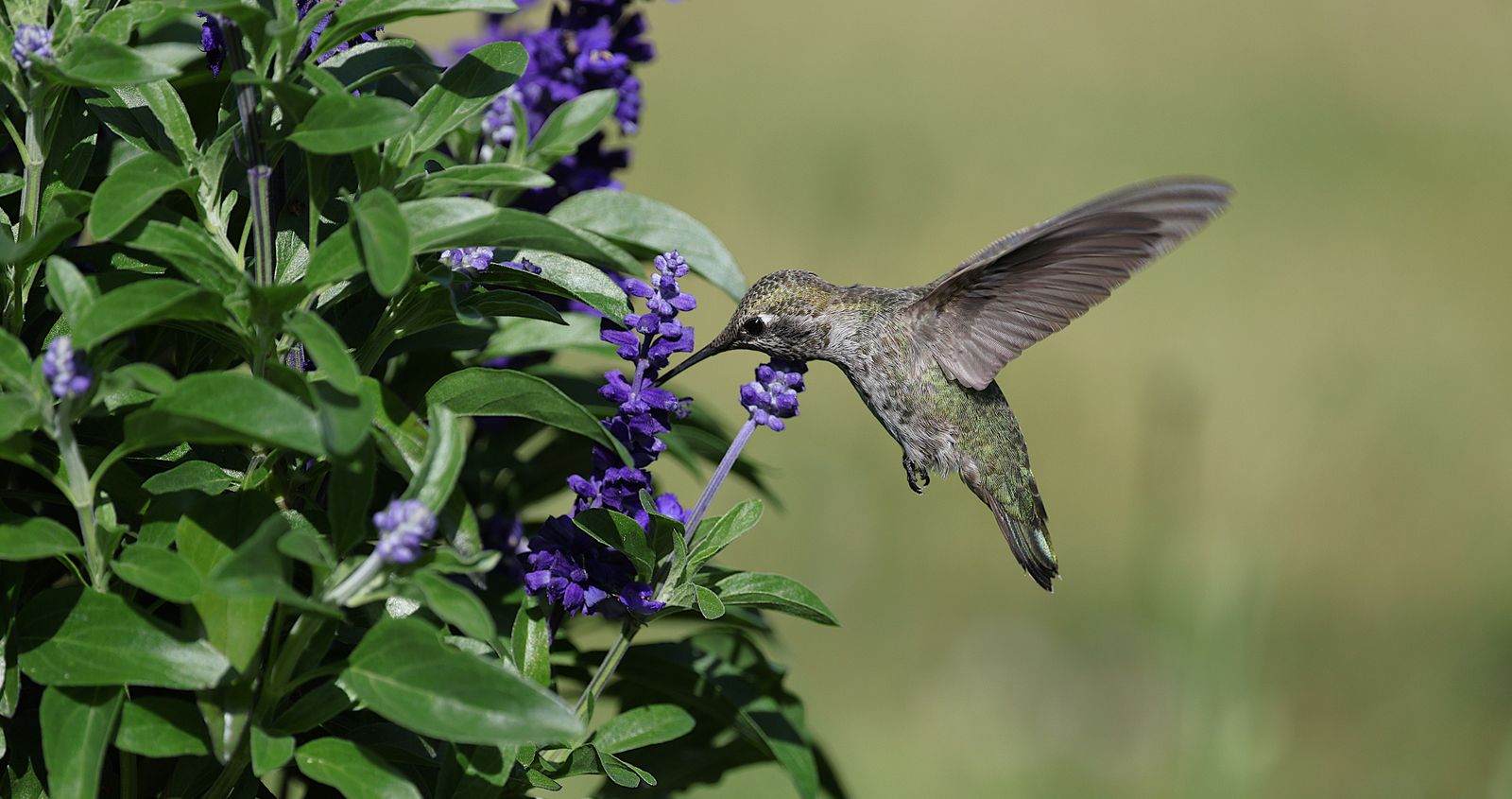
Transforming Your Backyard into an Evening Sanctuary for Hummingbirds and Nature Lovers
An evening sanctuary is less about lighting than about the shift change that happens in every garden around sunset. Hummingbirds take a final heavy feed and disappear into cover, hawk moths come out to work the same flowers, and fireflies, bats, and night-scented plants take over the yard. Build for that handover — dense roosting cover, dusk-blooming nectar, a water sound, and restrained light — and the garden becomes something to sit in rather than something to look at.
What actually happens in a garden at dusk
The last hour of light is the busiest hour of a hummingbird's day, and once you know the sequence you can plan a yard around it.
- 60 to 40 minutes before dark: feeding intensity rises sharply. Hummingbirds are loading up on the calories that have to carry them through a long night with no food.
- 30 to 15 minutes before dark: territorial chasing drops off and birds start making short trips toward cover, often the same shrub every night.
- Full dusk: hummingbirds are settled. Many drop into torpor, a deep energy-saving state with sharply reduced heart rate and body temperature.
- Just after dark: sphinx moths begin working nectar sources, night-scented flowers release their fragrance, and in season fireflies start signaling over open grass.
- Later: bats hunt the insect layer above the garden, usually higher than people notice.
The last feed of the day, and where the birds sleep
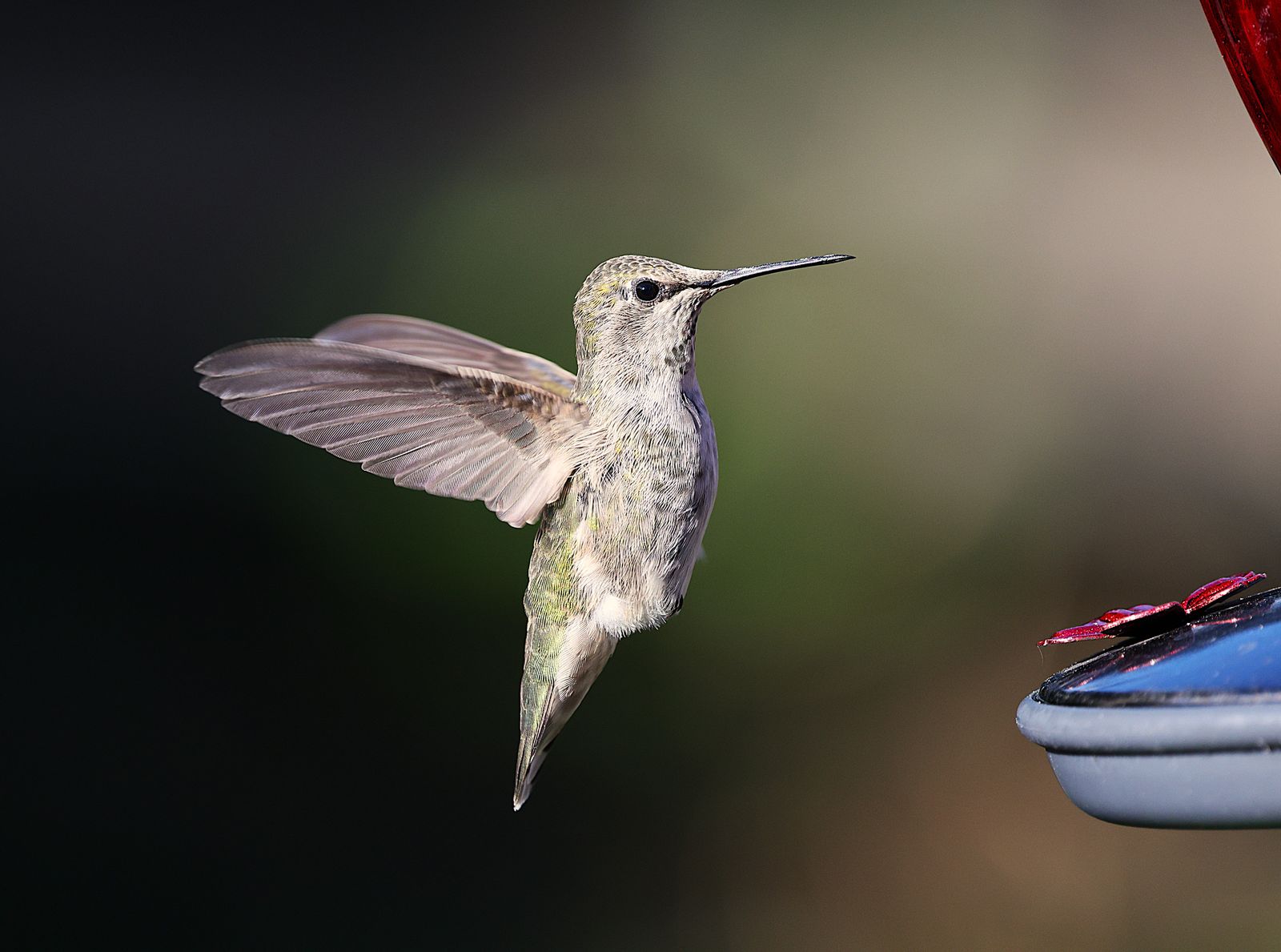
Photo by Veronika Andrews on Pexels
A feeder earns its keep at dusk. Keep it filled and fresh through late afternoon, because that final feed matters more than the mid-morning one, and a spoiled reservoir at 8 p.m. is a wasted opportunity. Standard nectar — one part plain white sugar to four parts water, no red dye, no honey, no brown sugar — changed every few days and more often in heat is all it takes.
Then look for roosting habitat. Hummingbirds sleep in dense twiggy shrubs and the sheltered interior branches of small trees, often within 20 or 30 feet of a dependable food source, and frequently in the same spot night after night. If your yard has nothing thicker than a lawn and a fence, adding one dense shrub does more for the sanctuary than any fixture.
Keep steady light out of that cover. Point any glow at open patio, path, or lawn instead of straight into the shrubs where birds are settling. A feeder whose lights sit inside a glass reservoir helps here, because the effect is a diffuse lantern rather than a beam aimed across the yard.
Hawk moths: the shift change you can watch
Sphinx moths — hawk moths, and in some regions the hummingbird clearwing — hover at flowers with a wingbeat fast enough to blur, feeding through a long proboscis. People routinely mistake them for tiny hummingbirds at dusk, and the confusion is understandable: they occupy the same niche at the opposite end of the day.
They are the easiest wildlife to add to an evening garden because they come to light and to fragrance. A glowing feeder attracts them for viewing, and pale, tubular, night-scented flowers feed them. Watching a hawk moth work a garden at 9 p.m. is the closest thing to extending hummingbird season into the night.
Plants that work the dusk shift
| Plant type | What it does at dusk | Where to put it | |---|---|---| | Pale, tubular night-scented flowers | Release fragrance after sunset and feed hawk moths | Close to seating, where scent collects | | Red and orange tubular day flowers | Fuel the final hummingbird feed before roost | In view of the feeder, in afternoon light | | Dense twiggy shrubs and small evergreens | Roosting cover and shelter from wind | 20 to 30 feet from the feeder, away from light | | Native grasses and open lawn edges | Firefly display space in season | Where you can see it from a seat | | Silver or white foliage | Holds the last light and reads well at low levels | Along path edges and bed fronts |
The pattern is straightforward: day-shift nectar in the sun, night-shift fragrance near where you sit, and thick cover in the darkest corner you have.
Water and sound
Moving water does more work per dollar than any other addition. Hummingbirds bathe in mist and shallow moving water rather than deep baths, and a dripper, mister, or small recirculating basin gives them that while also giving thirsty insects a target that is not your nectar feeder.
Sound also changes how an evening yard feels. A quiet trickle masks street noise and gives the space a center, which matters more after dark when there is less to look at. Keep the basin shallow, keep it clean, and refresh it often in hot weather.
Being a good neighbor to nocturnal wildlife
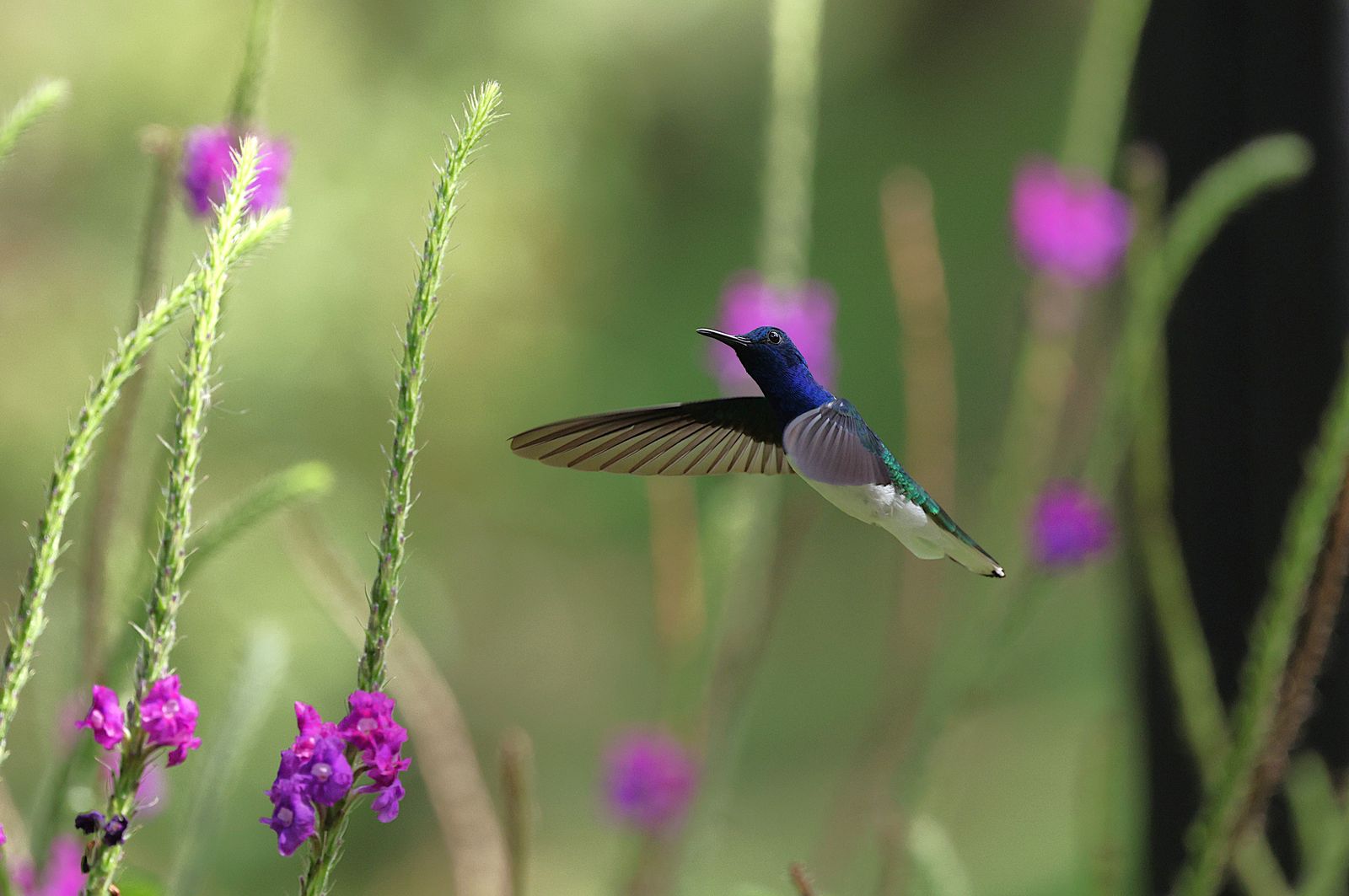
Photo by Veronika Andrews on Pexels
Restraint is the ethic of an evening garden. Light pollution genuinely disrupts moths, fireflies, and nocturnal insects, and fireflies in particular struggle to signal against bright ambient light. A garden lit like a parking lot has fewer of the things you built it to watch.
Practical limits that cost nothing: light only what you need to see, keep fixtures low and aimed downward, choose warmer tones over harsh white for anything left on all night, avoid bright light spilling across a property line, and leave at least one genuinely dark corner. A single glowing focal object plus dim footing light is usually the whole plan — and it is also what makes fireflies and moths visible in the first place.
Building the observation spot
Because the reservoir on this feeder is hand-blown — glass artists shape the curves and patterns at 2,300 degrees, so each piece is unique — it holds light through its whole body rather than throwing a beam, which is exactly what a low-light garden wants. The comparison of hand-blown glass and plastic feeders covers how that difference plays out over seasons outdoors.
FAQ
Will hummingbirds come to the garden after dark? Almost never. They feed until the last usable light and then roost, so plan the hummingbird part of the evening for the final hour before dark and let moths take the night shift.
Do the lights disturb roosting birds? There is no evidence that a small solar garden light disturbs roosting hummingbirds, and they routinely roost in yards with porch lighting. Still, aim any glow at open ground rather than into dense shrubs.
What is the fastest way to make a yard feel like a sanctuary? One dense shrub for cover, one moving water source, and a single focal glow — in that order. Cover and water change what visits; lighting only changes what you can see.
Can I do this on a balcony or small patio? Yes, at smaller scale. A feeder at eye level, a couple of pots of night-scented plants near the chair, a shallow water dish, and one dim light source recreate most of the effect.
A practical next step
Spend one evening outside with the lights off, from twenty minutes before sunset to twenty minutes after, and write down what you see and where. That list is your design brief, and it will be more specific than any general plan. For the daytime foundation, the look at live nectar plants beside glass solar feeders covers which plantings pull the most traffic.
Cover photo by Veronika Andrews on Pexels.