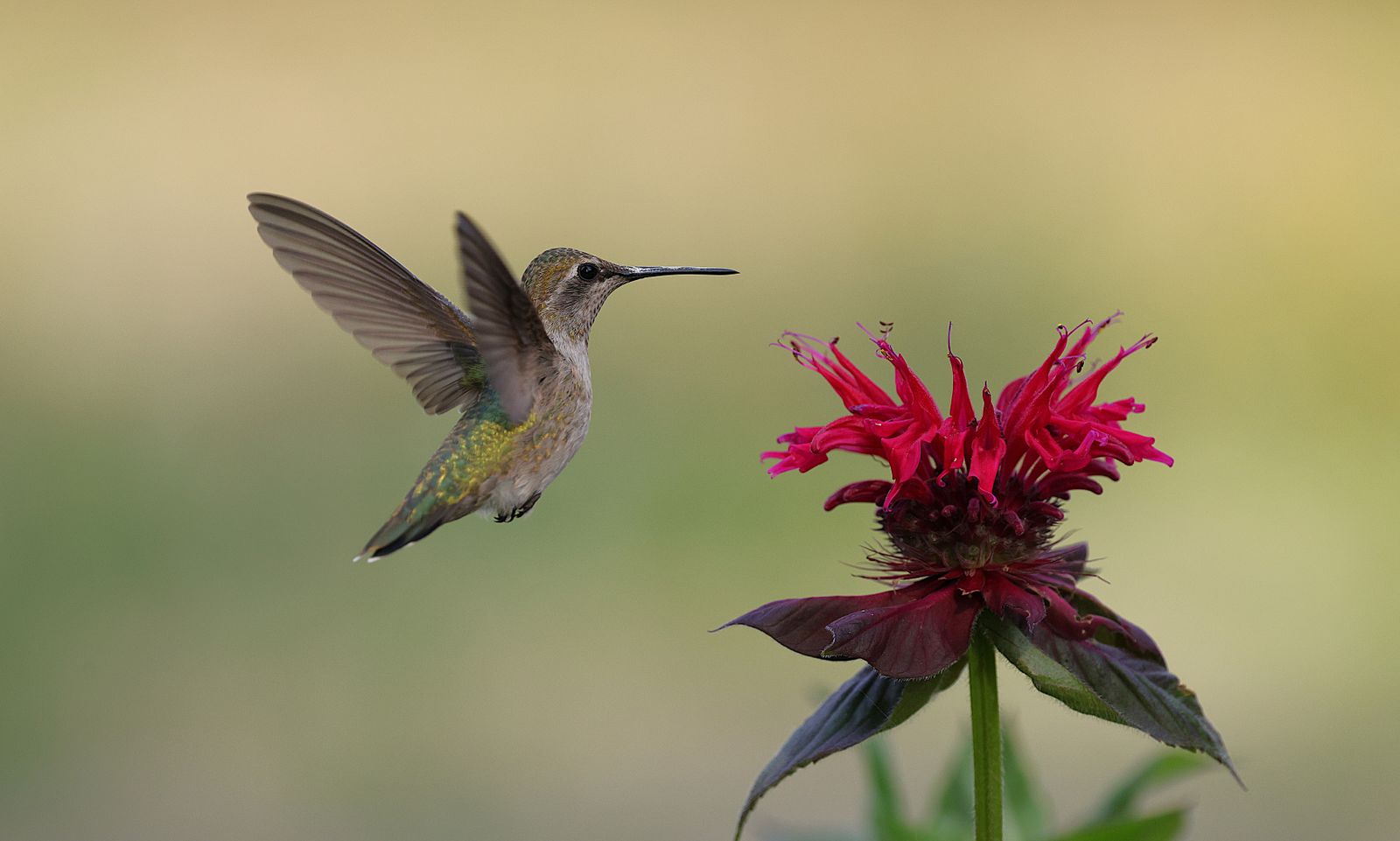
Glowing Garden FAQs: Do Nighttime Solar Lights and RGB Colors Affect Hummingbirds?
An illuminated solar feeder does not scare hummingbirds away, because the light only runs after the birds have already stopped feeding for the day. Hummingbirds are strictly daytime feeders that settle into a roost at dusk and sleep through the night, so the glow that makes a glass reservoir look like a lantern is almost entirely for the people watching it. The color the light cycles through has no effect on whether birds visit, either — daytime flower color and nectar quality do all the real work.
Do hummingbirds feed at night?
In almost all cases, no. Hummingbirds forage from first light until the last usable minutes of dusk, then go quiet. Overnight they often drop into torpor, a deep energy-saving state where heart rate and body temperature fall sharply so the bird can survive a long fast on a tiny body. A bird in torpor is not shopping for nectar; it is conserving every calorie it has.
There are narrow exceptions. Birds sometimes feed in bright moonlight, in the extended dusk of far-northern summers, or under a porch light during migration when the pressure to fatten up is extreme. These are unusual enough that you should never plan a feeder strategy around them. The practical takeaway: the hours when a solar light is on are the hours hummingbirds are least active, which is exactly why the light does not interfere.
Does the light run while hummingbirds are active?
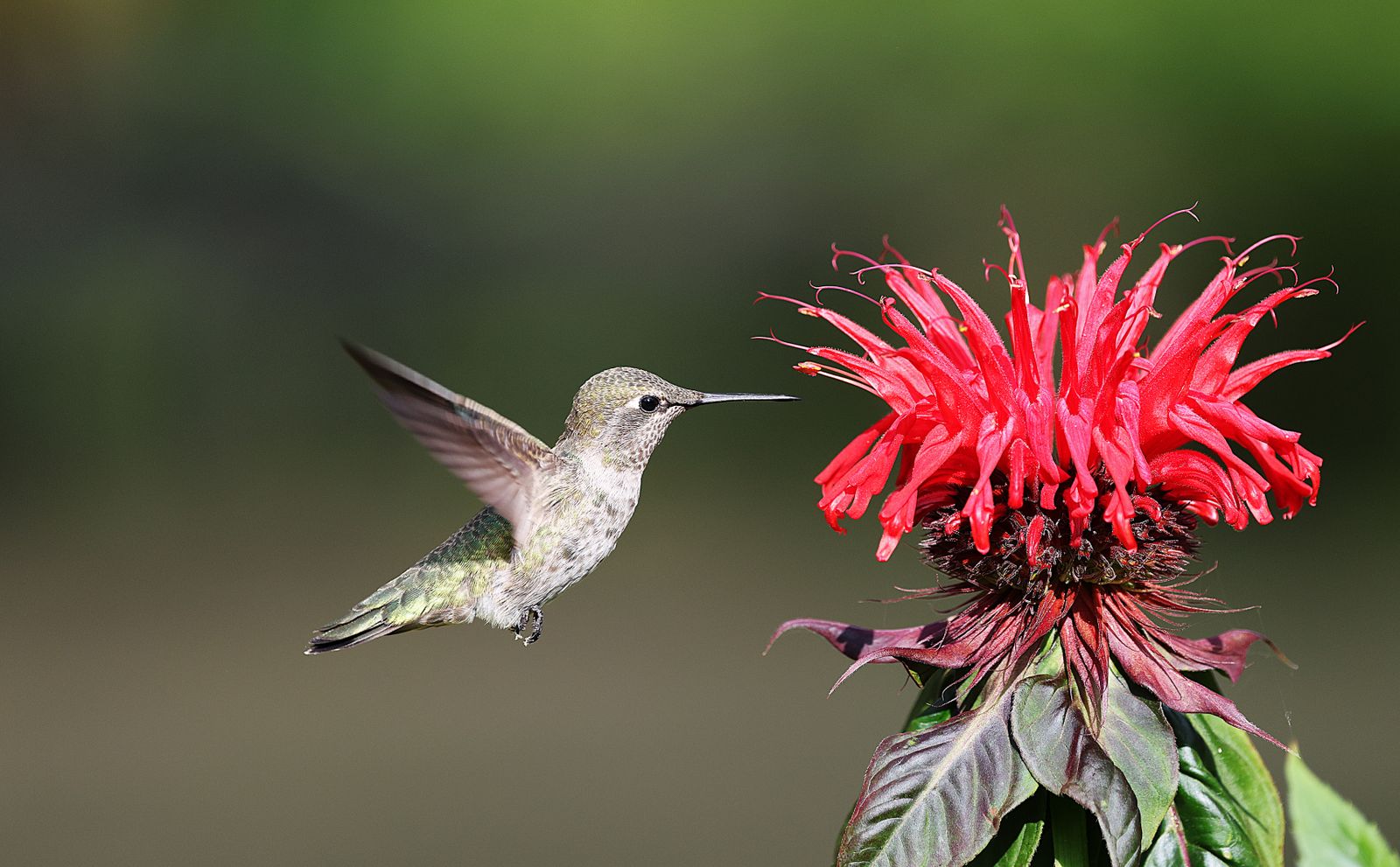
Photo by Veronika Andrews on Pexels
No. A solar feeder charges through the day and its light switches on when the panel stops seeing daylight — the same dusk-to-dark logic every solar garden light uses. On this feeder the RGB lights run for up to 8 hours after a full recharge, which means the illuminated window sits squarely inside the hummingbird's sleep period and typically fades before the earliest morning arrivals.
That timing has a useful side effect. Because the light is off during feeding hours, nothing about the lighting system changes how a bird approaches the feeder. Birds judge a feeder in daylight by the same things they always have: whether it looks like a nectar source, whether the perch and ports feel safe, and whether the nectar tastes right.
Can hummingbirds see the RGB colors, and do the colors attract them?
Hummingbirds have excellent color vision — better than a person's in one specific way, since they can perceive ultraviolet and combination colors that human eyes cannot separate. They genuinely do prefer red and orange, which is why so many nectar plants advertise in those shades.
But color preference is a daytime behavior tied to finding flowers. At night, with the birds roosting, the RGB cycle is decorative. It is not a lure, and it is not a deterrent. The reason to pick one lighting mode over another is how the color looks against your patio, plants, and glass — not bird biology.
| Lighting choice | What it does for you | What it does for the birds | |---|---|---| | A single warm or fixed color | Reads as calm landscape lighting; easiest on the eyes from a seating area | No effect — the birds are roosting | | Slow RGB color cycling | Turns the glass reservoir into a moving focal point | No effect | | Fast or high-contrast modes | Best for parties and short-term display; can feel busy in a small yard | No effect on the birds, though bright light near a roost is worth avoiding | | Light off (feeder in shade all day) | No display until the panel gets sun again | No effect on daytime feeding |
Does a glowing feeder mean you can skip red dye?
Yes, and you should skip red dye regardless. The correct nectar is one part plain white sugar dissolved in four parts water — nothing else. No red dye, no honey, no brown sugar, no raw or unrefined sugar, no artificial sweetener. Honey ferments and grows mold quickly, and dyes offer the bird nothing.
Attraction comes from the feeder and the garden, not the liquid. A hand-blown glass reservoir in colorful translucent glass already reads as a bright object in daylight, and the see-through design means you can watch the nectar level without opening anything. If you want more traffic, add red-flowering plants nearby and keep the nectar fresh — those two moves beat any additive.
Where should a glowing feeder go so it does not disturb roosting wildlife?
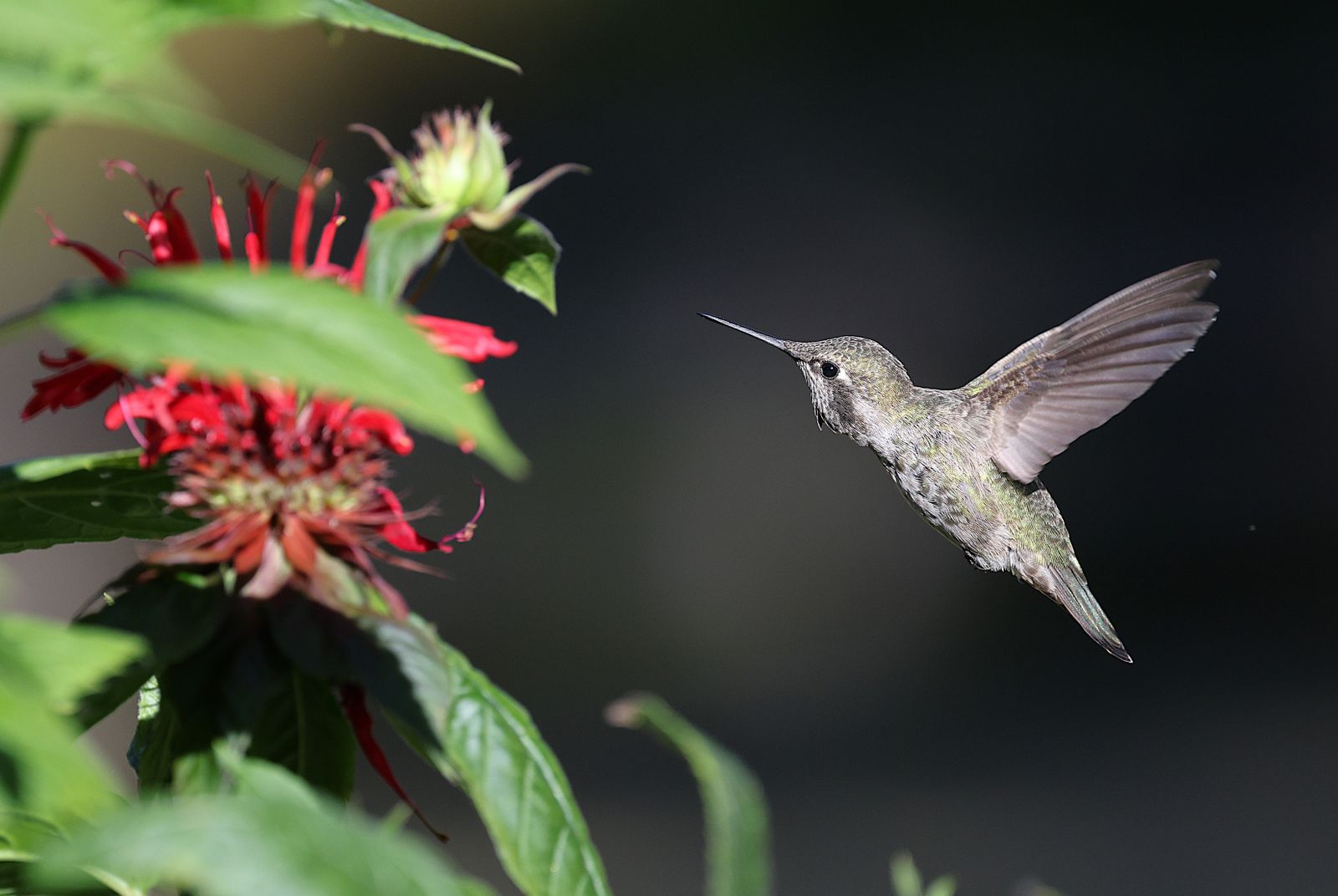
Photo by Veronika Andrews on Pexels
The feeder is not the concern; the direction of spill light is. Hummingbirds roost in dense shrubs and tree cover, often surprisingly close to a reliable food source. Aim for a placement that keeps steady light out of that cover.
Placement always involves a trade-off between sun for the panel and shade for the nectar. If you have to choose, protect the nectar: warm nectar spoils fast, and a shorter light run is a smaller problem than a bad batch of sugar water. If you are still weighing a feeder against a planted approach, the comparison in live nectar plants versus glass solar feeders walks through what each one actually delivers.
What the light does attract: moths and night insects
A lit feeder pulls in night-flying insects, and that is the one real ecological effect worth knowing about. Sphinx moths — sometimes called hawk moths — hover and feed at nectar sources in a way that genuinely looks like a small hummingbird, and a glowing feeder can bring them close enough to watch. Many gardeners consider this a bonus rather than a problem.
The nuisance version is different. Standing sugar water attracts ants and, in warm weather, wasps. Neither is caused by the light, but light concentrates attention on the feeder, so any pest problem becomes more visible. Use a water-only ant moat above the feeder — plain water, never oil — and keep the outside of the base wiped clean so there is no sticky trail to follow.
FAQ
Will the light keep hummingbirds awake or stress them? There is no evidence that a small solar garden light disturbs roosting hummingbirds, and the birds routinely roost in yards with porch and street lighting. The sensible precaution is to point the glow at open space instead of directly into dense shrubs where birds may be sleeping.
Do certain RGB colors attract more hummingbirds than others? Not at night. Red and orange do attract hummingbirds during the day, which is why colorful glass and red flowers help, but the lighting modes run when the birds are asleep. Pick the color you like looking at.
Can I leave the lights on all season? Yes. The system charges each day and runs after dark on its own, so there is nothing to switch on or off seasonally. Shorter winter days and a low sun angle simply mean shorter run times.
Does the light make the nectar spoil faster? No. Heat and sunlight during the day drive spoilage, not the LED at night. In hot weather, change the nectar more often — every day or two during a heat wave — and keep the feeder out of harsh afternoon sun.
A practical next step
Watch your yard at dusk for two or three evenings and note where the last feeding activity happens and where the birds disappear into cover. Hang the feeder between those two areas, in a spot where the solar cap still catches midday sun, and let the glow fall on open ground. If you are also deciding on materials and how a reservoir will hold up outdoors, the breakdown of hand-blown glass compared with plastic feeders covers the durability side of that choice.
Cover photo by Veronika Andrews on Pexels.