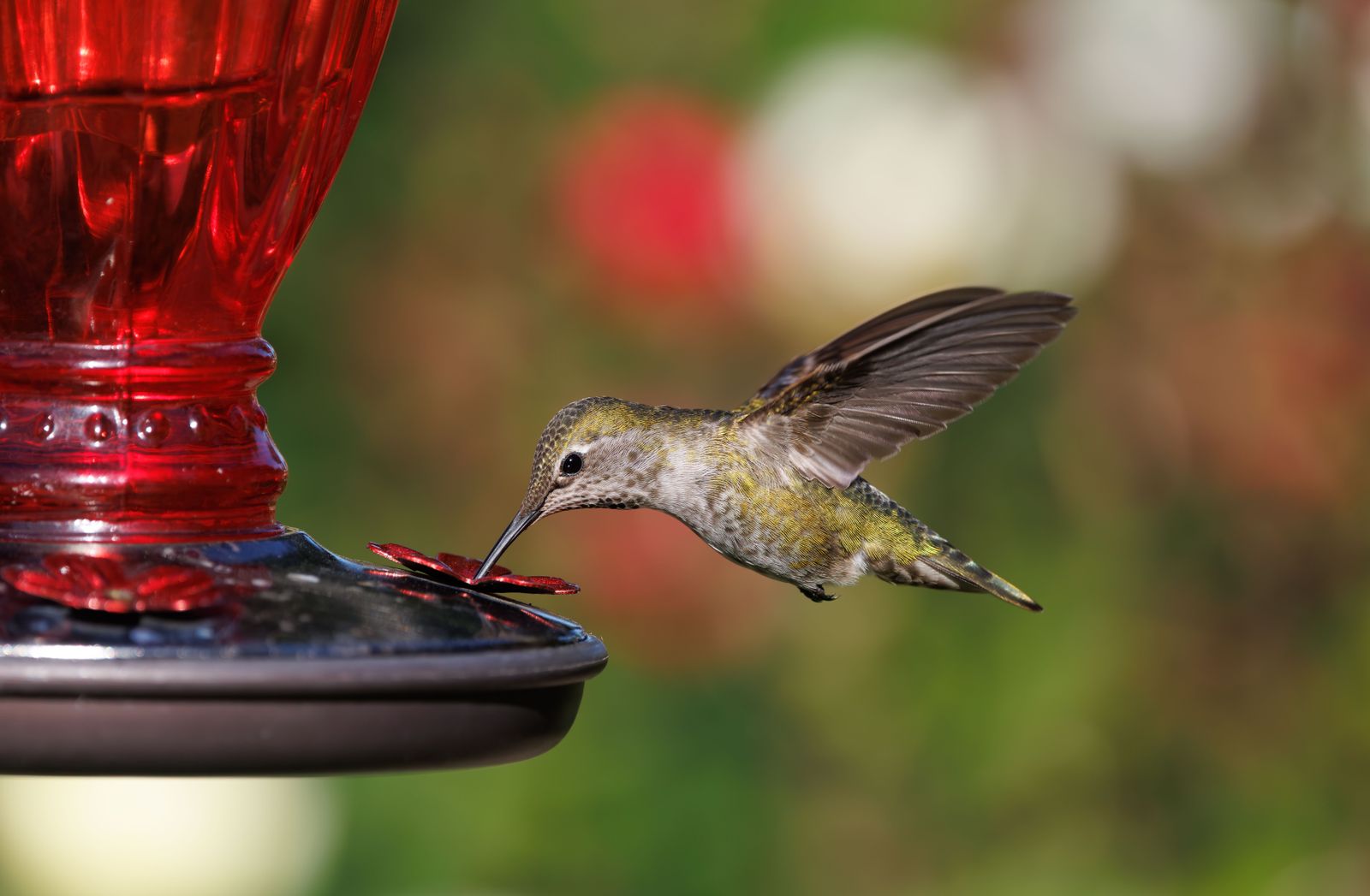
Hummingbird Feeder Setups for Balconies and Small Patios
Hummingbirds will visit a third-floor balcony as readily as a backyard, provided the feeder is visible from open air, mounted so it cannot swing into the railing, and kept scrupulously fresh in the heat that hard surfaces trap. The constraints on a balcony are different from a yard: less space, no ground layer, more wind, more reflected heat, and neighbors below who will notice a drip. Each of those has a straightforward fix.
Can hummingbirds actually find a balcony feeder?
Yes, and height is an advantage rather than an obstacle. Hummingbirds routinely feed well above ground level, and a feeder hanging off a balcony against open sky is often more visible than one tucked into a shrub border at ground level. What matters is that the feeder projects into open air where a passing bird can see it from several directions.
The two things that slow discovery on a balcony are enclosure and clutter. A feeder set back against the wall, behind furniture and a privacy screen, is effectively invisible from outside. Move it to the outer third of the space, where it has sky above and clear approach lines from at least two sides.
Ground-floor patios work too, but they behave more like a small yard: use the railing or a plant stand to get some height, and keep the approach clear of foot traffic.
Where should the feeder mount on a small balcony?
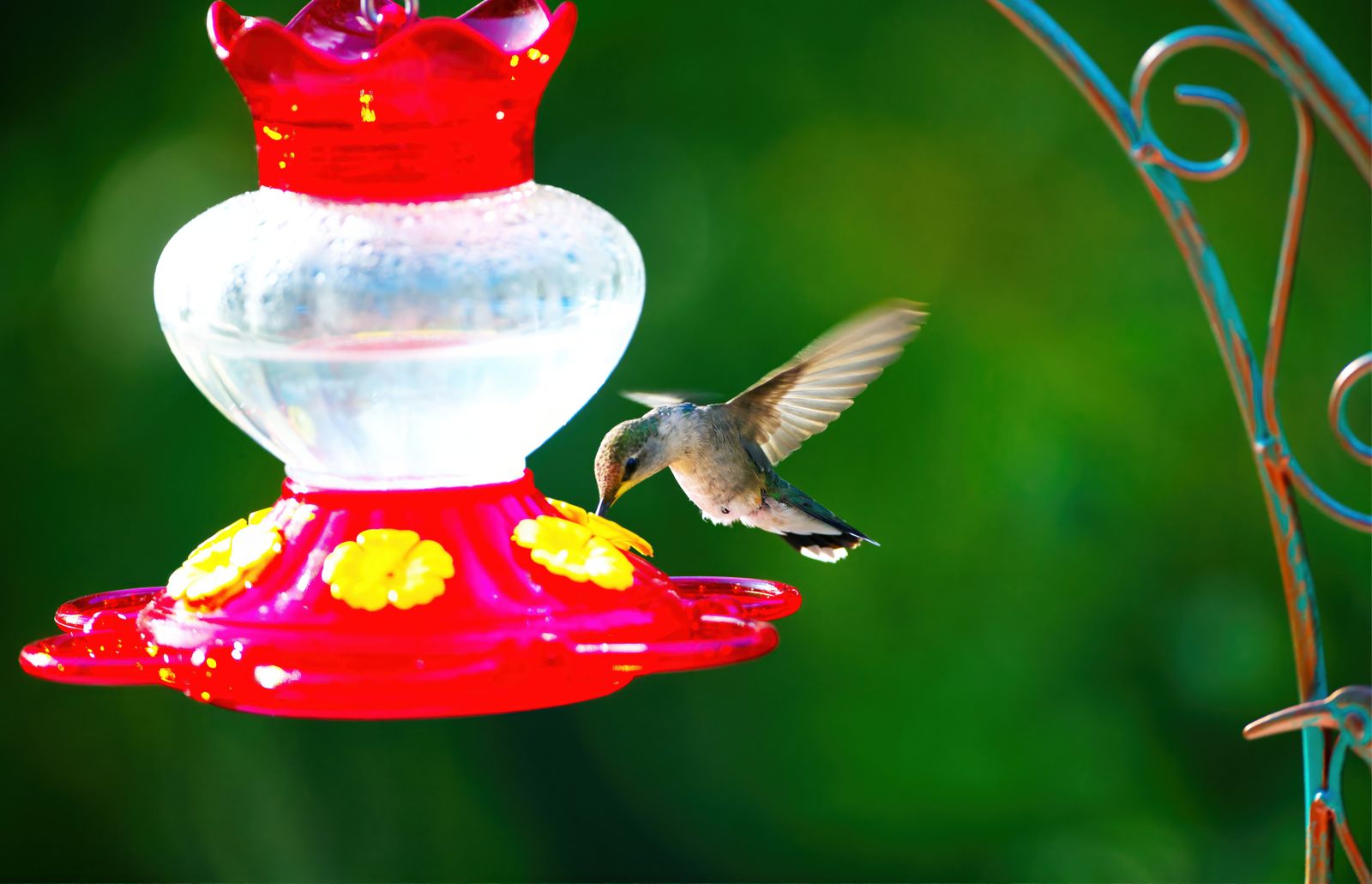
Photo by DANNIEL CORBIT on Pexels
There are four workable mounting points, and the right one depends on your railing type and whether your building allows fixtures.
- Railing-mounted hook or bracket. The most common option. Choose one that clamps rather than screws if you cannot drill, and position the arm so the feeder hangs outside the railing line but still within arm's reach for refills.
- Deck hook over the top rail. Fast and removable. Check that the hook cannot lift free in wind.
- Freestanding shepherd's hook in a weighted planter. Best when you cannot attach anything to the structure. The planter needs real mass — a large pot with damp soil rather than a light plastic one.
- Ceiling or soffit hook, if you have covered overhead structure. Good for stability, but check the sun. A feeder that spends all day under solid cover has nothing to charge a solar cap with, so its lighting will not run after dark.
How do you stop drips onto the balcony below?
Prevent them rather than clean them up. Three habits handle nearly all of it.
Also avoid hanging directly over a neighbor's balcony or a walkway. Position over your own floor space, inside your railing footprint, even if the feeder itself projects slightly outward.
Small-space setup at a glance
| Constraint | Balcony solution | Why it matters | |---|---|---| | No ground to plant in | Two or three tubular-flower containers near the feeder | Holds birds in the space between feeder visits | | Wind at height | Clamp mount plus partial fill | Less swing, less spill, less railing contact | | Reflected heat from concrete and glass | Smaller batches, more frequent changes | Nectar spoils faster on hard, hot surfaces | | No hose or outdoor tap | Refill and rinse indoors at the sink | Makes regular cleaning realistic instead of optional | | Limited sun | Mount where the solar cap sees several hours of direct light | Solar lighting depends on daytime charge | | Building rules on fixtures | Weighted planter with a shepherd's hook | No drilling, fully removable |
What nectar routine works in a hot, hard-surfaced space?
Use the same recipe as anywhere else — one part plain white sugar to four parts water, no red dye, never honey or brown sugar — but shorten the interval. Balconies collect heat from concrete, siding, and glass, and afternoon sun on a west-facing wall can make a small space considerably hotter than a shaded lawn. Nectar in that environment needs replacing more often, and there is no benefit to stretching it.
Small batches make this painless. Mix a modest amount, keep the unused portion in the refrigerator, and refill from that rather than making a fresh batch every time. A see-through glass reservoir helps here: you can read the level and the clarity from inside through the door, and cloudiness is your signal to dump, wash, and refill rather than top up.
If you use an ant moat, fill it with plain water only. Nothing else belongs in a moat.
Does a lit feeder make sense in a small outdoor space?
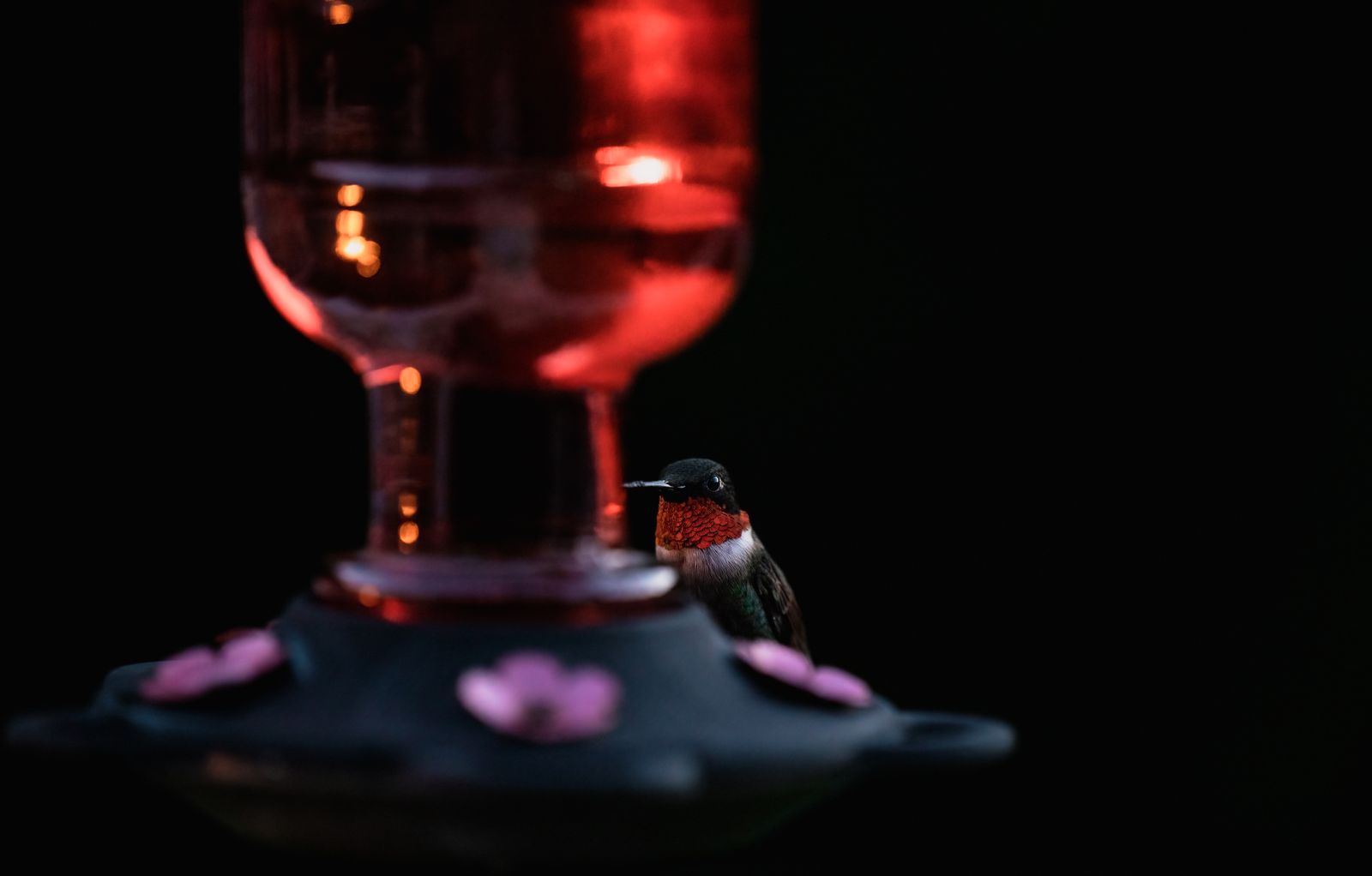
It arguably makes more sense on a balcony than in a large yard, because a small space has one focal point rather than several. A feeder with a hand-blown glass reservoir reads as an ornament during the day and, with RGB lighting and multiple lighting modes running after dark, becomes the light source for the whole space — which on a balcony is often all the evening lighting you need.
Two practical notes. Choose a fixed, low-key color setting if the balcony is your evening sitting space, and save the cycling modes for when you want the feeder to be a display. And keep the light aimed at the feeder rather than into adjacent planting, where birds may be roosting overnight.
For a small space, planted containers and a feeder are complementary rather than competing choices; the comparison of live nectar plants and glass solar feeders covers how each contributes. If you are weighing what will survive being handled, moved, and cleaned in a tight space, the glass and plastic durability comparison is the relevant read.
FAQ
Will a feeder attract pigeons or pests to my balcony? Nectar feeders do not interest seed-eating birds, so the usual balcony nuisance species mostly ignore them. Bees, wasps, and ants are the realistic visitors, and they are managed with careful sealing, prompt cleanup of drips, and a water-only moat.
Do I need a screen or privacy panel removed for birds to come? Not removed, but the feeder should hang outside it. A bird needs a clear line of sight and a clear approach; a panel behind the feeder is fine and can even help by giving a plain backdrop.
How high is too high? There is no practical ceiling. Upper-floor balconies get visitors. What limits a high balcony is wind, not altitude, so mounting stability becomes the main concern.
What if I travel and cannot refresh the nectar? Take the feeder down, wash it, and leave it empty rather than leaving old nectar hanging. Birds adapt quickly when a feeder returns, and spoiled nectar is worse than an absent feeder.
A practical next step
Stand at your balcony door and find the spot with the clearest open-air view and a few hours of direct sun. Mount a clamp-style hook there, hang the feeder with a small batch of one-to-four nectar and a saucer on the floor beneath, and set a recurring reminder to refresh it — shorter in summer than in spring.
Cover photo by Veronika Andrews on Pexels.