Why Aren't Hummingbirds Visiting Your Water Feature? (And How a Glass Feeder Helps)
Hummingbirds ignore water features that are deeper than 1/4 inch, flow too rapidly, or lack bright visual cues. To attract them, adjust water flow to a fine mist or trickle and position a vibrant, light-reflecting hand-blown glass solar feeder within 5 to 10 feet as a visual beacon.
Water Feature Diagnostic Flowchart
- Are hummingbirds flying past your garden high above without stopping? → Yes: Check visual contrast. Is your water feature hidden in deep shade without bright color cues?. No: Proceed to landing behavior check..
- Is the water feature in deep shade without reflective color cues? → Yes: FIX: Position a vibrant hand-blown glass solar feeder 5 to 10 feet away in direct sun to serve as a high-visibility visual magnet.. No: Proceed to surface motion check..
- Are hummingbirds hovering near the water feature but refusing to touch down? → Yes: Check water depth and spray force.. No: Check local nectar sources and surrounding perch cover..
- Is the water depth greater than 1/4 inch or splashing heavily? → Yes: FIX: Add shallow perching river stones or convert pump output to a micro-mister nozzle.. No: FIX: Ensure perching branches exist within 4 to 8 feet for rest between bathing..
Troubleshooting Matrix: Water Feature Diagnostic Guide
Photo by pete weiler on Pexels
| Observed Symptom | Probable Cause | Avian Impact | Recommended Solution |
| --- | --- | --- | --- |
| Birds fly high overhead, never descending to inspect water | Lack of visual contrast; feature buried in dense green shade | Hummingbirds rely on bright red/iridescent visual cues to locate water from high flight paths | Hang a vibrant, hand-blown glass feeder 5–10 ft away in direct line-of-sight to act as a beacon |
| Birds hover near water spray but retreat without touching droplets | Water droplet size is too large or fountain pump pressure is too high | Heavy droplets overpower 3-gram bird bodies, soaking flight feathers dangerously | Install a solar micro-mister nozzle cap or turn down the pump valve to create fine atmospheric fog |
| Birds approach fountain rim but refuse to enter basin | Water basin depth exceeds 1/4 inch at the edges | Hummingbirds cannot swim; deep standing water triggers immediate fear of drowning | Stack flat river stones inside the basin to create shallow 1/8 to 1/4 inch stepping perches |
| Nectar in nearby feeder turns cloudy or tastes watery after two days | Water mister spraying directly into feeder ports | Dilutes 4:1 sugar solution, encouraging rapid bacterial and mold growth | Relocate feeder 5 to 10 feet upwind or outside the direct drift path of the mister |
Identify the exact symptom your garden feature exhibits to find the underlying cause and instant fix.
The Solution: Pair Moving Water with a Hand-Blown Solar Glass Visual Beacon
When water alone fails to grab the attention of passing hummingbirds, bringing in a bright visual anchor turns the tide instantly. The LUJII Solar-Powered Hand-Blown Glass Hummingbird Feeder serves as the perfect partner for any backyard fountain or mister.
- 3,000°F Handcrafted Glass Art: Each reservoir is individually blown by master artisans, creating unique mineral swirls that reflect natural sunlight across the yard like a prismatic jewel.
- 32 fl. oz. Leak-Proof Capacity: A precision-sealed metal base prevents drips while the crystal-clear glass lets you check nectar levels from across the porch.
- Automatic Solar RGB Illumination: Recharges by day to emit an enchanted multi-color ambient glow for up to 8 hours at dusk, extending your garden's beauty into the evening.
- Weatherproof Metal Base: Anti-rust coated base and durable solar cap shield nectar against sun, rain, and snow.
Avian Sensory Science: How Sound and Light Refraction Work Together
Hummingbirds process their environment through specialized sensory channels. While their sense of smell is practically non-existent, their visual system detects wavelengths into the near-ultraviolet spectrum, allowing them to spot structural iridescence from extreme distances.
Moving water produces a distinct acoustic frequency—specifically the high-pitched hiss of micro-droplets colliding with leaves. However, sound alone only alerts birds when they fly directly overhead. By placing a multi-colored hand-blown glass feeder within 5 to 10 feet of a mister, sunlight refracts off both the glass body and the water spray. This creates a dual sensory signal: an ultraviolet visual flash combined with an acoustic water mist signature.
Hummingbird Water & Nectar Zone Blueprint
Refer to this spatial setup blueprint to maintain clear visual corridors and prevent water spray from diluting your nectar solution.
Decision Tree: Modifying Your Fountain vs. Adding a Visual Beacon
- Can your fountain's pump flow rate be adjusted down to a micro-trickle or mist? → Yes: Adjust pump pressure to low. Is the feature visible from 20+ feet away?. No: Attach an aftermarket solar mister kit or add a shallow rock staging tier.
- Is the water feature clearly visible from 20+ feet away in bright sunlight? → Yes: Setup complete! Monitor bird visits over 3-5 days.. No: Hang a handcrafted solar glass feeder 5-10 feet away in direct sunlight to act as the visual magnet.
Your Immediate Action Blueprint
Your decision: Determine whether your water feature needs depth reduction (adding stones), flow adjustment (adding a mister cap), or visual elevation (adding a hand-blown solar glass feeder).
Do this next: Adjust water feature depth to under 1/4 inch or attach a mister kit, then hang a colorful handcrafted glass solar feeder 6 feet away within direct sightlines of passing birds.
Related resource: Downloadable Sanctuary Sightline & Elevation Blueprint (PDF)Pair your garden fountain with the LUJII Hand-Blown Solar Glass Hummingbird Feeder to serve as a high-visibility visual beacon during the day and an enchanted RGB garden accent at dusk.
Take these concrete actions to transform your silent fountain into an active hummingbird retreat.
Essential Rules for Water & Visual Anchor Alignment
- Hummingbirds cannot bathe in water deeper than 1/4 inch; use flat river rocks to build shallow perches.
- Fine mist and gentle trickles attract hummingbirds far better than heavy splashing fountain jets.
- Bright red, orange, and iridescent blown-glass feeders serve as visual anchors to draw birds into shaded water features.
- Maintain a strict 5 to 10 foot clearance between water misters and nectar feeders to prevent sugar water dilution.
- Ensure protective foliage perches exist within 4 to 8 feet of the water feature for preening after baths.
Selecting the Right Layout for Your Backyard Space
Hummingbirds require moving water that is under 1/4 inch deep (or mist) paired with high-contrast red/iridescent visual cues. If modifying your existing fountain's flow depth is impossible, adding a bright hand-blown glass solar feeder within sightline acts as the essential visual anchor.
Best choice for
- Add river stones to fill depth and hang a LUJII solar glass feeder 6 feet away in direct sun. — Solves both the drowning hazard and the visibility gap without requiring fountain replacement.
- Add a small solar mister pump and position a colorful handcrafted glass feeder high in the sunny entryway. — The solar glass feeder draws passing birds down from high flight corridors into the cool courtyard.
- Placing nectar feeders directly beneath active water spray where drifting mist enters nectar ports.
- Leaving standing water basins deeper than 1/2 inch without perching stones or mist nozzles.
- Drip irrigation mist line paired with hanging solar glass art feeder — Provides constant micro-droplets across foliage where hummingbirds love to perform leaf-rubbing baths.
Featured Visual Beacon: LUJII Hand-Blown Solar Glass Feeder
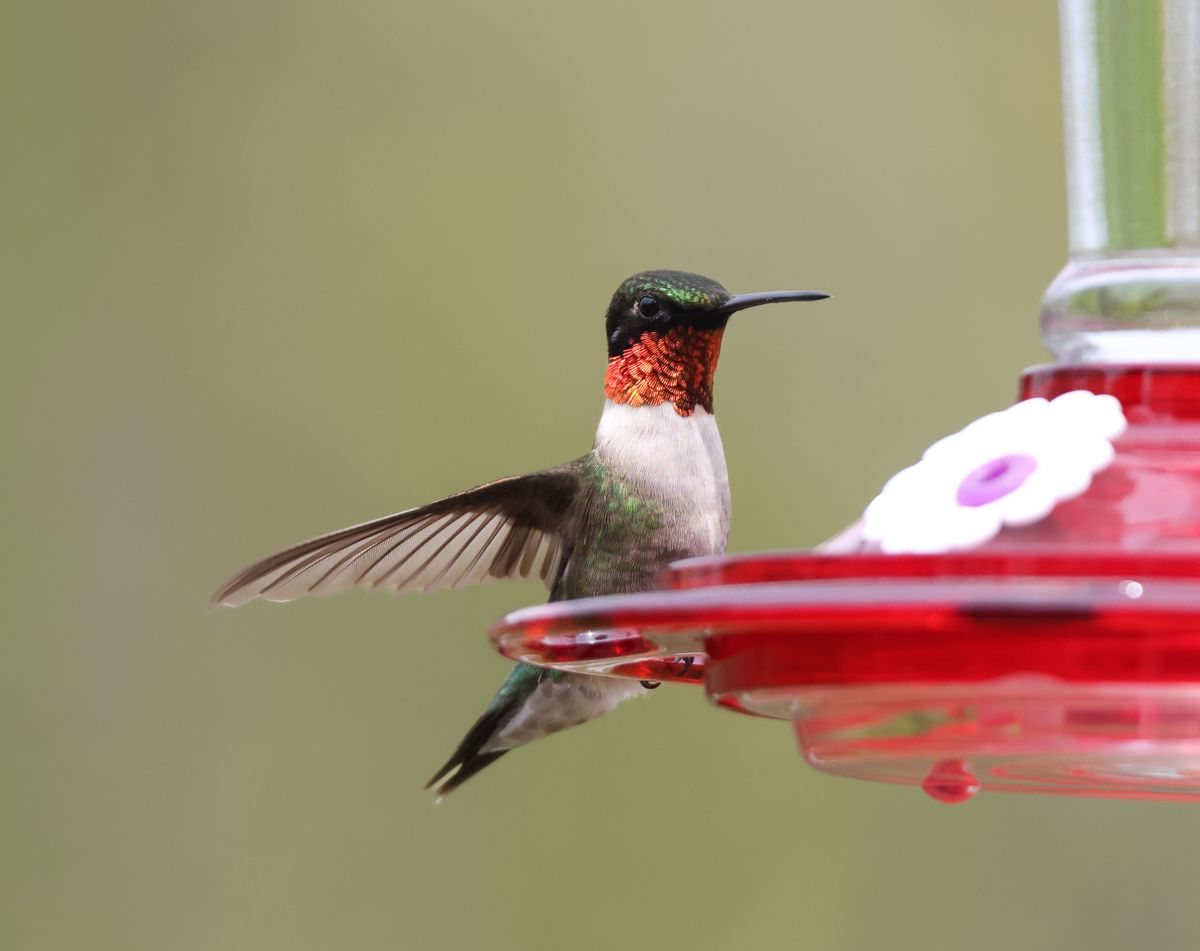
Photo by Catherine Dempsey on Pexels
Designed specifically for backyard habitat enthusiasts, this feeder combines high-art aesthetics with reliable field performance.
Water Feature Setup Comparison: Traditional vs. Optimized Sightline
| Setup Parameter | Traditional Pedestal Birdbath | Deep Tiered Fountain | Optimized Mister + Solar Glass Beacon |
| --- | --- | --- | --- |
| Water Depth | 1 to 3 inches (Too deep) | 2 to 6 inches (Drowning hazard) | 1/8 to 1/4 inch or micro-mist (Ideal) |
| Long-Distance Visibility | Low (Blends into lawn/patio) | Moderate (Sound only) | High (Artisan glass refracts light 30+ ft) |
| Bathing Suitability | Poor (Birds hover but won't land) | Poor (Splashing overpowers birds) | Excellent (Fine mist for flying leaf-baths) |
| Dusk & Evening Decor | None (Dark basin) | Requires main line wiring | Automatic solar RGB lighting (8 hours) |
Compare how traditional water features stack up against an optimized mist-and-glass-beacon setup.
Step-by-Step Guide: Aligning Nectar Feeders with Water Features
Follow these five steps to tune your backyard setup for maximum hummingbird attraction.
5 Common Mistakes That Repel Hummingbirds from Garden Fountains
Avoid these frequent errors to keep your backyard humming with activity.
Explore More Sanctuary Design Guides
Expand your sanctuary knowledge with these specialized guides:
- Designing a Whimsical Backyard Sanctuary: Landscaping for Bird Lovers
- How to Clean and Maintain Your Hand-Blown Solar Hummingbird Feeder
- Hand-Blown Glass vs. Plastic Hummingbird Feeders: Why Artisan Craftsmanship Wins
Frequently Asked Questions
Answers to common questions about combining water features with hand-blown solar glass feeders.
Sanctuary Optimization Checklist
Your decision: Choose whether to adjust your current fountain mechanics or hang a high-visibility solar glass feeder as a visual beacon.
Do this next: Reduce water depth to under 1/4 inch using river stones, install a fine mister cap, and position a handcrafted solar glass feeder 6 feet away in direct sunlight.
Related resource: Downloadable Sanctuary Sightline & Elevation Blueprint (PDF)Pair your garden water feature with the LUJII Hand-Blown Solar Glass Hummingbird Feeder to serve as a high-visibility visual magnet by day and an illuminated RGB garden accent by night.
Ready to finalize your garden setup? Review these quick checklist steps.
Cover photo by pete weiler on Pexels.