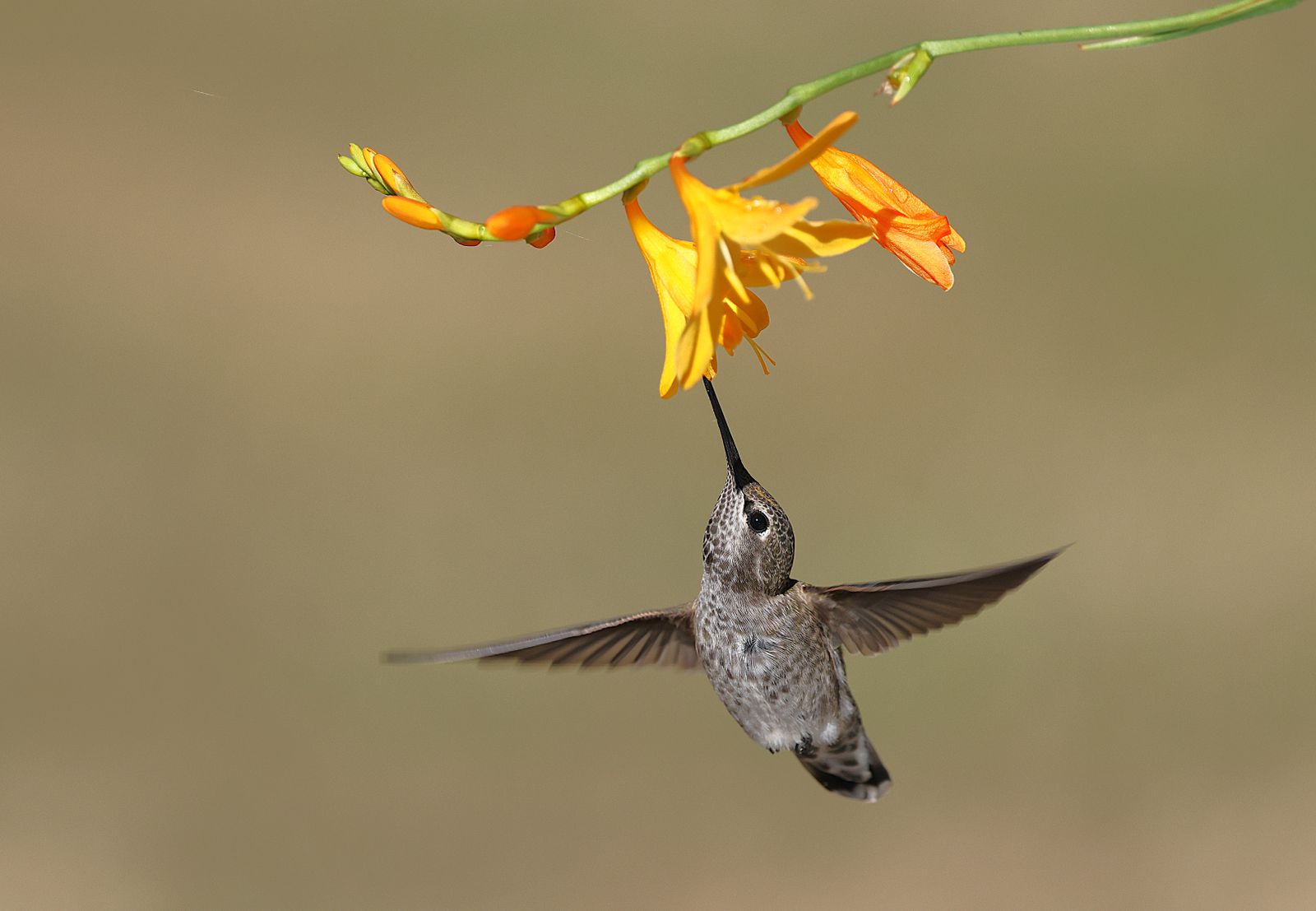
Artisanal Glass in the Garden: Frequently Asked Questions on Crafts, Lighting, and Wildlife
Artisan glass garden decor raises the same handful of questions over and over: how it is made, whether it survives outdoors, how solar lighting behaves inside it, and whether any of it is safe for the birds and insects it attracts. The short answers are that hand-blown glass is shaped by a person at roughly 2,300 degrees and is therefore never identical piece to piece, that glass itself does not weather or fade, that solar run time depends almost entirely on how much sun the panel got that day, and that a glass feeder is safe for wildlife as long as the nectar is plain sugar water and the feeder is cleaned on schedule.
What follows is a grouped set of direct answers.
Questions about the craft
What does hand-blown actually mean?
It means the glass was inflated with human breath through a hollow steel pipe and shaped with hand tools while still soft, rather than pressed or injected into a closed mold by machine. A mold produces copies. Hand-blowing produces related but non-identical objects, because each one is formed during the few minutes the glass stays workable.
Why is 2,300 degrees the number that keeps coming up?
Glass has no single melting point. It softens gradually across a temperature range, and around 2,300 degrees it behaves like thick honey — hot enough to gather and inflate, viscous enough to hold a shape. The glass artists who shape the reservoir on the Solar Hummingbird Feeder work in that window, returning the piece to a reheating chamber repeatedly to keep it there.
Why do two pieces of the same design look different?
Because the process cannot be repeated exactly. Expect slight asymmetry, color that pools thicker near the base and stretches thinner at the widest point, faint spiral marks from inflation, and the occasional tiny internal bubble. These are the signature of hand work, not defects, and they do not affect how the piece holds liquid.
Is the color painted on?
No. Color in this kind of glass comes from metal oxides melted into the material, usually applied as colored rods or crushed frit that gets picked up onto the hot body and melted flush. Because the color is inside the glass rather than on it, it cannot chip, peel, chalk, or fade — which is the opposite of how painted outdoor decor behaves after two summers.
What is annealing, and why should a buyer care?
Annealing is the slow controlled cooling a finished piece goes through in an oven, typically starting near 900 to 1,000 degrees and stepping down over hours. It relieves internal stress. Glass cooled too fast holds that stress and can crack later from nothing more than a temperature swing. Properly annealed glass is stable, which is why annealing quietly determines whether a piece survives outdoors.
Questions about solar lighting
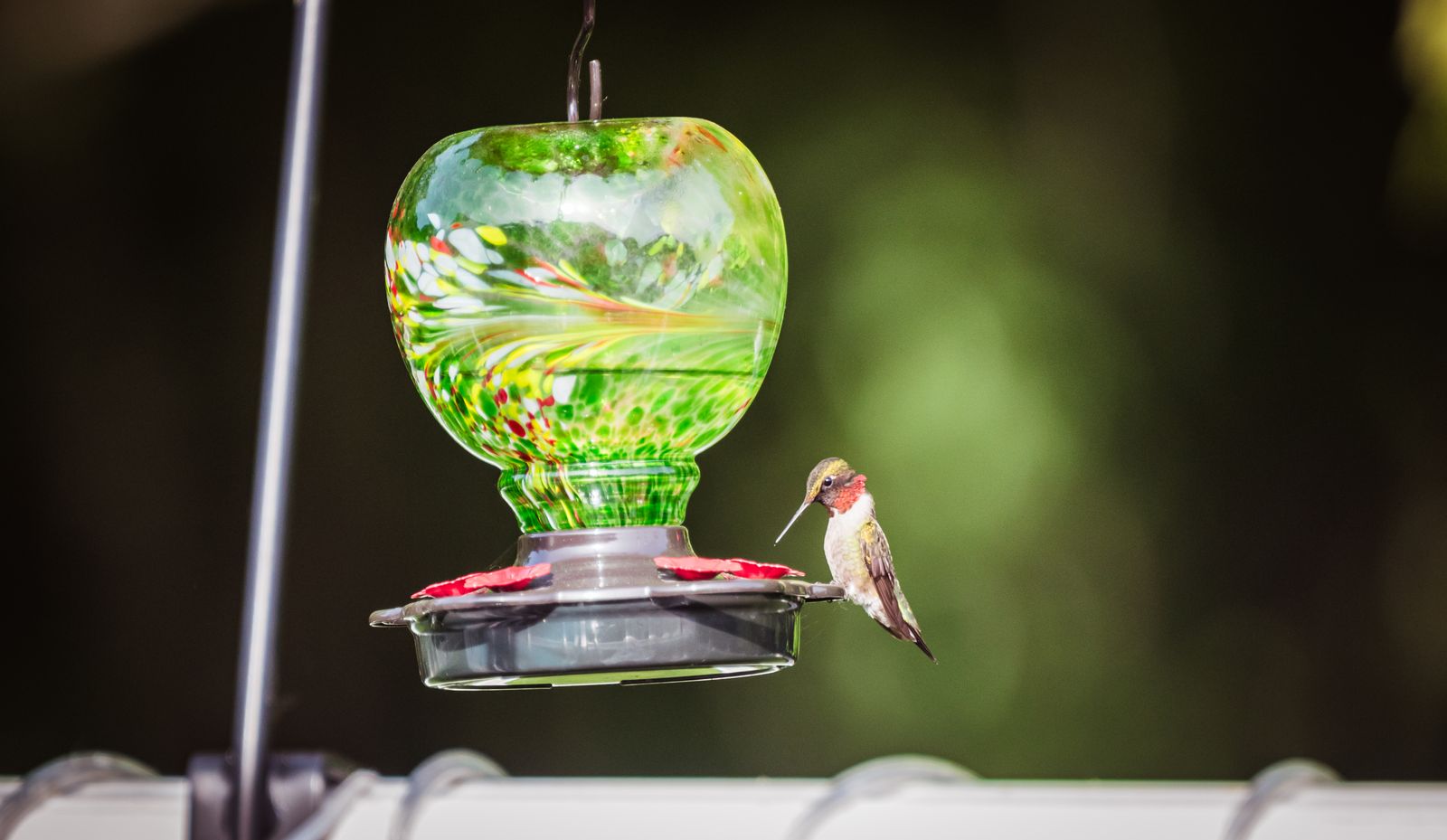
How does the lighting work without wiring?
A panel converts daylight into electricity, an internal cell stores it, a light sensor detects dusk and switches the circuit on, and the stored charge runs the lighting until it is spent or dawn arrives. It is a closed daily loop with no wiring and nothing to plug in.
How long should it stay lit?
The Solar Hummingbird Feeder lights up automatically at night for up to 8 hours after a full recharge. Treat any figure like that as a good-conditions number. Four things move it:
- Cloud cover, which can cut collection dramatically
- Day length, shorter in fall and winter
- Sun angle, since low winter sun strikes a horizontal panel obliquely
- Panel cleanliness, because pollen and dust scatter light before it reaches the cell
Why does glass make solar light look better than plastic?
Uneven wall thickness. Hand-blown glass varies in thickness across the body, so each area bends light at a slightly different angle. One small source inside becomes shifting ribbons and pools of color, some landing on nearby surfaces. Molded plastic has uniform walls, which produce an even but visually flat glow, and it clouds and yellows with sun exposure over several seasons.
Does the lighting mode change run time?
Yes, in practice. This feeder offers RGB lights with multiple lighting mode options, and steady single-color modes generally stretch further into the evening than active color-changing ones. If you want the longest glow, favor a steady mode.
Where should a lit glass piece be placed?
| Placement factor | Aim for | Reason | |---|---|---| | Midday sun on the panel | Several unobstructed hours | Sets the evening run time | | Overhead clearance | Open sky above the cap | Eaves and dense canopy cut collection | | Backdrop | A darker hedge, fence, or wall | Contrast makes color read stronger | | Nearby lighting | Away from porch and path lights | Ambient light can delay the dusk sensor | | Viewing line | Visible from a window or patio | The effect is only worth producing if it is seen |
Questions about wildlife
Is a glass feeder safe for hummingbirds?
Yes. Glass is chemically inert, does not absorb odors or detergent, and stays smooth under repeated brushing, so it is arguably the easiest material to keep genuinely clean. Safety comes down to what goes inside and how often it is washed, not the material.
What should go in the feeder?
One part plain white granulated sugar to four parts water, stirred until dissolved and cooled to room temperature. Leave out red dye, which is unnecessary. Leave out honey, which ferments fast and promotes fungal growth harmful to hummingbirds. Leave out brown sugar, raw sugar, and molasses. Leave out artificial sweeteners, which provide none of the calories the birds came for.
How often does it need cleaning?
Change the nectar and wash the feeder every day or two when daytime highs run above 80 degrees, and every three to five days in mild weather. Use hot tap water and a soft bottle brush, clean the ports individually with a small brush or swab, and for mold soak in one part white vinegar to four parts water and rinse thoroughly. Avoid abrasive pads, and never pour boiling water into cold glass.
Does color on the glass attract birds?
Yes. Hummingbirds locate food by sight and respond strongly to warm reds, oranges, and pinks. That is why the color belongs on the feeder rather than in the nectar. Live blooms nearby reinforce the signal, which is the subject of live nectar plants versus glass solar feeders.
How do you deal with ants without chemicals?
Hang an ant moat above the feeder and fill it with plain water only. Ants will not cross standing water. Never use oil, petroleum jelly, or insecticide as a barrier, because those coatings transfer to feathers and can ruin a bird's insulation and flight. Wiping dried nectar off the outside of the feeder at every refill removes the trail ants follow in the first place.
Questions about durability and care
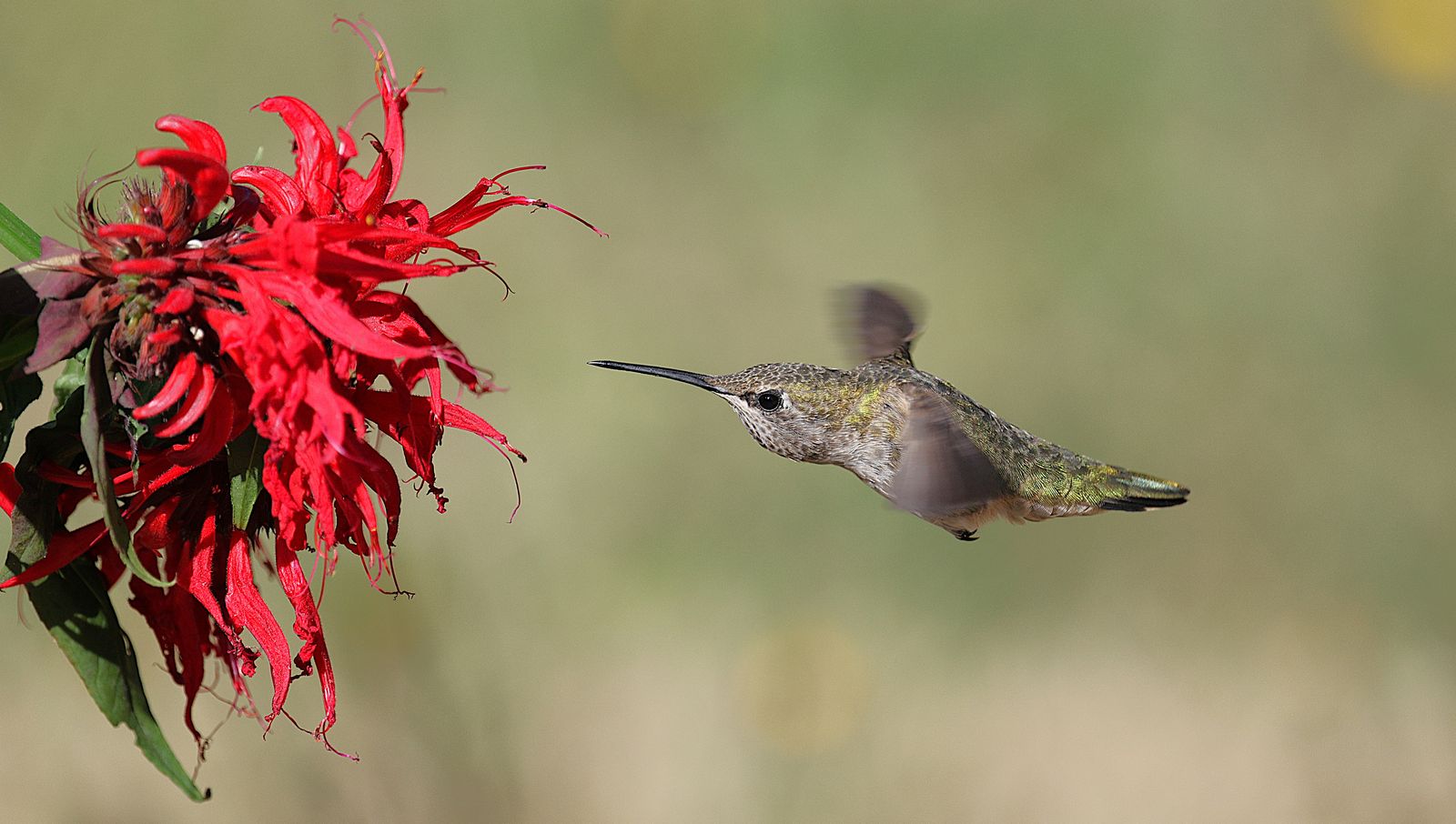
Photo by Veronika Andrews on Pexels
Does glass survive outdoors year-round?
Glass does not weather, fade, or degrade in sun or rain, and the plastic solar cap on this feeder is built to shield the nectar against sunlight, rain, and snow. The two real risks are impact and freezing liquid. Empty, wash, dry, and store the feeder before hard freezes, since liquid expands as it freezes and can crack any full container.
How much weight does a full feeder put on the hook?
A 32 fluid ounce fill of nectar is roughly two pounds before you count the glass. Hang it from a firmly set shepherd's hook, a bracket screwed into solid framing, or a substantial branch near the trunk — not a thin decorative hook or a slender branch tip. This is the most common cause of broken glass, and it has nothing to do with the glass itself.
Is glass more fragile than plastic overall?
It fails differently rather than more often. Plastic fails gradually and predictably through scratching, yellowing, and stiffening, and most owners replace it every few seasons. Glass does not degrade at all, but a single hard knock ends it. The material comparison is laid out further in hand-blown glass versus plastic hummingbird feeders.
Quick answers at a glance
- Hand-blown means inflated by breath and shaped by hand, so every piece differs
- Color is melted into the glass and cannot fade or peel
- Run time depends on the previous day's sun, not on the time of night
- Wipe the solar panel every time you change the nectar
- One part plain white sugar to four parts water, nothing else
- Water only in the ant moat, never oil or insecticide
- Empty and store before a hard freeze
A practical next step
Pick the spot before you buy anything else. Look for unobstructed midday sun on the cap, solid support that can carry a full reservoir, easy reach for cleaning every couple of days, and a clear view from indoors. A location that satisfies all four turns artisan glass from a decorative purchase into something you use and enjoy daily.
Cover photo by Veronika Andrews on Pexels.