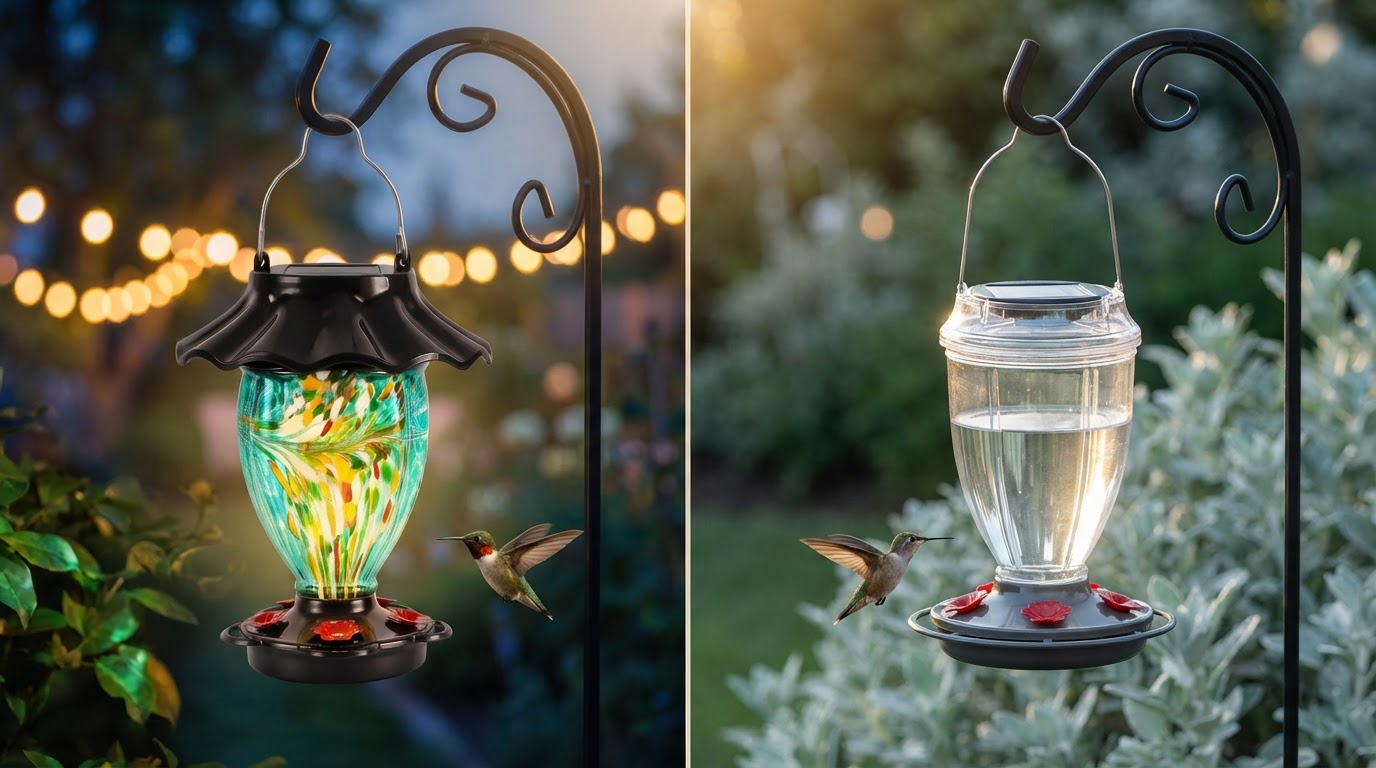
Glass vs Plastic Hummingbird Feeders: Which Is Best?
Glass vs Plastic Hummingbird Feeders: Which Is Best?
Choosing the right hummingbird feeder material directly affects how easily you can maintain nectar and how attractive your garden looks. To learn more about overall garden setup, read [the main guide].
Comparing Glass and Plastic Feeder Materials
While all-plastic feeders are common, premium glass feeders offer clear advantages in durability, weight, and visual presentation.
Aesthetics and Craftsmanship
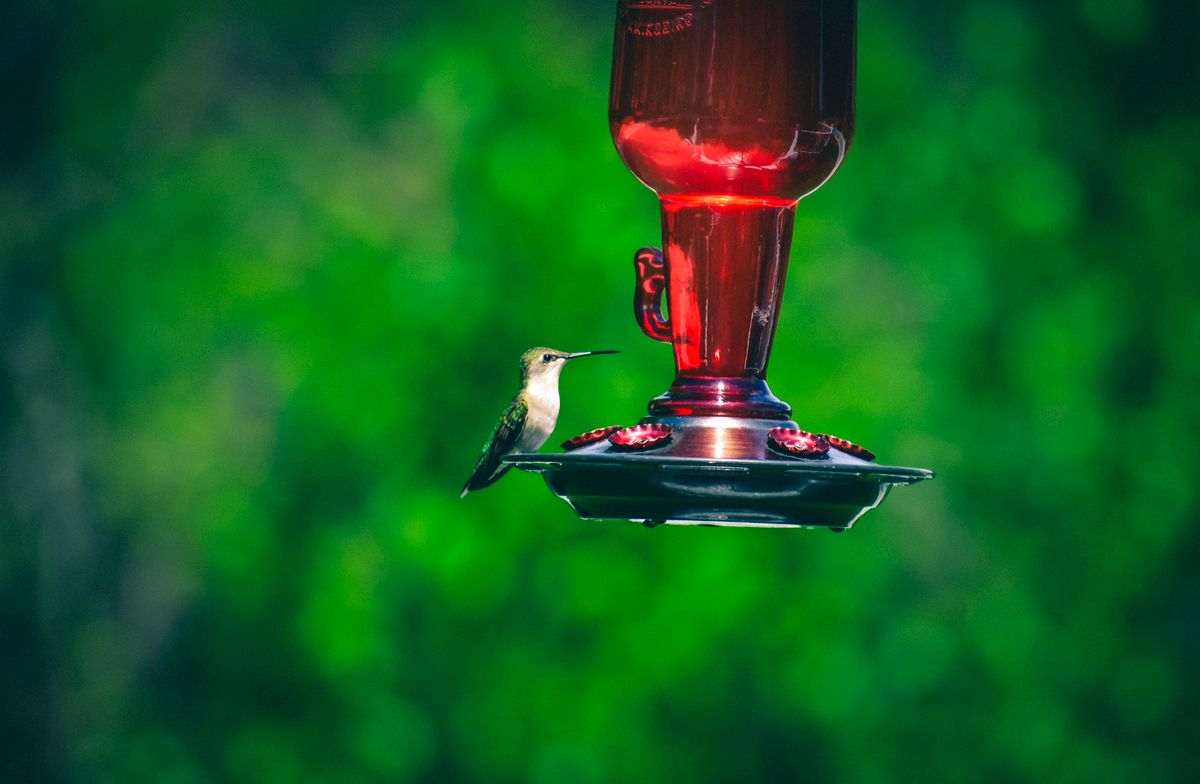
- Plastic Feeders: Plastic often clouds or discolors over time when exposed to sunlight.
- Glass Feeders: Hand-blown glass art created at 2,300 degrees offers colorful, translucent glass patterns. Each piece functions as a unique garden sculpture while letting you monitor nectar levels with ease.
Durability and Weather Resistance
Plastic feeders can warp under high temperatures or crack during cold snaps. High-quality glass feeder systems incorporate a plastic solar cap designed to shield against sunlight, rain, and snow, combined with an anti-rust coated metal base that holds firm against harsh weather.
Capacity and Leak Prevention
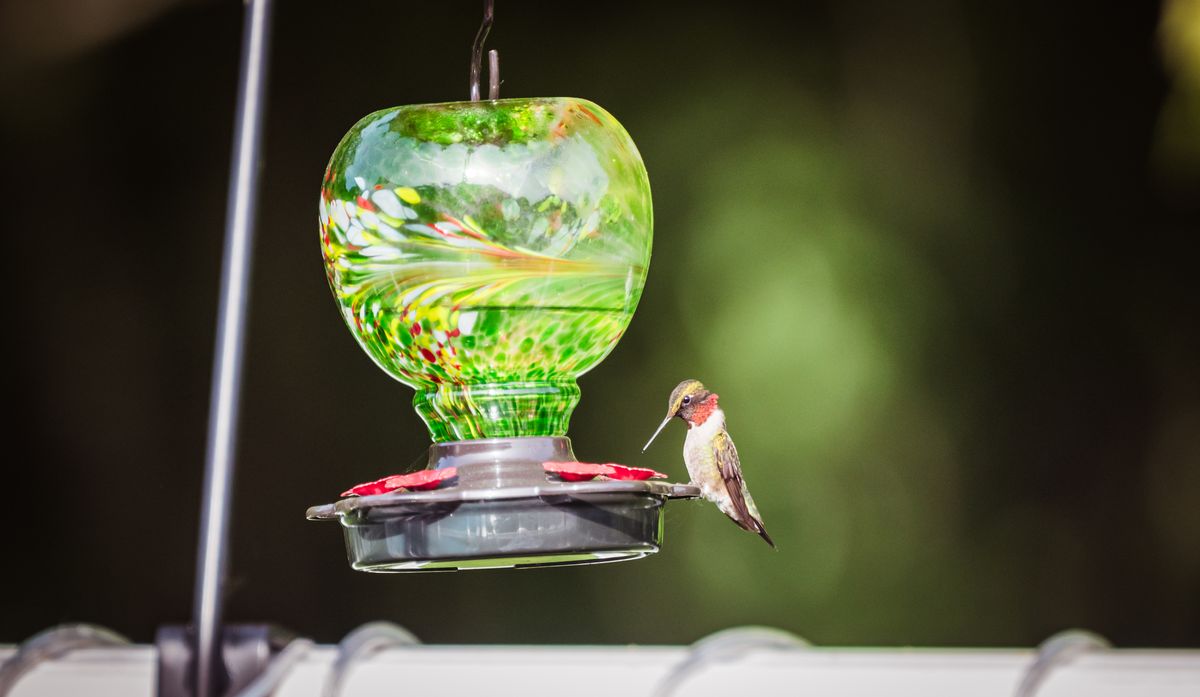
- Capacity: Both materials come in varying sizes, but a 32 fl.oz glass capacity provides an ideal balance of volume and stability.
- Leak Resistance: Lightweight plastic feeders tilt easily in wind. A slender, weight-balanced glass reservoir with a sealed base minimizes drips and spills effectively.
Final Verdict
While plastic feeders offer entry-level convenience, hand-blown glass feeders provide superior durability, leak-proof designs, and long-lasting beauty for serious garden enthusiasts.
Read the full guide: How to Attract Hummingbirds to Your Garden: The Complete Guide