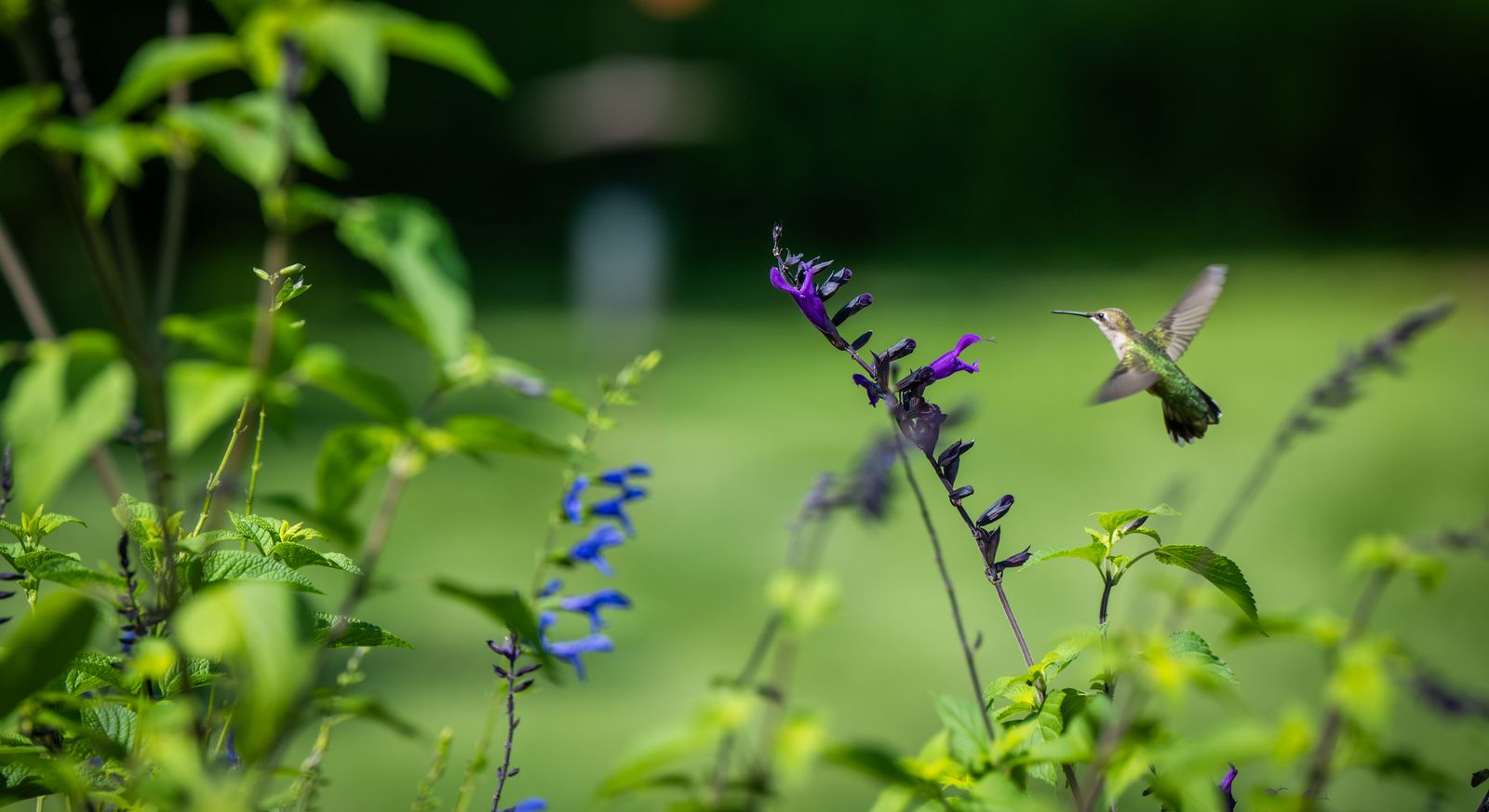
How to Style Your Summer Yard with Luminous Hand-Blown Glass Feeders
A hand-blown glass feeder styles a summer yard best when it is treated as a light fixture that happens to hold nectar, not as hardware hung wherever a hook already exists. Choose one sightline you use every evening, build a low layer of planting under it, and let the glass be the tallest lit object in that view. Everything else in this guide is refinement on that single decision.
Where should a luminous glass feeder hang for the best visual effect?
Hang it where you already look. The most common styling mistake is placing a beautiful feeder at the far edge of the yard, where it reads as a small colored dot instead of a centerpiece. The three sightlines worth claiming first are the view from the kitchen window, the view from wherever you sit outdoors after dinner, and the view down the length of a path or fence line.
Height matters as much as position. Roughly eye level when you are standing gives you two effects at once: during the day the translucent glass catches side light and glows from within, and at night the illuminated reservoir sits in the same visual band as your eyes rather than up in the dark. A feeder hung too high disappears into the sky; hung too low, it competes with lawn and mulch.
One practical constraint governs all of it. A solar feeder needs direct sun on its cap during the day to charge, so a spot under dense tree cover will look perfect at four in the afternoon and stay dark all evening. Look for a position that takes several hours of open sun and still offers a nearby branch or shrub for birds to perch on between visits.
What glass colors work with a summer planting palette?
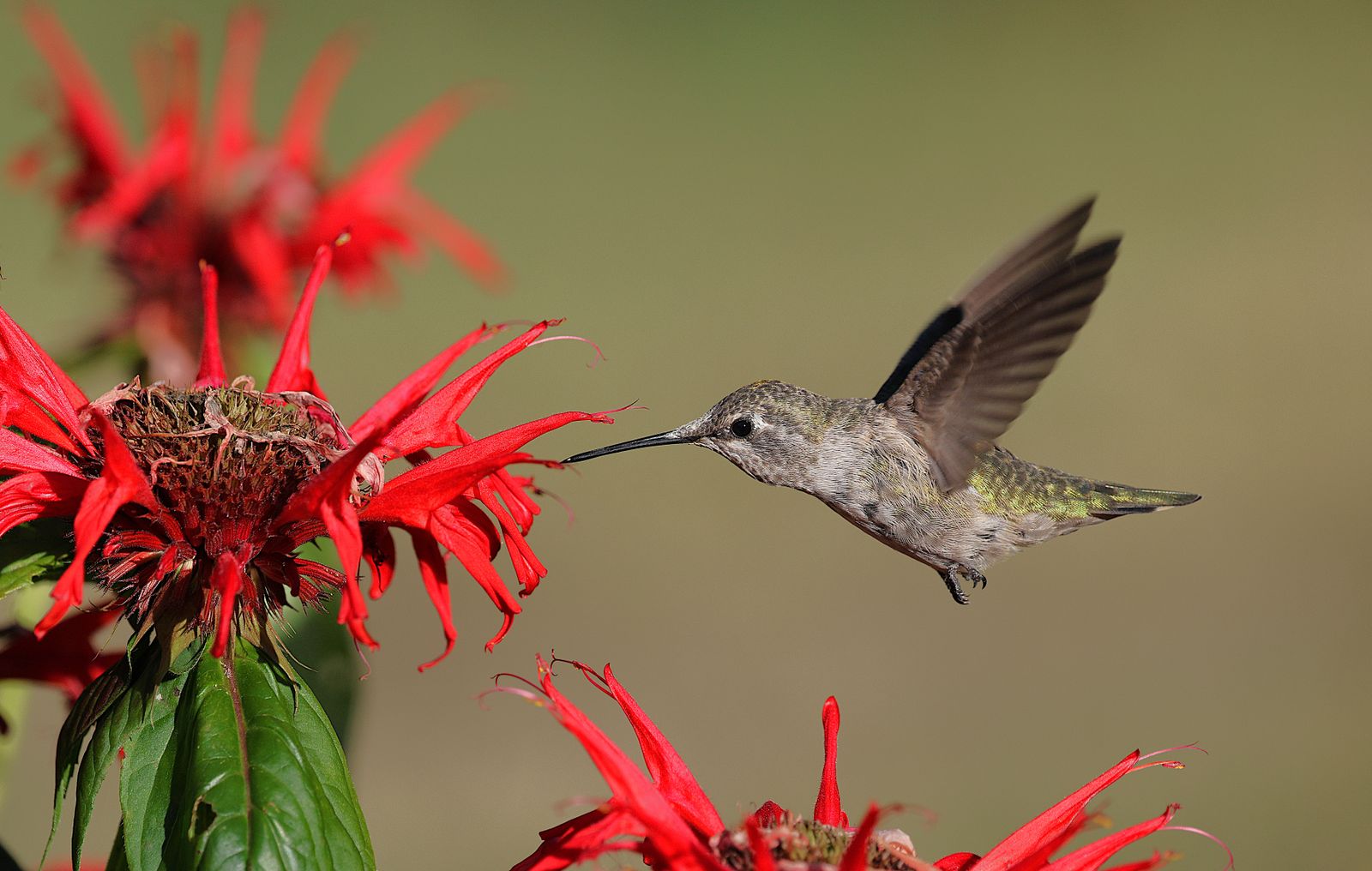
Photo by Veronika Andrews on Pexels
Translucent colored glass behaves like stained glass rather than paint: its color changes depending on what is behind it. Against a dark green hedge, warm tones read strongest. Against a pale fence or stucco wall, cool tones hold their edge better. If you have a feeder with a hand-blown reservoir in mixed or swirled colors, place it where a plain background lets the pattern show instead of fighting a busy border.
Because a feeder with RGB lighting and multiple lighting modes can be set to a single color or cycled through several, you get to make the choice twice. A fixed warm setting tends to blend into porch lighting and candle light. A cycling setting draws the eye and works better as a standalone accent at the end of a path, where nothing else is competing for attention.
How do you build a three-layer evening scene?
The scenes that look designed rather than accidental almost always have three layers of height. Build them in this order.
Styling by yard type
| Yard type | Best placement | Layer to lean on | What to avoid | |---|---|---|---| | Small patio or courtyard | Corner at eye level, against a plain wall | Container plants at mid height | Multiple ornaments in one narrow view | | Deep backyard with lawn | End of a path or bed, not the middle of the lawn | Pale ground layer for spill light | Hanging it so far out it reads as a dot | | Fence-line garden bed | Every third or fourth fence post, one feeder only | Mid-height shrubs to break the fence line | A row of identical accents, which flattens depth | | Deck or railing edge | Just off the railing, clear of foot traffic | Trailing plants below the rail | Positions where a swinging feeder can knock the rail | | Front entry | Beside the walkway, offset from the door | Low border planting | Direct porch-light glare washing out the glow |
Which plants make a feeder look intentional?
Pair the feeder with plants that flower in the same tones as the glass, or in a deliberate contrast to it, and keep the palette to two or three colors in that one view. Tubular flowers do double duty here because they read as garden design and also give visiting birds a natural food source in the same spot, which tends to make the feeder busier. If you are deciding how much of your yard's draw should come from planting versus a feeder, the tradeoffs are laid out in this comparison of live nectar plants and glass solar feeders.
Texture matters more than flower count. A feeder with a smooth glass reservoir looks best against something fine and feathery — ornamental grass, fennel, a soft-leafed salvia — because the contrast makes the glass look more polished than it does against broad, glossy leaves.
Does the feeder still need to be practical to look good?
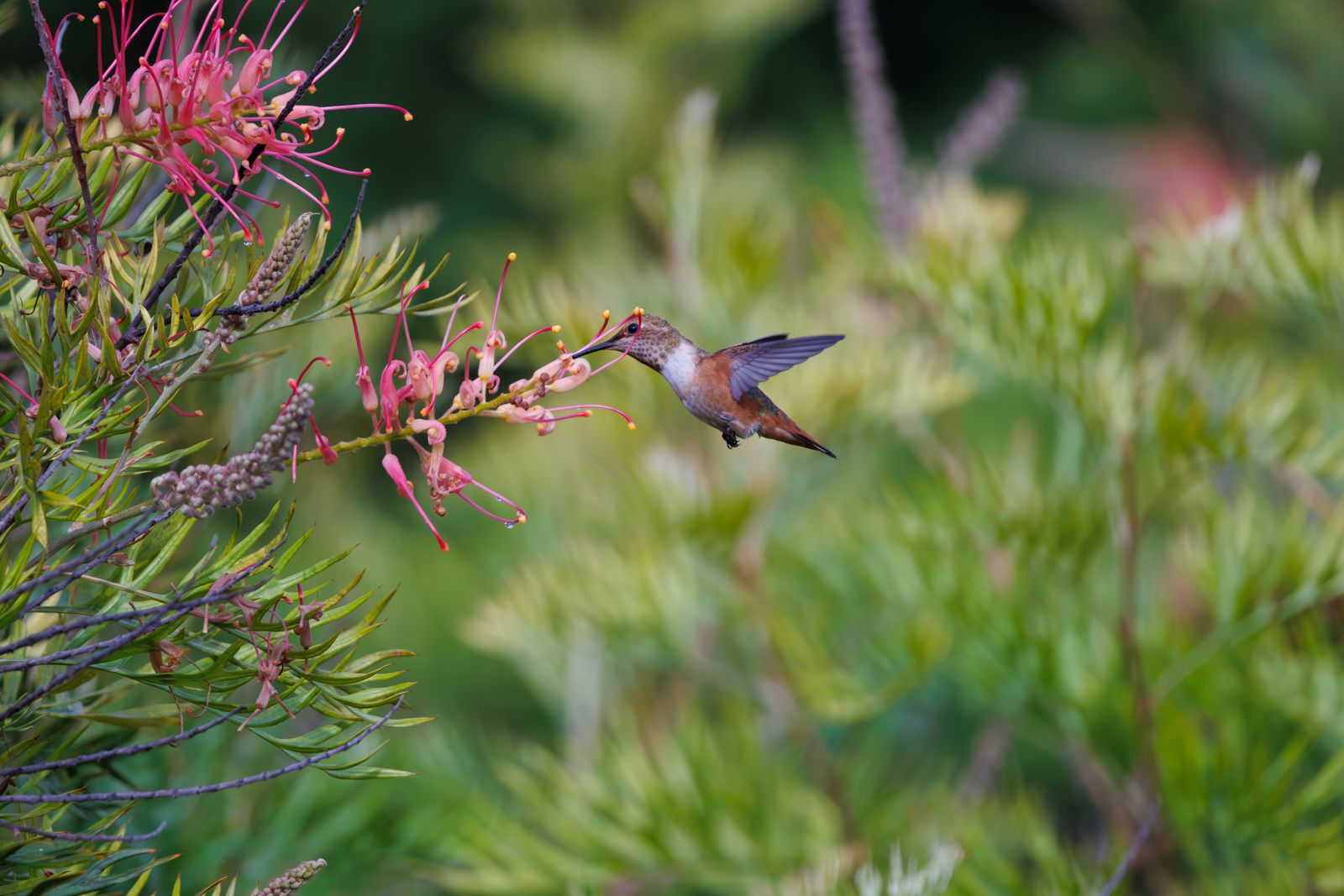
Photo by Ant Armada on Pexels
Yes, and the practical side is what keeps a styled scene looking styled in August. Fill the reservoir with a simple solution of one part plain white sugar to four parts water, and skip red dye entirely — the glass and any lighting already supply all the color the scene needs, and dye does nothing for the birds. Never substitute honey or brown sugar. Clean the feeder on a regular schedule and refresh the nectar more often during hot spells, when it spoils faster.
A see-through reservoir helps the styling more than it sounds like it should. Being able to read the nectar level from the window means you notice a low or cloudy feeder before it becomes the ugly thing in your best sightline. If you are still choosing a material, the visual and durability differences are covered in this breakdown of hand-blown glass versus plastic feeders.
Common summer styling mistakes
- Too many accents in one view. Three solar objects in a ten-foot span cancel each other out. One strong focal point beats three weak ones.
- Shade placement. A feeder in shade all afternoon has nothing to run its lights on after dark.
- No perch nearby. Birds prefer a spot with cover in reach, and a feeder with visitors is a better-looking feeder.
- Ignoring the daytime look. Hand-blown glass is at its best in low side light, so check the morning and late-afternoon view too, not just the night one.
- Overfilling in heat. A large reservoir looks generous, but nectar that sits too long turns cloudy. Fill to what your visitors actually drink.
FAQ
How many feeders should one yard have for a styled look? One per sightline. If you can see two feeders at the same time from the same chair, you have crowded the view. Additional feeders are better used to open up a second scene — a front entry, a side path — than to double up in one.
Will lighting at the feeder bother the birds? Hummingbirds feed during daylight and settle at dusk, so the lit hours mostly fall after they have stopped visiting. Keep the light gentle and pointed at the feeder rather than into nearby shrubs where birds may be roosting.
Does colored glass attract more hummingbirds than clear? Color helps a feeder get noticed, which is why so many are made with warm-toned accents. Once birds know the location, they return out of habit rather than color, so choose the glass you like looking at.
How do I keep the scene from looking bare in early spring? Lean on the mid layer. Evergreen container plants and ornamental grasses hold structure before the flowering layer fills in, so the feeder never sits alone against bare soil.
A practical next step
Tonight, sit in the spot where you actually spend your evenings and pick the one direction you look most. That single sightline is where your feeder belongs. Hang it at standing eye level, add one container plant below it, remove whatever else is currently in that view, and give the scene a week before you change anything else.
Cover photo by Chris F on Pexels.