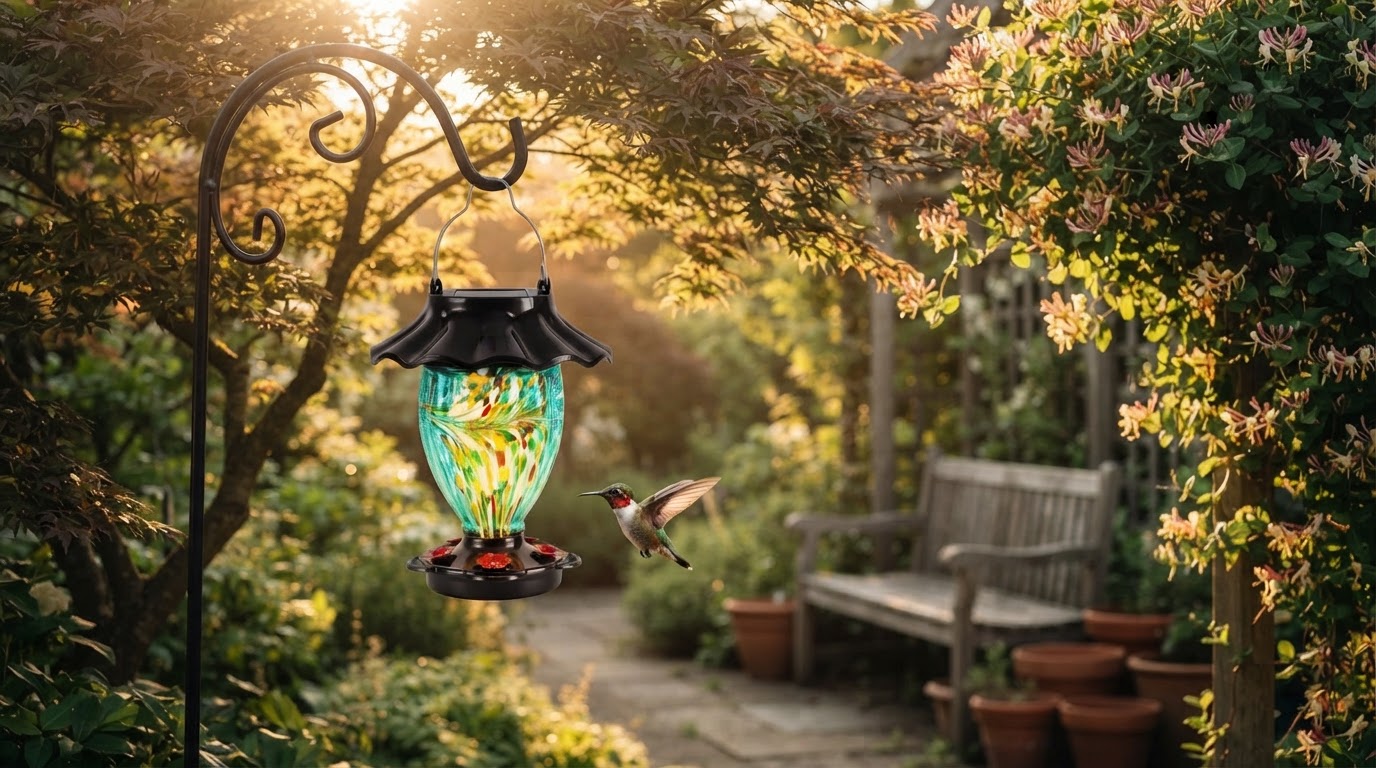
Smart Feeders Meet the LUJII Solar Hummingbird Feeder
 Daniel OkaforField Tester
July 30, 2026 — While the birding world focuses on high-tech cameras, I spent the last two weeks testing the LUJII Solar-Powered Hummingbird Feeder to see how traditional glass holds up against new tech. This field test focused on durability and the reliability of solar-integrated garden hardware.
I tested this for fourteen days in my own backyard during a particularly humid stretch of July. Recent reporting from New Atlas highlights a shift toward the Harymor smart feeder, which uses phone-based monitoring to track local wildlife. According to New Atlas, this new class of home technology aims to provide a bird's-eye view from anywhere. While those gadgets focus on pixels, I wanted to see if the LUJII’s hand-blown glass and RGB lighting offered a more practical benefit for those of us who prefer looking out the kitchen window instead of at a screen.
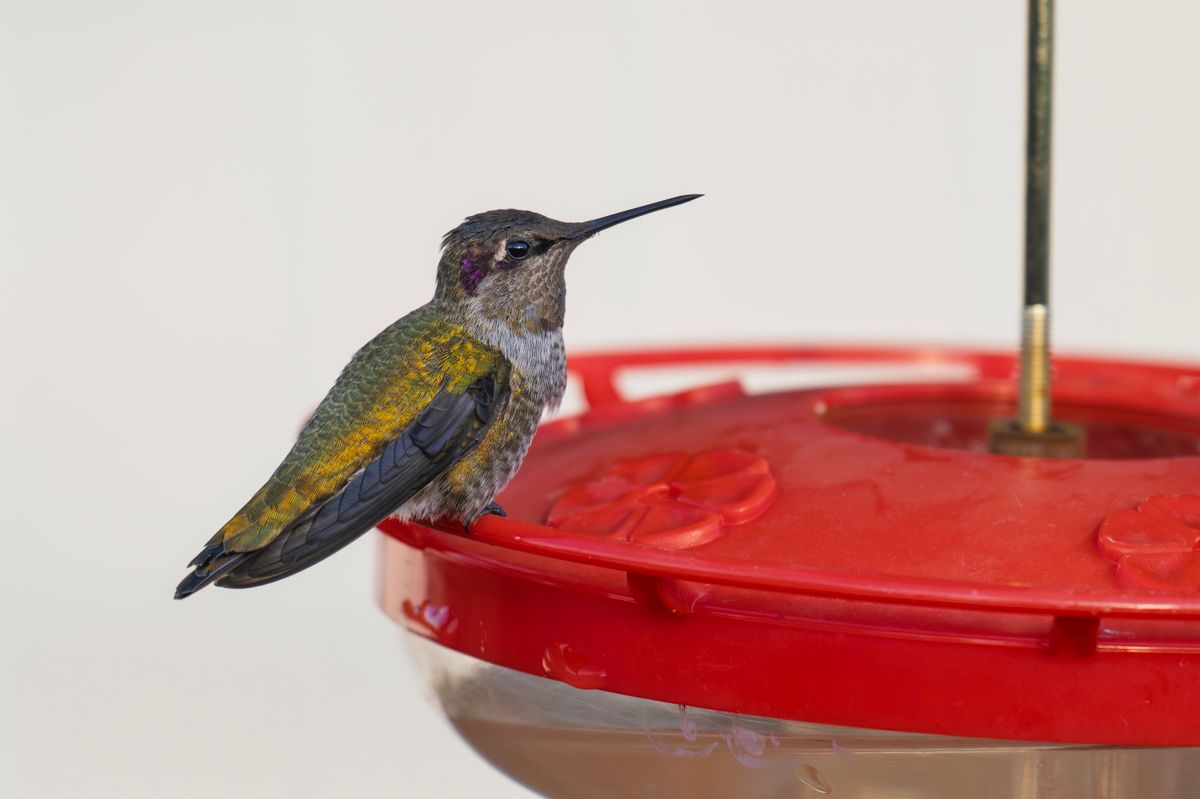
Photo by Frank Cone on Pexels
Day three is where I noticed the real advantage of the 32 fl.oz capacity. Most feeders I’ve used require a refill every forty-eight hours, but the slender, sealed reservoir on the LUJII kept the nectar level visible and stable even after a heavy thunderstorm. The metal base, which features an anti-rust coating, didn't show any pitting despite the moisture. I watched three ruby-throats navigate the perches while the solar cap was still wet, and the seal held perfectly without any of the stickiness you get with cheaper plastic models.
What surprised me: the RGB lights actually stayed bright for the full eight hours after a clear day of sun. I’ve found that many solar garden tools flicker out by midnight, but this one stayed consistent. When choosing between cleaning glass feeders and positioning solar panels, it is clear that the LUJII prioritizes low-maintenance aesthetics over the complex setups required by the smart feeders mentioned by New Atlas. If you are attracting hummingbirds for the first time, the simplicity of a leak-proof design is often more valuable than a camera feed.
Expert tip: To keep the solar sensors working at peak efficiency, wipe the top of the plastic cap with a damp cloth once a week. Dust and pollen can block the cells, reducing the night-time glow even if the nectar is fresh.
What I’d do differently is hang it slightly higher from the start; the 2,300-degree handcrafted glass is heavy, and it needs a sturdy branch to prevent swaying in high winds. Here's the moment it earned its place: at dusk, the transition from the translucent glass patterns to the internal glow created a focal point that no plastic smart feeder can replicate.