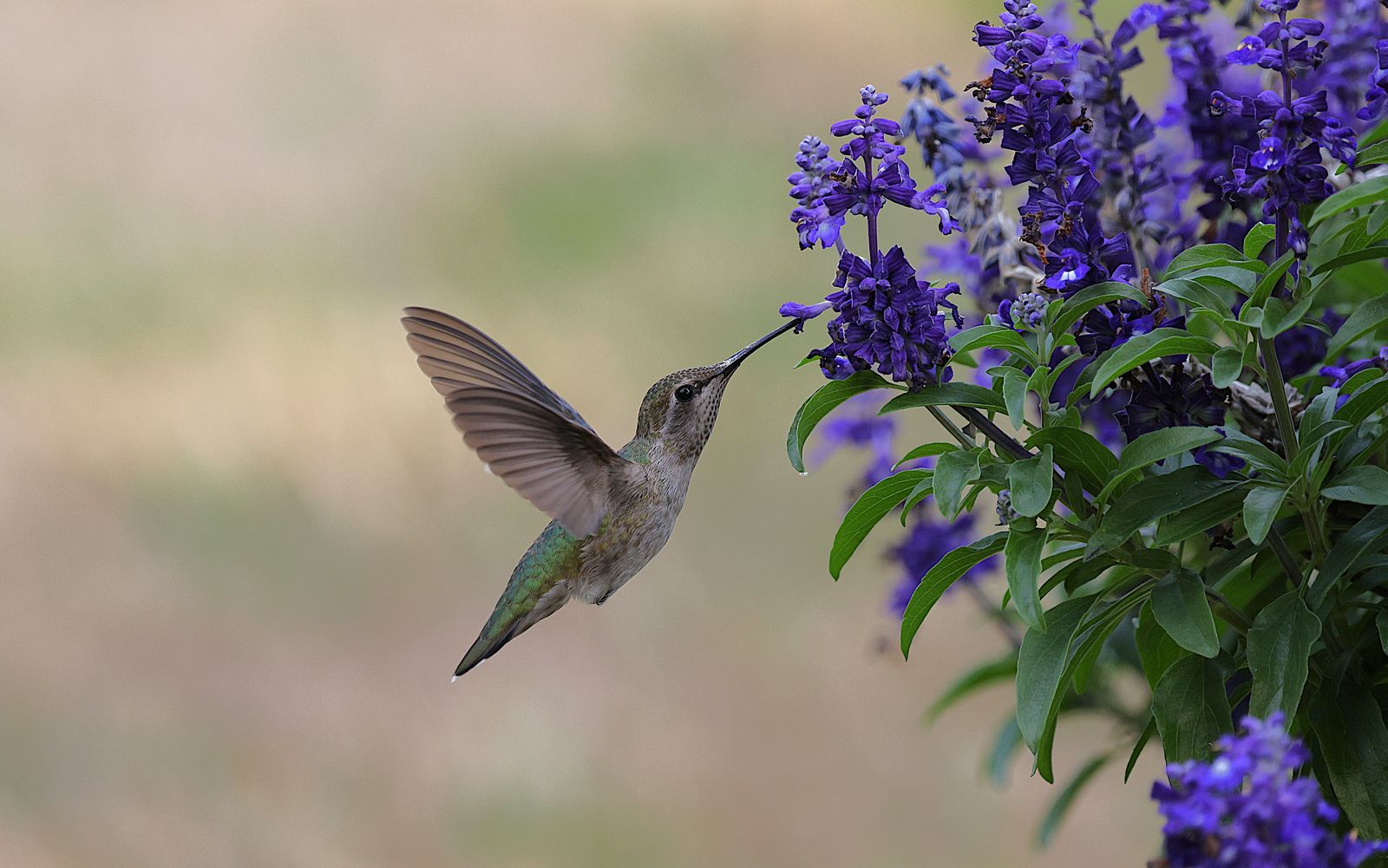
The Science of Glow: How 2,300-Degree Hand-Blown Glass Amplifies Nighttime Solar Light
Hand-blown glass makes a solar light look better than a molded housing does for one reason: its walls vary in thickness. Every gentle swell and thin spot left by the blowing process bends light at a slightly different angle, so a single small light source inside the reservoir becomes a shifting field of color rather than a flat glowing panel. Add colored glass, and the light picks up that color on the way out. That is the entire optical trick, and it cannot be reproduced in a part stamped to uniform thickness.
Why uneven glass produces better light
Light slows and bends when it crosses from air into glass, and bends again on the way out. How much it bends depends on the angle it hits the surface. A perfectly uniform wall bends light uniformly, which reads as an even, characterless glow. A hand-blown wall does something more interesting.
Three effects stack up:
- Refraction. Each change in wall thickness acts as a weak lens, spreading some rays and concentrating others.
- Internal reflection. Light striking the inner surface at a shallow angle reflects back inside and travels along the glass before exiting somewhere else, which is why the whole body appears lit rather than just the area nearest the light.
- Caustics. Concentrated rays exit and land on nearby surfaces as bright ribbons and pools of color — the moving patterns you see on a deck board or wall beside a lit glass object.
How colored glass filters light
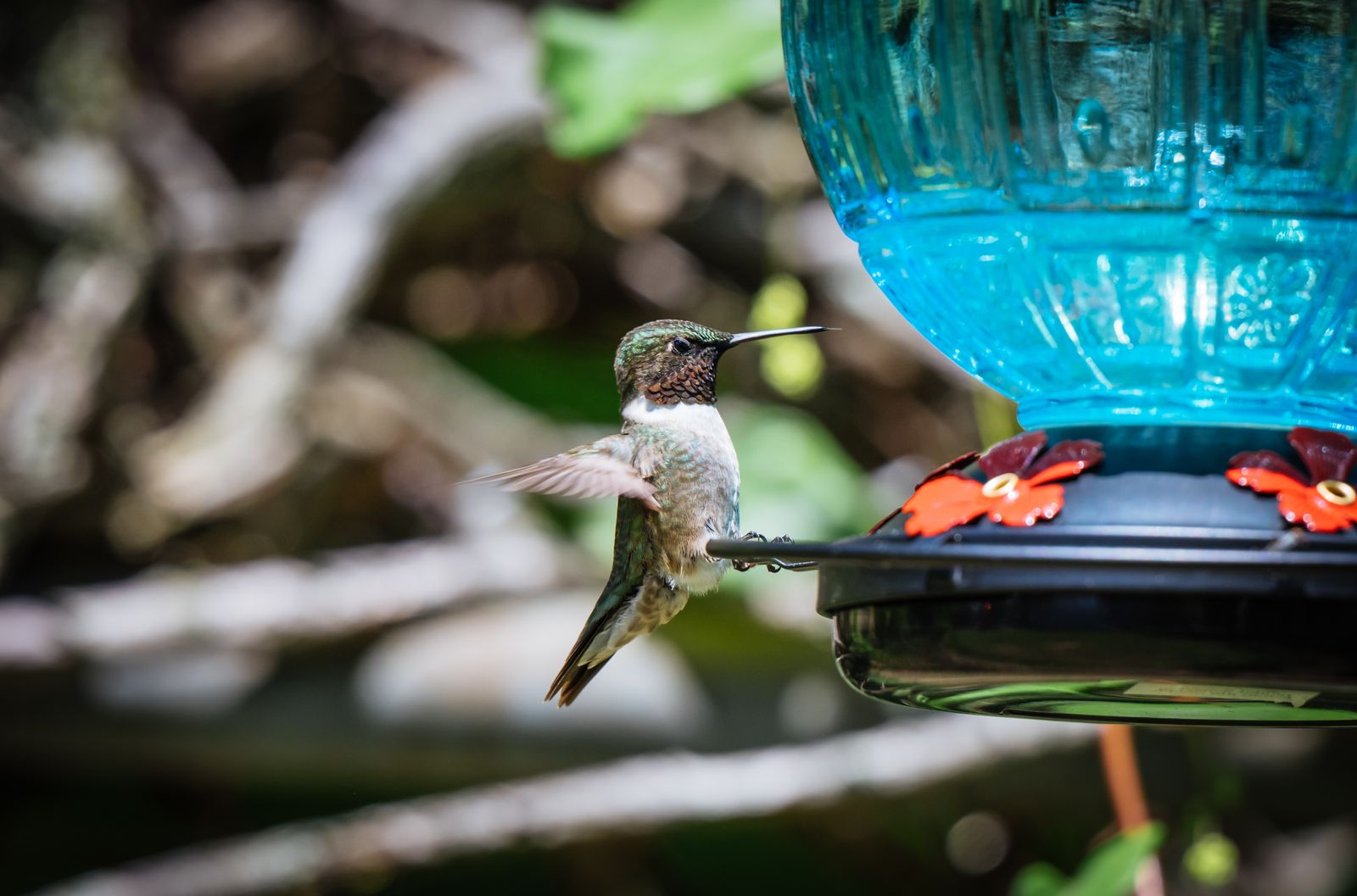
Color in this kind of glass comes from metal oxides melted into the material, not from paint or a coating. That has two consequences at night.
First, the color is a true filter. Light passing through blue glass emerges blue because the glass absorbs other wavelengths along the path. The longer the path through the glass, the deeper the color — which is why the thick base of a piece often glows more saturated than the thin midsection.
Second, the color cannot fade off. Surface paint on outdoor objects chalks and peels within a few seasons of sun and rain. Color that is part of the glass matrix is as permanent as the glass. A feeder in its fifth summer throws the same colors it threw in its first.
What the solar cap is doing all day
The lighting on a solar garden object is a small closed energy loop, and understanding it explains most of what people find confusing about run times.
The Solar Hummingbird Feeder lights up automatically at night for up to 8 hours after a full recharge, and offers RGB lights with multiple lighting mode options. Two things follow from the loop above. A full recharge requires a genuinely sunny day with the panel unobstructed. And color-cycling modes and steady modes do not draw identically, so the mode you pick influences how long the evening show lasts.
Placement: the variable that decides everything
The most common reason a solar feeder underperforms is a spot chosen for the birds and never checked for the panel.
| Placement factor | What to aim for | Why it matters | |---|---|---| | Direct sun on the cap | Several hours of unobstructed midday sun | Charge collected sets the evening run time | | Overhead obstruction | Clear sky above the cap | Eaves, dense canopy, and umbrellas cut collection sharply | | Competing light at dusk | Away from porch and path lighting | Ambient light can delay or confuse the dusk sensor | | Viewing angle | In sight of a window, patio, or walkway | Light traveling through glass is best seen, not just produced | | Backdrop | A darker wall, hedge, or fence behind it | Contrast makes color read stronger | | Nectar temperature | Shade in late afternoon if possible | Cooler nectar spoils slower; balance against panel needs |
The last row is a real tension. Full sun charges best and spoils nectar fastest. A workable compromise is morning and midday sun with afternoon shade, and filling less than the full 32 fluid ounce capacity during hot spells so nectar turns over quickly.
Why solar run time changes through the year
Nothing is wrong with a feeder that glows for hours in July and far less in November. Four seasonal factors move the number:
- Day length. Fewer daylight hours means fewer charging hours.
- Sun angle. Low winter sun strikes a horizontal panel obliquely, so less energy reaches it per unit of area.
- Weather. Overcast days can cut collection dramatically compared with clear ones.
- Temperature. Cold reduces the effective capacity of small storage cells, so the same charge delivers less run time.
Getting the most from the glow
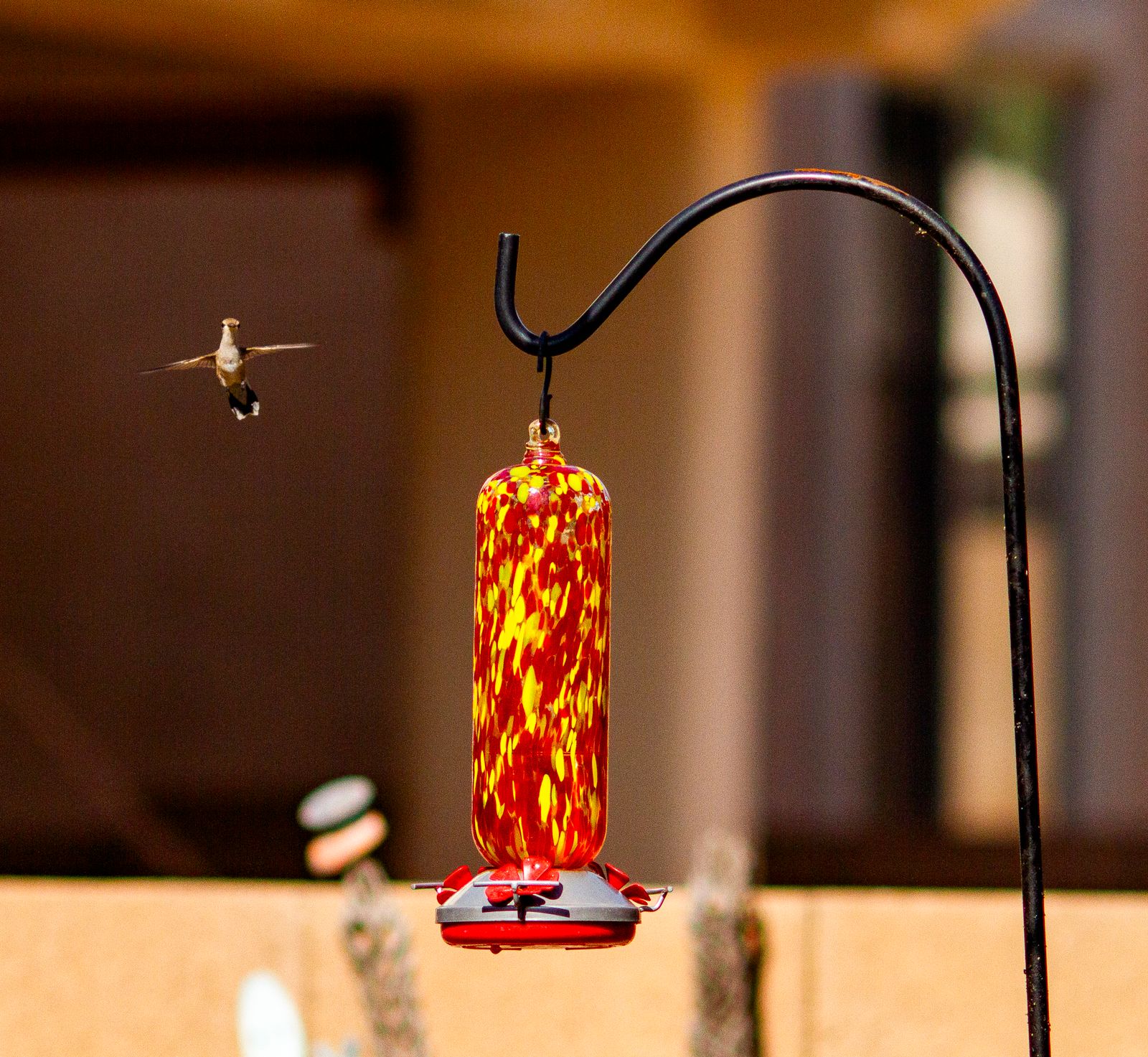
Photo by Jon Champaigne on Pexels
- Site the cap for sun first, then adjust for viewing angle
- Wipe the panel with a damp cloth on every nectar change
- Choose a spot with a dark backdrop rather than a pale wall that washes out color
- Give the feeder a full sunny day before expecting a long evening run
- Position it where reflected light can land on a nearby surface, since the caustic patterns are half the effect
- Keep it out of the spill from porch or landscape lighting so the dusk sensor triggers cleanly
- Steady single-color modes generally stretch further into the night than active color-changing modes
How glass compares with other lit garden materials
Frosted plastic diffuses light evenly and cheaply, which is why so much solar garden lighting uses it. The tradeoff is that even diffusion is visually flat, and outdoor plastic clouds and yellows over time, which dims and discolors the output. Metal housings do not transmit light at all; they only direct it. Hand-blown glass is the only common option that transmits, colors, and scatters light unevenly all at once, which is why it reads as decorative rather than functional.
For the material durability side of that comparison, see the breakdown of hand-blown glass versus plastic feeders.
Frequently asked questions
Does the nighttime light bother hummingbirds? Hummingbirds are diurnal and settle in for the night well before the lighting matters to them. They are not feeding at midnight. The glow is for the people looking at the garden, and it does not warm the nectar or interfere with daytime feeding.
Will the light attract insects to the feeder? Some night-flying insects are drawn to light generally. In practice the bigger insect magnet is nectar residue on the outside of a feeder, not the glow. Keep the exterior rinsed, make sure the base is sealed so drips do not run down the glass, and use a water-only ant moat above the feeder.
Why does a feeder glow longer some nights than others? Because the previous day's charge differed. Cloud cover, day length, sun angle, a dusty panel, or a partly shaded cap all reduce what gets stored. Up to 8 hours describes a full recharge under good conditions, not an overcast December afternoon.
Does the color of the glass change how bright it looks? Yes. Colored glass absorbs some of the light passing through it, so deeply saturated areas appear dimmer than thin or lighter-colored zones. That variation across the surface is what makes a hand-blown piece look alive rather than uniformly backlit. Pairing the feeder with plantings changes the effect too, which is worth reading about in live nectar plants versus glass solar feeders.
A practical next step
Spend one evening testing rather than guessing. Hang the feeder in your first-choice spot, note how long the glow lasts, then move it a few feet toward better midday sun and compare the next night. Two nights of observation will teach you more about your own yard's light than any specification can.
Cover photo by Veronika Andrews on Pexels.