Nighttime Hummingbird Feeder FAQ: Solar Lights, Moths, and Evening Pests
Many gardeners worry that solar hummingbird feeder lights attract swarms of mosquitoes and nocturnal moths that ruin nectar. In reality, mosquitoes seek carbon dioxide rather than light, and moths ignore long-wavelength light. Setting your solar RGB feeder to warm red or amber mode completely eliminates insect phototaxis while preserving evening garden ambiance.
Nighttime Solar Lighting Decision Matrix
To prevent nocturnal insects like moths and beetles from swarming your illuminated feeder while safeguarding nectar, set your solar feeder's RGB lighting to warm red or amber mode and suspend the feeder using a weather baffle and ant moat.
Best choice for
- Red or Warm Amber LED Mode — Insects possess peak phototaxis sensitivity in UV, blue, and green light spectrums; red light is virtually invisible to moths.
- Baffled Pole Mount with Sealed Base Feeder — Prevents heavy mammals from tipping the 32 fl. oz glass reservoir or breaking the waterproof seal.
- Using bright cool-white or blue LED spectrums in high-density insect areas after dusk.
- Hanging feeders directly from tree branches without mammal baffles in raccoon-inhabited regions.
- Solar Panel Cover / Manual Shutoff — If local nocturnal pest pressure is extreme during seasonal hatches, covering the solar sensor disables nighttime illumination entirely while leaving daytime feeding unaffected.
Ideal Feeder Features for Pest-Free Night Operation
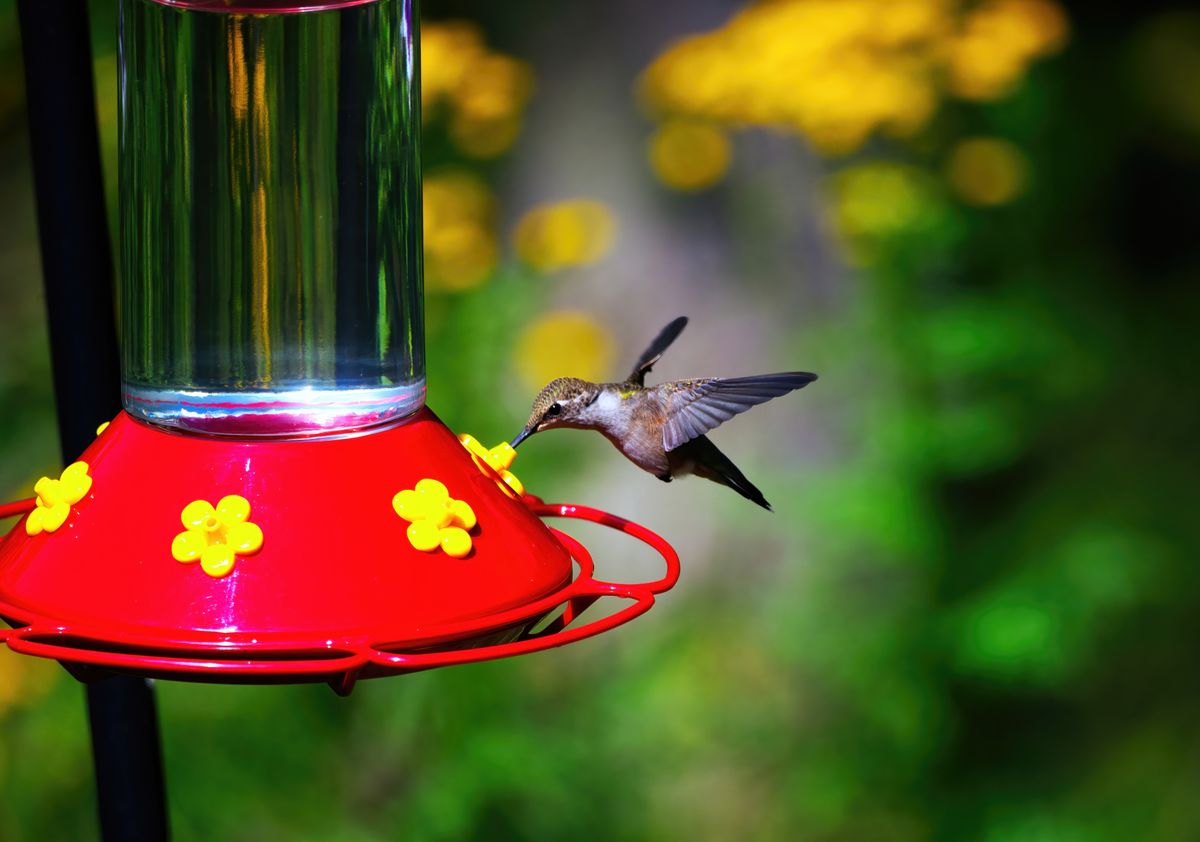
Photo by DANNIEL CORBIT on Pexels
When selecting an illuminated hummingbird feeder, structural design is just as critical as light controls. A high-quality solar feeder must protect nectar from nocturnal intruders while withstanding nighttime weather elements. Look for these key features:
- Customizable RGB LED Control: Multi-mode solar caps allow you to select fixed warm red or amber wavelengths during peak moth hatches.
- Heavy Hand-Blown Glass Reservoir: High-density glass (such as 32 fl. oz handcrafted reservoirs formed at 2,300°F) provides the physical weight necessary to prevent light wind or small nocturnal visits from spilling nectar.
- Sealed Leak-Proof Rubber Gaskets: A leak-proof base prevents nectar drips that attract crawling insects like earwigs and ants after dark.
- Weatherproof Solar Cap & Anti-Rust Metal Base: Waterproof solar housing shields electrical components from rain and snow, while coated metal perches resist rust and raccoon tugs.
Top Recommendation: LUJII Solar-Powered Hand-Blown Glass Hummingbird Feeder
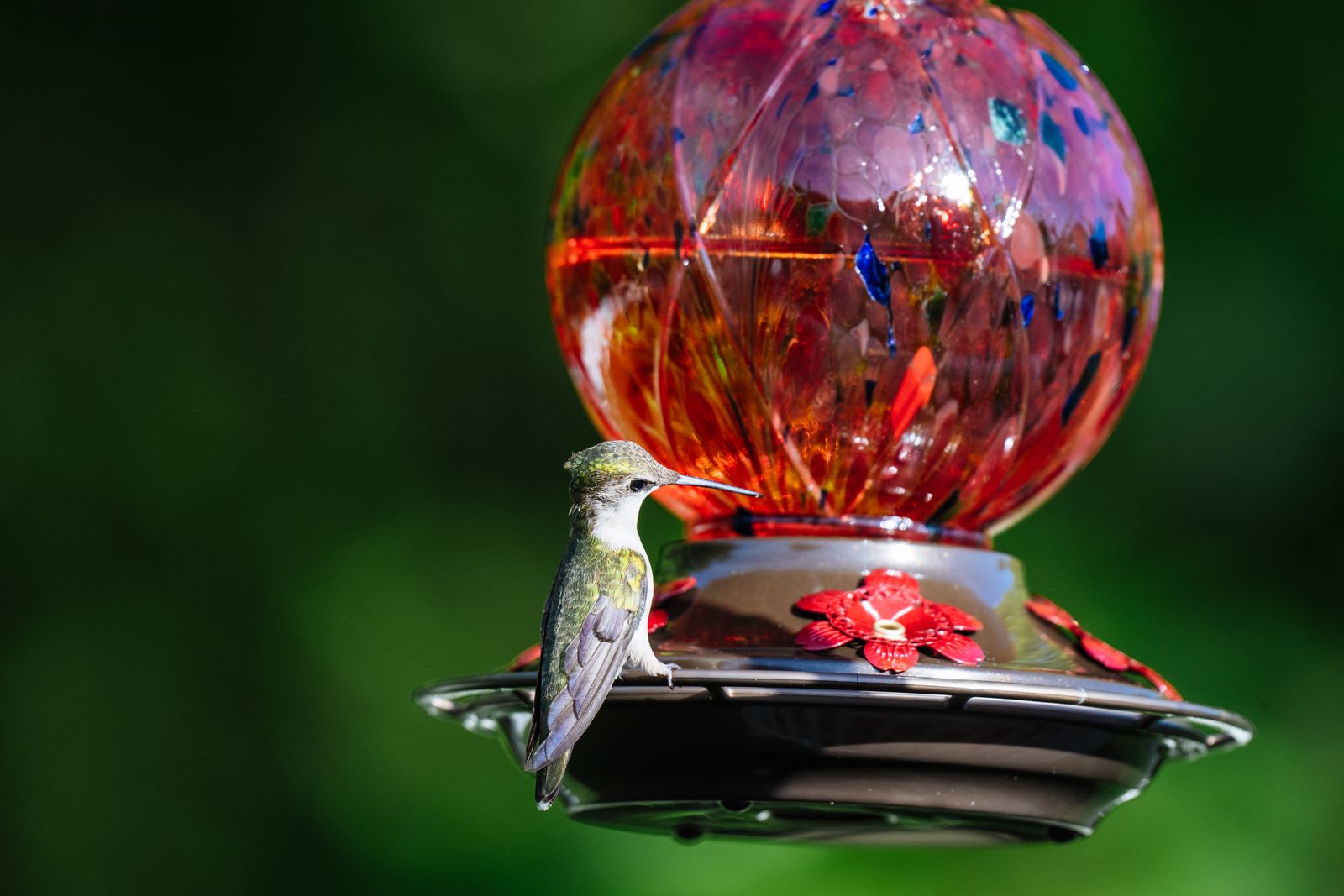
The LUJII Solar-Powered Hand-Blown Glass Hummingbird Feeder (available at solarhummingbirdfeeder.com) combines artisanal garden decor with intelligent nighttime pest management. Each 32 fl. oz reservoir is individually hand-blown by master glass artists at 2,300°F, creating a translucent, thick-walled bottle that makes nectar monitoring effortless.
Equipped with an automatic solar-recharging cap, the feeder glows for up to 8 hours each night. Its multi-mode RGB lighting lets you easily switch from vibrant color-cycling to insect-safe warm amber or red hues during heavy bug seasons. The precision rubber-sealed metal base prevents drips, while the heavy-duty weather shield protects the solar electronics against rain, snow, and UV degradation.
Bring magical evening illumination to your garden without inviting unwanted pests—explore the LUJII Hand-Blown Glass Solar Hummingbird Feeder with customizable RGB light modes today!
Expert Tip: Spectral Tuning for Zero Moth Attraction
Nocturnal insects possess compound eyes tuned specifically to perceive ultraviolet (300–400 nm), blue (400–500 nm), and green (500–550 nm) wavelengths. This biological trait, known as positive phototaxis, causes moths, June bugs, and beetles to navigate toward cool-white LED solar lights thinking they are steering by moon and starlight.
By switching your solar RGB light to warm red (620–700 nm) or deep amber (590–610 nm), you shift the emitted light completely outside the perceptual visual range of phototactic insects. The feeder remains a glowing gem in your garden to human eyes, yet appears dark to swarming moths.
Nighttime Feeder Pest Troubleshooting Matrix
| Nocturnal Scenario | Observed Symptom | Spectral / Lighting Fix | Physical Hardware Solution |
| --- | --- | --- | --- |
| Swarming Moths at Dusk | Insects flutter around solar cap; white light glowing | Switch RGB light cycle to fixed Warm Red or Amber mode (620–700 nm wavelength) | Wipe glass reservoir exterior with warm soapy water to eliminate sticky sugar spots |
| Missing Nectar Overnight | Reservoir drained by morning; feeder tilted or swinging | Maintain amber lighting to avoid illuminating feeding ports to mammals | Install a 15-inch smooth metal stovepipe baffle on a shepherd's hook 5 feet off the ground |
| Earwigs / Ants on Base | Crawling insects near port flowers after dark | No spectral change needed; crawling bugs rely on smell, not light phototaxis | Fill hanging ant moat with clean water; apply food-grade silicone grease to hook shaft |
| Nectar Clouding / Rapid Spoiling | Nectar turns hazy within 48 hours in summer | Rest easy: LED solar caps emit zero infrared heat, so light does not cause fermentation | Sanitize hand-blown glass bottle twice weekly with 1:4 vinegar rinse; change solution frequently |
If you spot unusual activity around your feeder after dark, consult this scenario-based guide to quickly identify the intruder and apply the correct spectral or hardware solution.
Actionable Evening Routine for Gardeners
Your decision: Switch your solar feeder's RGB setting to warm red or amber mode before dusk during peak summer bug seasons.
Do this next: Inspect your feeder's sealed base, fill with fresh nectar, and hang using a specialized weather baffle and ant moat.
- Read next: How to Hang Your Solar Hummingbird Feeder to Block Ants and Crawling Insects
- Read next: The Ultimate Buying Guide to Weather Baffles and Shields for Solar Feeders
LUJII Solar-Powered Hand-Blown Glass Hummingbird Feeder (32 fl. oz, Multi-Mode RGB Lighting).
Establishing a quick dusk routine ensures your illuminated feeder stays pristine, safe, and bug-free night after night.
Essential Rules for Nighttime Solar Feeder Care
Keep these fundamental principles in mind to balance evening lighting aesthetics with wildlife safety:
- Red & Amber Keep Bugs Away: Moths cannot detect light wavelengths above 590 nm. Use warm settings to avoid swarms.
- Mosquitoes Don't Care About LEDs: Mosquitoes target carbon dioxide and body heat, not solar feeder light.
- LEDs Produce Zero Heat: Solar LEDs emit negligible thermal energy and will not spoil or ferment sugar nectar overnight.
- Hummingbirds Sleep Elsewhere: Hummingbirds enter torpor on high tree branches; soft feeder glow does not disturb their deep slumber.
- Sealed Bases Prevent Crawlers: A leak-proof gasket stops nectar drips that attract earwigs, raccoons, and ants after dark.
Dusk Feeder Inspection Checklist
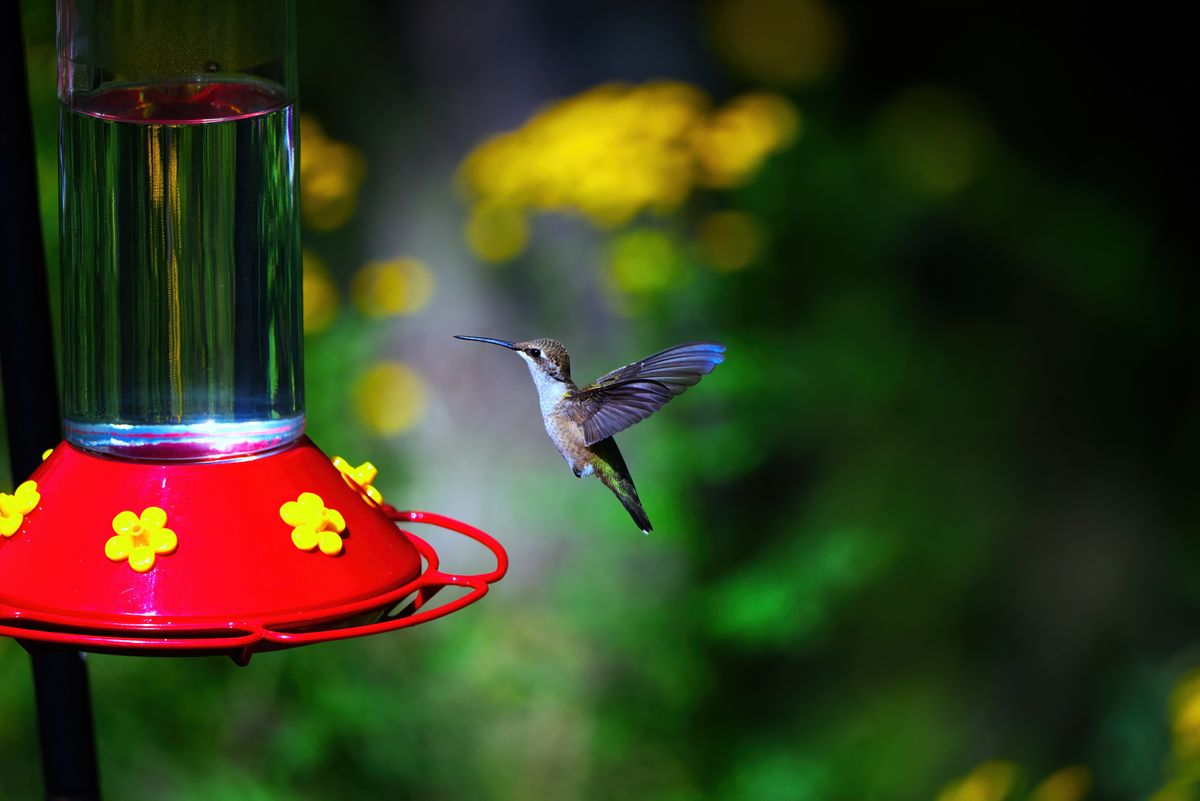
Photo by DANNIEL CORBIT on Pexels
- [ ] Verify solar LED is set to warm amber or red RGB mode.
- [ ] Check that the 32 fl. oz glass reservoir base is tightly sealed to prevent drips.
- [ ] Ensure ant moat is filled with clean water to block crawling nocturnal insects.
- [ ] Confirm weather baffle is securely positioned above the solar cap.
- [ ] Wipe away any nectar residues from external glass surfaces.
4 Mistakes That Attract Nocturnal Intruders to Solar Feeders
Avoid these common missteps that inadvertently invite pests to your evening garden display:
Expand Your Pest-Free Feeding Knowledge
Further enhance your backyard sanctuary with these essential concepts in feeder care, pest barriers, and seasonal maintenance:
- Optimal Pole Placement: Discover mounting heights and mammal baffle configurations that protect handcrafted glass.
- Weather Shields & Rain Baffles: Learn how protective top domes shield solar caps from heavy rain and nocturnal mammals.
- Hand-Blown Glass Sanitization: Master non-toxic vinegar rinses to keep colorful translucent glass sparkling and mold-free.
Frequently Asked Questions: Nocturnal Pests & Solar Feeder Lights
Here are detailed answers to the most common questions about operating solar-powered glass hummingbird feeders after dark.
Your Next Steps for a Pest-Free Garden
Your decision: Switch your solar feeder's RGB setting to warm red or amber mode before dusk during peak summer bug seasons.
Do this next: Inspect your feeder's sealed base, fill with fresh nectar, and hang using a specialized weather baffle and ant moat.
- Read next: How to Hang Your Solar Hummingbird Feeder to Block Ants and Crawling Insects
- Read next: The Ultimate Buying Guide to Weather Baffles and Shields for Solar Feeders
LUJII Solar-Powered Hand-Blown Glass Hummingbird Feeder (32 fl. oz, Multi-Mode RGB Lighting).
Ready to transform your garden into an evening oasis while keeping hummingbirds safe and nocturnal pests at bay? Explore the handcrafted beauty of the LUJII Solar Feeder and set up your night-safe feeding station today.
Cover photo by Chris F on Pexels.