Can a Solar Hummingbird Feeder serve as a patio night light?
 Priya RamanSenior Analyst
July 13, 2026 — A Solar Hummingbird Feeder functions effectively as a localized patio night light, provided the unit features a high-transparency glass basin and a dusk-to-dawn LED sensor.
Homeowners seeking to blend avian support with functional aesthetics often choose between utility lighting and decorative accents. Selecting these units involves balancing lumen output against the preservation of a natural resting habitat. You want enough glow to navigate a patio without disrupting the circadian rhythms of local wildlife.
How does light output vary across glass solar bird feeders?
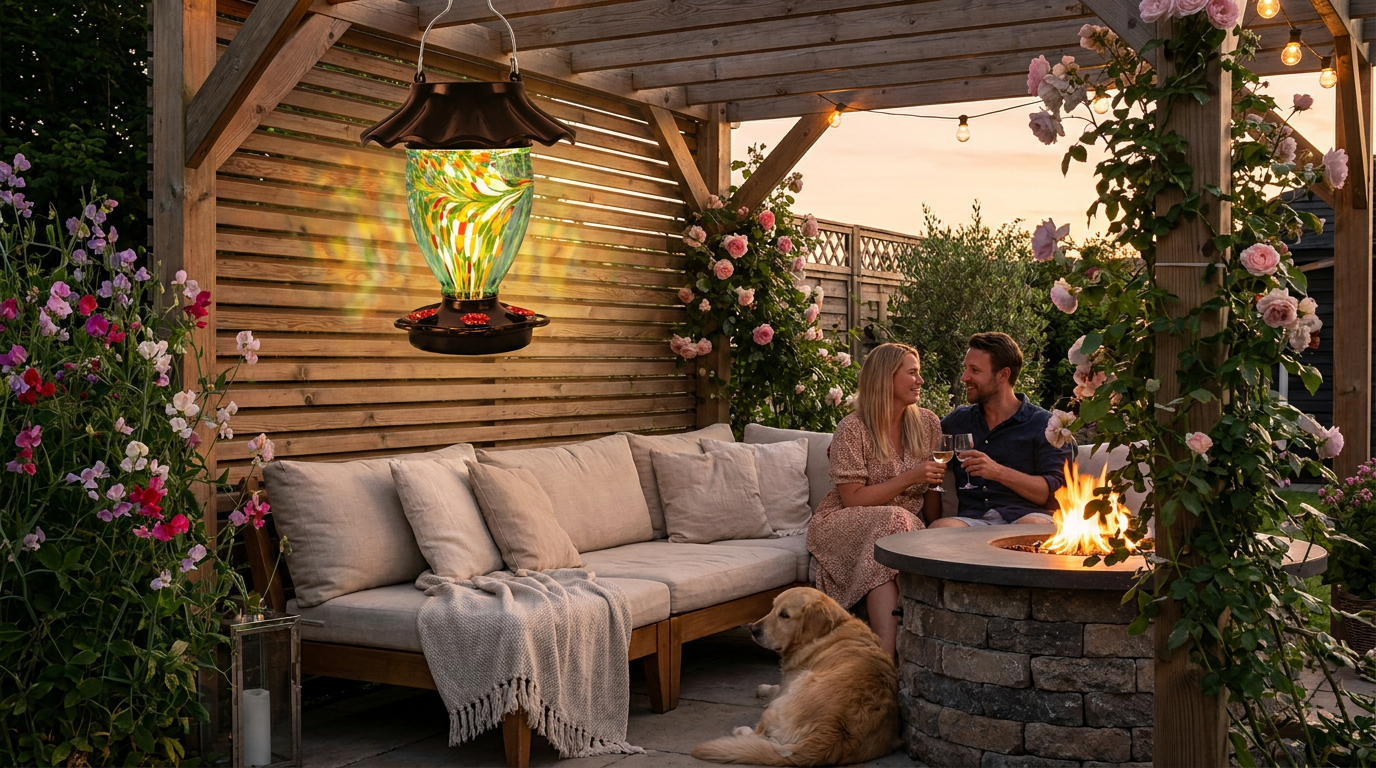
The light output of these feeders is determined by the refractive properties of the basin material and photovoltaic cell efficiency. Hand-blown glass models act as natural diffusers, casting a patterned glow rather than a harsh beam.
According to specifications from The Birdhouse Chick, a solar glass hummingbird feeder uses a rechargeable LED to become a garden accent at night. These units rely on a solar panel on the lid to charge a nickel-metal hydride (Ni-MH) battery. Under optimal conditions, this provides approximately 6 to 8 hours of ambient illumination, suitable for evening patio use but not as a primary safety light for walkways. One nighttime dynamic worth anticipating: any light source near a sugar reservoir will interest the insect world even if the birds sleep through it. A glowing feeder can draw moths and night-flying insects to its warmth and brightness, and while they cannot reach nectar through a well-sealed basin, insect traffic around the ports can leave residue that ants follow by morning. The mitigations are the same ones daytime feeder-keepers already use, applied with the light in mind: an ant moat on the hanging hook, feeding ports with intact bee guards, and a quick evening glance to confirm nothing has pried a port cover loose. The low-lumen output these units produce is itself the main defense — a soft ambient glow attracts a fraction of the insect attention a bright white patio bulb does, which is one more argument for resisting any urge to wish the feeder were brighter. As a bonus, the modest glow makes the feeder visible enough that nocturnal wildlife — raccoons being the classic nectar bandits — can be spotted from the kitchen window before they empty the basin.
Will patio illumination disturb nesting hummingbirds?
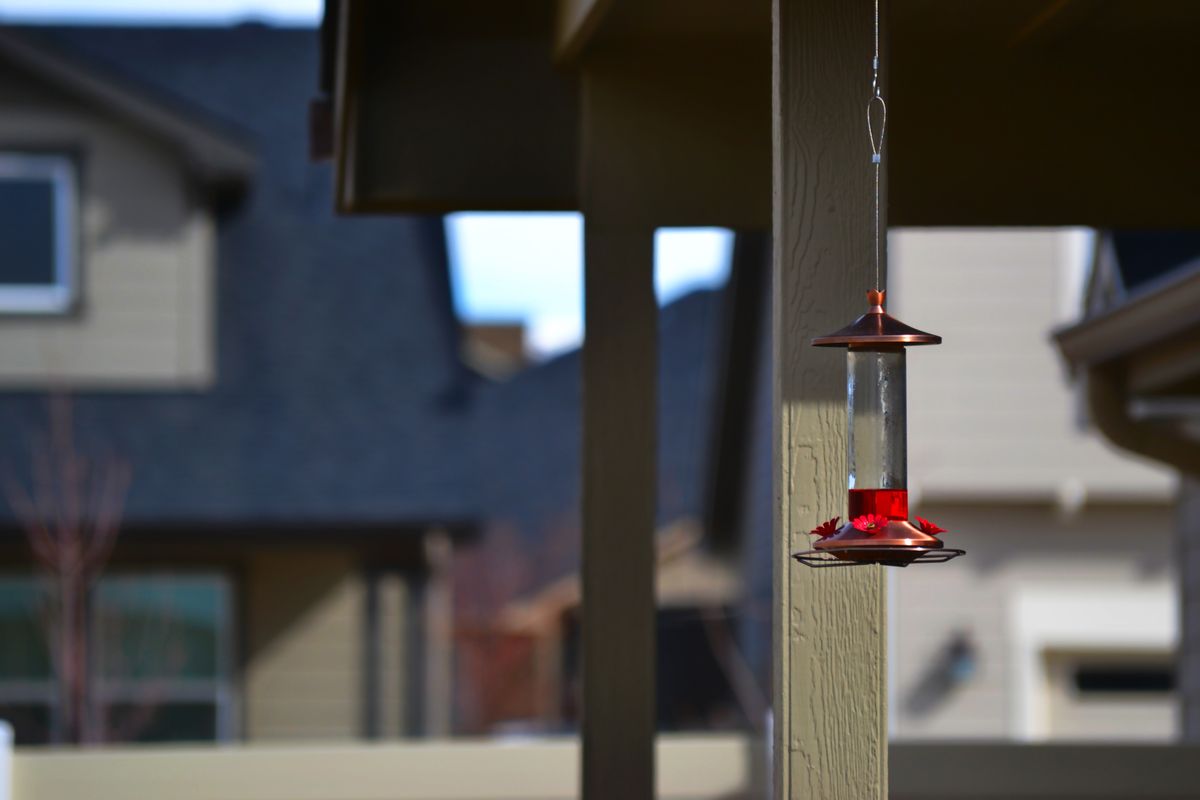
Photo by Brett Sayles on Pexels
Ambient light from a solar feeder generally does not disturb hummingbirds, but high-intensity floodlighting near nests should be avoided. The placement rule is to keep decorative solar lights five to ten feet away from nesting sites to ensure birds enjoy total darkness during torpor.
Research from the Nature Home Decor community suggests that while hummingbirds visit feeders by day, they require rest at night. Further discussions on Facebook indicate that many enthusiasts use low-wattage solar alternatives to minimize disturbance. A solar feeder provides a compromise, offering a localized glow that dissipates across a patio without the intensity of a standard AC-powered fixture. The glass basin that makes these units glow beautifully also makes them slightly more particular to maintain than plastic feeders. Two habits protect the investment. First, thermal respect: never pour hot water into cold glass or plunge a sun-warmed basin into cold rinse water — hand-blown and colored glass tolerates gradual temperature change and punishes sudden swings, so let the basin come toward room temperature before washing at whatever water temperature you start with. Second, the right tools: a bottle brush reaches the basin's curves, a small port brush (or a pipe cleaner) handles the feeding openings, and nothing abrasive touches the colored surfaces — scouring pads leave micro-scratches that cloud the glass exactly where the LED is supposed to shine through it. The LED lens and the small solar panel on the lid want the gentlest treatment of all: a soft damp cloth, since the panel's output and the light's clarity both degrade behind a film of pollen and nectar splash that accumulates too slowly to notice. Cleaned this way, the glass units age into the garden; scrubbed carelessly, they fog within a season.
Quick answers
Q: How long does the light stay on in a Solar Hummingbird Feeder? A: Most models with a 600mAh battery provide 6 to 8 hours of light after a full day of sun. Duration depends on the solar panel's exposure to direct sunlight.
Q: Can I use a plug-in night light for hummingbirds instead? A: Yes, products like the Hummingbird at Feeder night light from MyNightLightDesigns offer a plug-in alternative for indoor use or covered patios. These are decorative rather than functional nectar feeders.
Q: Is the LED light safe for the nectar? A: The LEDs used are low-heat components that do not significantly raise nectar temperature. This prevents premature fermentation common with incandescent bulbs.
Q: Does the light attract hummingbirds at night? A: No, hummingbirds are diurnal and enter torpor at night. The light is a functional aesthetic for humans and does not alter the birds' feeding schedule.
To see how these units perform, read our Solar Hummingbird Feeder Field Test of Lighted Glass Models. For comparisons, see the Best Solar Hummingbird Feeder Review 2024 or Optimizing Garden Illumination with Solar Hummingbird Feeder.
Learn more about Solar Hummingbird Feeder at https://solarhummingbirdfeeder.com.
Choosing between models when the light is the point
When the night-light function genuinely matters to the purchase, three features separate the models. A perch changes the daytime show: hummingbirds can hover-feed, but given a perch they will sit, which doubles average visit length and viewing pleasure — there is no downside, so prefer perched designs. Basin color does double duty: red glass is the classic attractant (making dye in the nectar as unnecessary as it is inadvisable), and red also glows warmly at night, while blue and green basins read cooler and more decorative after dark — a genuine aesthetic fork that is worth deciding deliberately rather than by default. And the battery-to-LED arrangement determines the honest runtime: models whose product pages state battery capacity outright tend to be the ones still glowing at midnight in owner photos.
Match capacity to observed traffic rather than to hopes: a patio with occasional visitors is best served by the smaller basins whose nectar turns over before it spoils, while a station already hosting a steady stream can justify larger reservoirs. Buying the big basin to attract more birds gets the causality backwards — traffic is built by location, reliability, and cleanliness, and the basin size should follow the birds, not lead them.