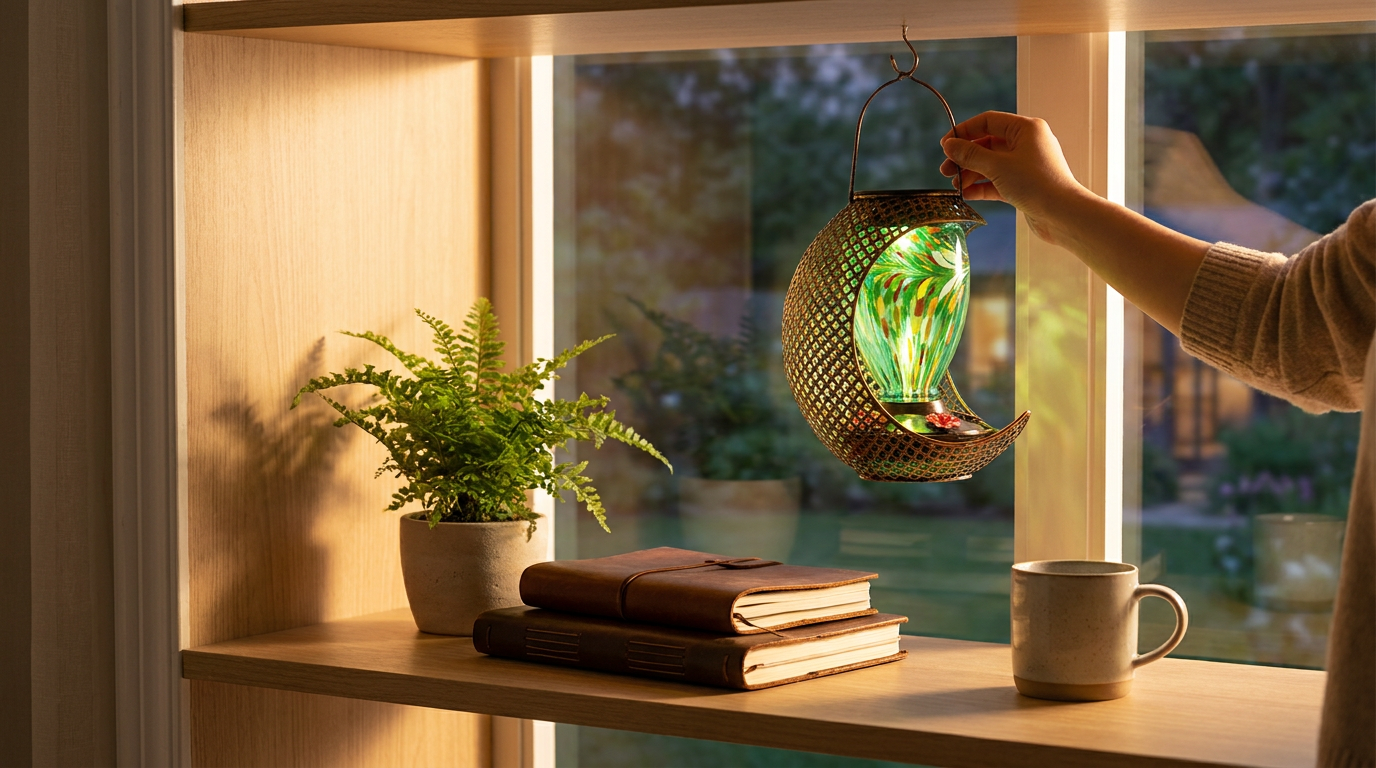
Do metal mesh Solar Hummingbird Feeder moon designs work?
 Maya ChenContributing Editor
July 13, 2026 — While moon-shaped metal mesh feeders are aesthetically popular, they often prioritize nocturnal garden illumination over the strict dietary requirements of hummingbirds unless specific glass reservoirs are integrated into the design.
Consumers looking for unique hummingbird gifts for women frequently encounter these units, which attempt to bridge the gap between functional wildlife support and solar-powered yard art. However, the thermal conductivity of a metal mesh frame can drastically accelerate nectar fermentation if solar panel placement is not optimized for shade-based operation.
Does the crescent moon shape impact hummingbird feeding?
The crescent moon design primarily serves as structural housing for solar components and perching space rather than enhancing the feeding mechanism. While the curve provides an ergonomic landing zone, efficiency depends entirely on the internal reservoir. Duncraft notes that copper bird feeders with mesh panels use the crescent shape to offer a protected feeding area, but these are often intended for seed-eating birds.
When applying this shape to a Solar Hummingbird Feeder, the metal frame acts as a heat sink. A glass reservoir encased in dark metal mesh can reach internal temperatures 10-15 degrees higher than ambient air in direct sunlight. This heat promotes rapid bacterial growth, requiring cleanings every 24 to 48 hours to prevent avian illness. The tension this review identifies — solar hardware wanting sun, nectar wanting shade — has a workable compromise in placement. Morning-sun, afternoon-shade positions, typically the east side of a tree canopy or pergola, give the panel its charging window during the cooler hours while sparing the reservoir the brutal 2-to-5 p.m. heat that does most of the spoiling. Hanging height and siting rules stay the same as for any feeder: at least four feet off the ground and away from shrubs that conceal ambushing cats, ideally within fifteen feet of cover the birds can retreat to between visits, and either within three feet of a window or well beyond ten to reduce collision risk. Households that want both the garden-light effect and serious bird feeding often end up splitting the jobs — this unit as the decorative piece in the sunny border, a plain shaded feeder doing the heavy nutritional lifting — which lets each object succeed at what it is actually good at.
How effective is the solar lighting in metal mesh designs?
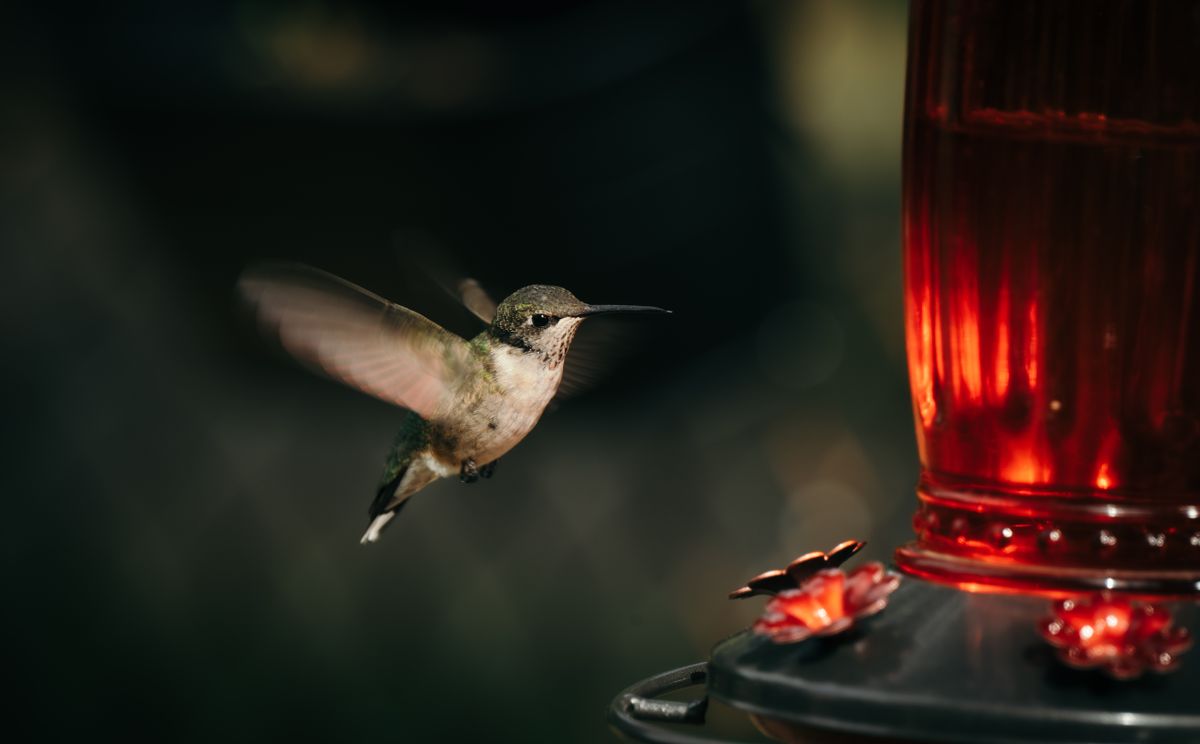
Solar lighting in these feeders provides low-lumen ambient glow rather than functional illumination. Integrating solar cells into the moon-shaped frame requires high-exposure placement, contradicting the "cool and shaded" requirement for healthy nectar.
Data from Pinterest listings for Moon & Stars patterns shows these feeders typically utilize a 6oz nectar capacity—smaller than standard 12oz or 16oz plastic models. This ensures nectar is consumed before the solar-heated frame spoils it. Marketed as a unique bird lover gift solar feeder, the light emitted is a soft LED that does not assist birds, as hummingbirds are not nocturnal. These intricate frames are rarely the easy to clean solar bird feeder for seniors prefer, as mesh can trap debris. Whatever the vessel, the nectar itself is non-negotiable territory. The only safe recipe is plain white sugar dissolved in water at one part sugar to four parts water — no red dye (the feeder's own color does the attracting), no honey (which ferments dangerously fast and can host botulism), no brown sugar, agave, or sweetener substitutes. Boiling the water helps dissolve the sugar and slows spoilage slightly; let it cool fully before filling. The small 6-ounce capacity this design carries becomes an advantage here: fill it halfway in hot weather rather than topping it up, because nectar the birds finish in two days never gets the chance to ferment, while a brimful reservoir mostly feeds the spoilage clock. Extra mixed nectar keeps a week or two in the refrigerator, which makes small frequent refills painless. If the liquid ever looks cloudy, or black specks appear anywhere the mesh meets the glass, that is the throw-it-out-and-scrub signal regardless of the calendar.
Quick answers
Q: What is the average nectar capacity of a moon-shaped glass feeder? A: Most moon and star themed glass feeders, such as those by Pot de Creme designs, feature a 6oz capacity to balance weight and fresh supply.
Q: Can metal mesh feeders be used for both seeds and nectar? A: Generally no, unless the unit includes a specific removable glass insert. Many crescent moon bird feeders on Etsy are designed as rustic metal bird baths or seed trays, lacking airtight seals for liquid nectar.
Q: Does the solar light attract hummingbirds at night? A: No, hummingbirds enter torpor at night and do not feed. The LED components in a Solar Hummingbird Feeder are for decorative garden lighting.
Learn more about Solar Hummingbird Feeder at https://solarhummingbirdfeeder.com.
Running the feeder by the calendar
The seasonal rhythm matters as much as the daily one. Hang the feeder in early spring, ahead of the first scouts — early arrivals remember reliable stations year to year — and resist the folk advice to take it down in fall to "send the birds south": migration is triggered by day length, not food supply, and a late feeder is a genuine aid to stragglers fattening for the trip. The working rule is to leave it up until two full weeks have passed with no visitors. In freeze-prone regions the solar unit then earns an indoor winter: cold slashes the battery's capacity, ice expansion stresses the glass reservoir, and a season in a dry garage costs nothing while doubling the electronics' useful life.
Spring recommissioning takes ten minutes: a thorough scrub of the reservoir and every mesh crevice, a fresh look at the hanging hardware (a winter of garage storage does not rust a hook, but the branch it hung from spent the winter outside), and one sunny day of charging before judging whether the LED survived the off-season as well as the birds' memory of the location will have.
Sources
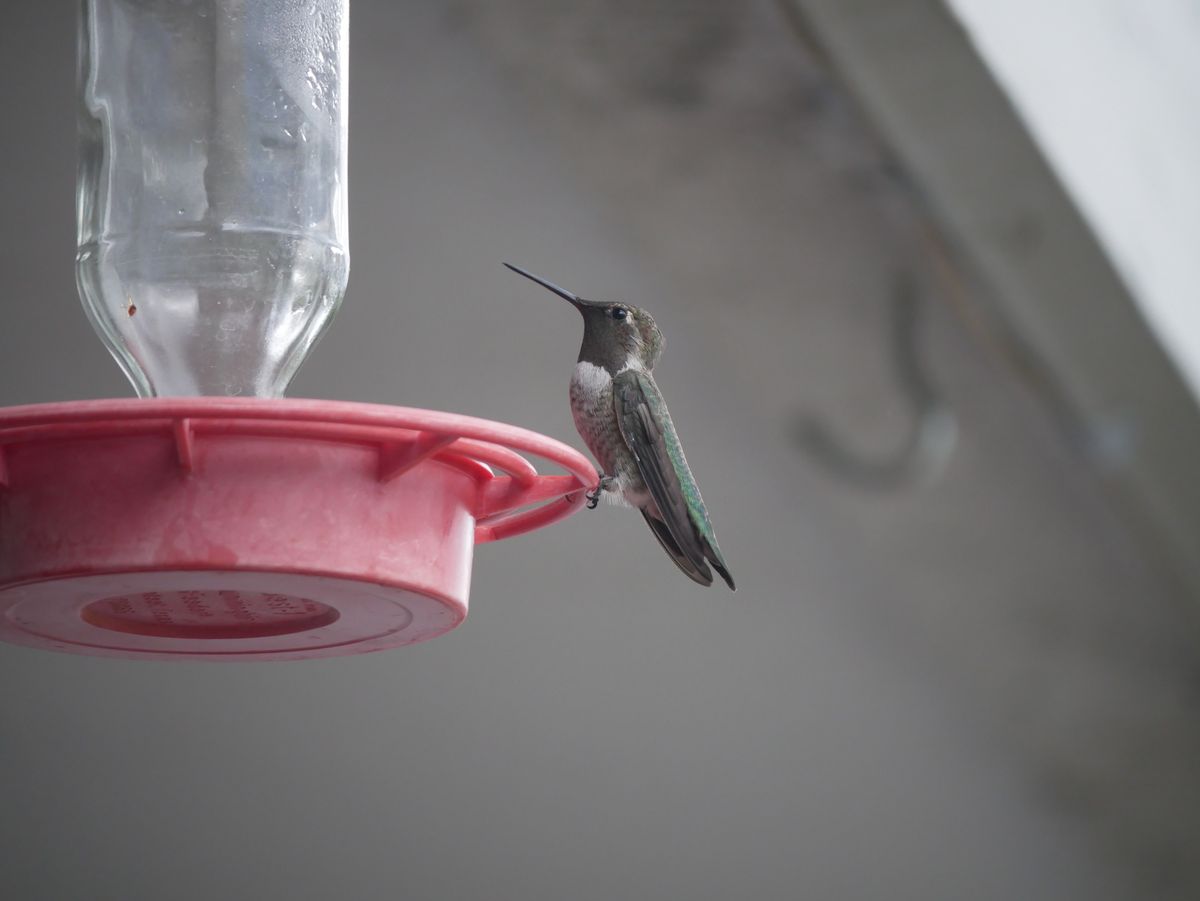
Photo by Connor kane on Pexels