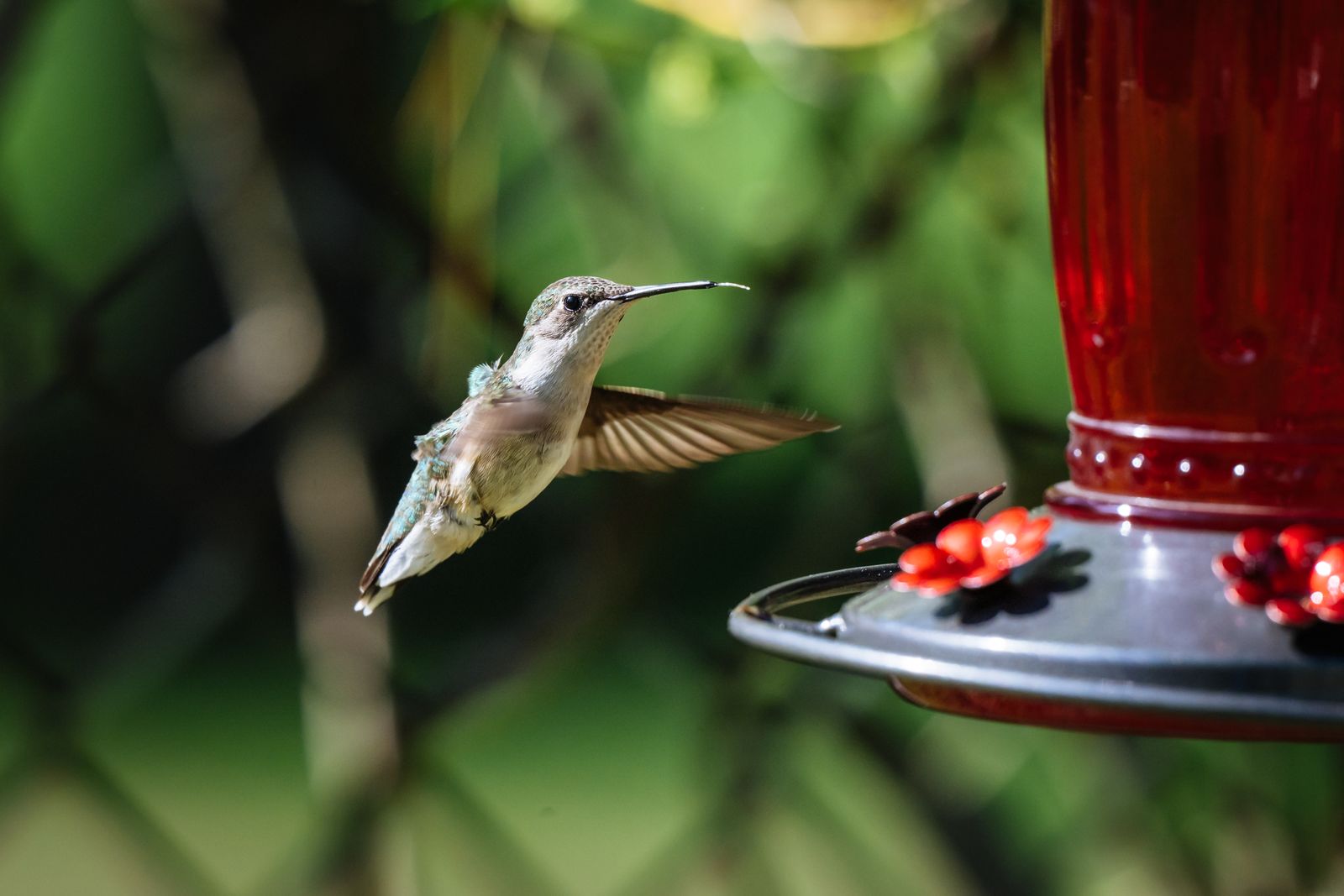
Jewel-Toned Glass vs. Bright Neon Finish: Which Feeder Hue Captures More Sightings?
Jewel-toned hand-blown glass feeders attract significantly more hummingbirds than bright neon plastic feeders. While neon offers flat high-contrast visibility, handcrafted ruby and amethyst glass refract natural sunlight and ultraviolet spectrums that leverage tetrachromatic avian vision—while solar RGB illumination keeps them visible through dusk without sun-fading or looking cheap.
Jewel Tone Glass vs. Neon Plastic Feature Matrix
| Feature / Criterion | Hand-Blown Jewel-Toned Glass | Bright Neon Plastic Finish |
| --- | --- | --- |
| Daylight Light Refraction | High: 2,300°F hand-blown glass curves bend sunlight into dynamic prismatic glints and UV highlights. | Low: Flat plastic surface creates uniform matte glare without prismatic depth. |
| Avian UV Spectrum Visibility | Superior: Translucent jewel silicate reflects and amplifies UV wavelengths visible to tetrachromatic hummingbird vision. | Moderate: Painted neon pigments absorb UV light and lack depth spectrum. |
| Sunlight & Thermal Durability | Lifetime: Color fused into glass matrix at 2,300°F; zero sun bleaching, warping, or cracking. | Poor: Plastic molecular bonds degrade under UV radiation, leading to fading and brittleness in 1–2 seasons. |
| Dusk & Night Illumination | Seamless Synergy: Built-in solar cap charges RGB LEDs that glow through translucent glass for up to 8 hours. | Opaque/Dull: Solid or cloudy plastic blocks internal glow, resulting in weak or harsh uneven light. |
| Garden Aesthetics & Gift Appeal | Artisan Luxury: Unique handcrafted swirl patterns enhance high-end garden landscapes. | Mass-Produced: Standard molded plastic looks utilitarian and cheap after outdoor exposure. |
| Nectar Safety & Leak Protection | Protected & Sealed: Non-porous glass with anti-rust coated metal base and tight silicone seals prevents drips. | Variable: Molded plastic threads wear down quickly, increasing drip and wasp/ant attraction risk. |
The table below compares handcrafted jewel-toned glass feeders with mass-produced neon plastic feeders across critical performance, optical, and durability criteria.
Comparing Feeder Hues: Trade-Offs at a Glance
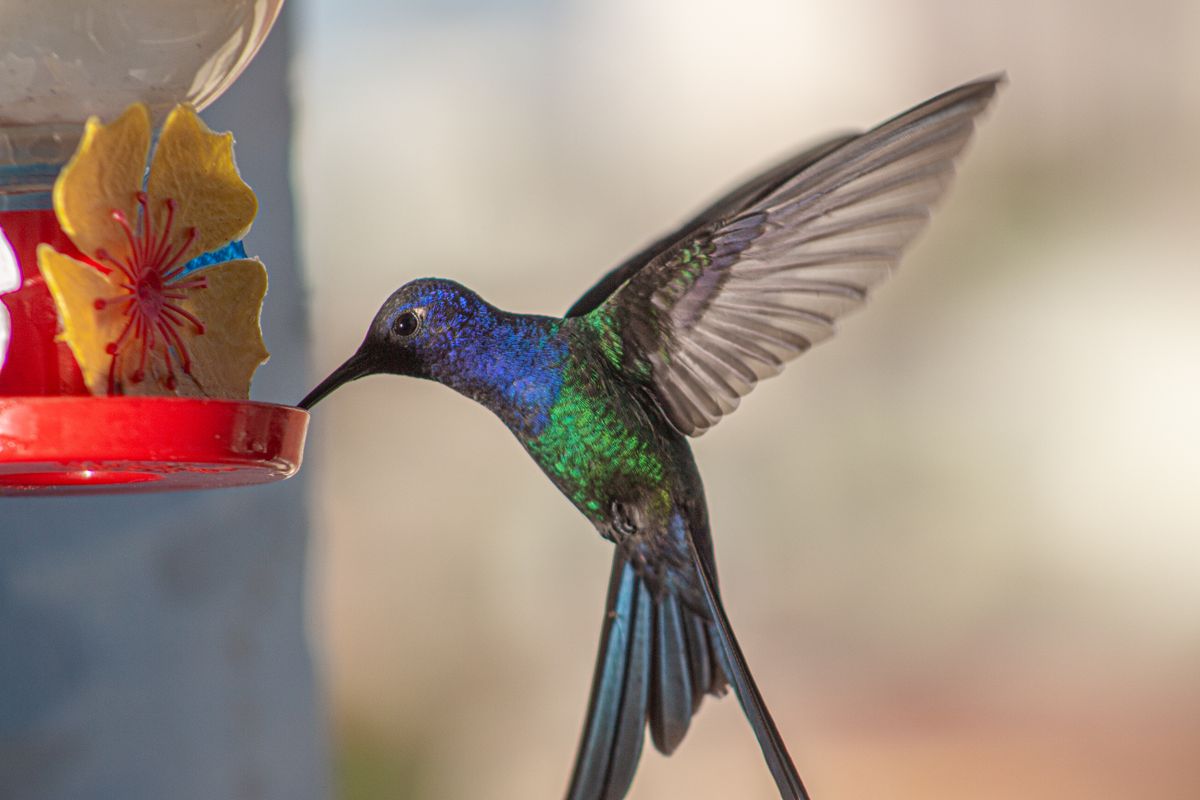
Photo by Lucas Pezeta on Pexels
Pros
- Prismatic glass refraction catches sunlight and creates vivid specular highlights visible from long distances.
- Tetrachromatic visual stimulation matches natural flower hues without needing harmful red-dyed nectar.
- Integrated solar-powered RGB illumination turns dark jewel glass into a glowing garden beacon at twilight.
- Hand-blown glass crafted at 2,300°F never fades, bleaches, or degrades under direct sunlight exposure.
- Heavy glass weight combined with an anti-rust metal base provides stability against wind tipping.
- Higher initial investment compared to basic single-season plastic feeders.
- Requires careful handling during cleaning to prevent accidental impact damage.
Editor's Pick: LUJII Solar Hand-Blown Jewel Glass Feeder
For bird lovers seeking maximum sightings alongside stunning backyard decor, the LUJII Solar Hand-Blown Jewel Glass Hummingbird Feeder represents the perfect balance of visual science and artisanal beauty.
Artisanal Sunlight Positioning
Position your hand-blown jewel glass feeder where it catches direct morning sun from the east while enjoying partial afternoon shade. Morning rays striking the curved 2,300°F glass act as a natural optical prism, flashing high-contrast light glints that draw migrating birds early in the day. Meanwhile, the top solar collector recharges efficiently to power evening RGB lighting during dusk feeding binges.
Initial Action Steps for Garden Setup
Your decision: Transition from sun-bleached neon plastic to hand-blown solar jewel glass.
Do this next: Mount a 32 oz solar jewel glass feeder in an east-facing garden location with 4-6 hours of daily sunlight exposure.
- Read next: Do Hummingbirds Feed at Night? Understanding Dusk Behavior Around Illuminated Feeders
- Read next: How to Clean and Maintain Hand-Blown Glass Hummingbird Feeders Without Fading Color
LUJII Solar Hand-Blown Jewel-Toned Hummingbird Feeder
Follow these simple steps to transition your yard to high-contrast jewel glass feeding.
Frequently Asked Questions About Feeder Hues
Answers to common queries regarding solar illumination, glass color, and hummingbird attraction.
Key Sightings Summary
- Hummingbirds possess tetrachromatic vision, allowing them to detect ultraviolet light refraction that clear or painted plastic cannot produce.
- Hand-blown glass color pigments are fused at 2,300°F into the silicate matrix, guaranteeing zero fading, peeling, or sun bleaching over time.
- Translucent ruby and amethyst glass eliminate any need for harmful red food dye in sugar water solutions.
- Solar-powered RGB LED caps illuminate dark jewel glass from within, creating a twilight feeding station during critical pre-dark energy refueling.
- Anti-rust coated metal bases and sealed silicone gaskets prevent nectar leaks that attract ants and wasps.
Which Feeder Hue Matches Your Backyard Goals?
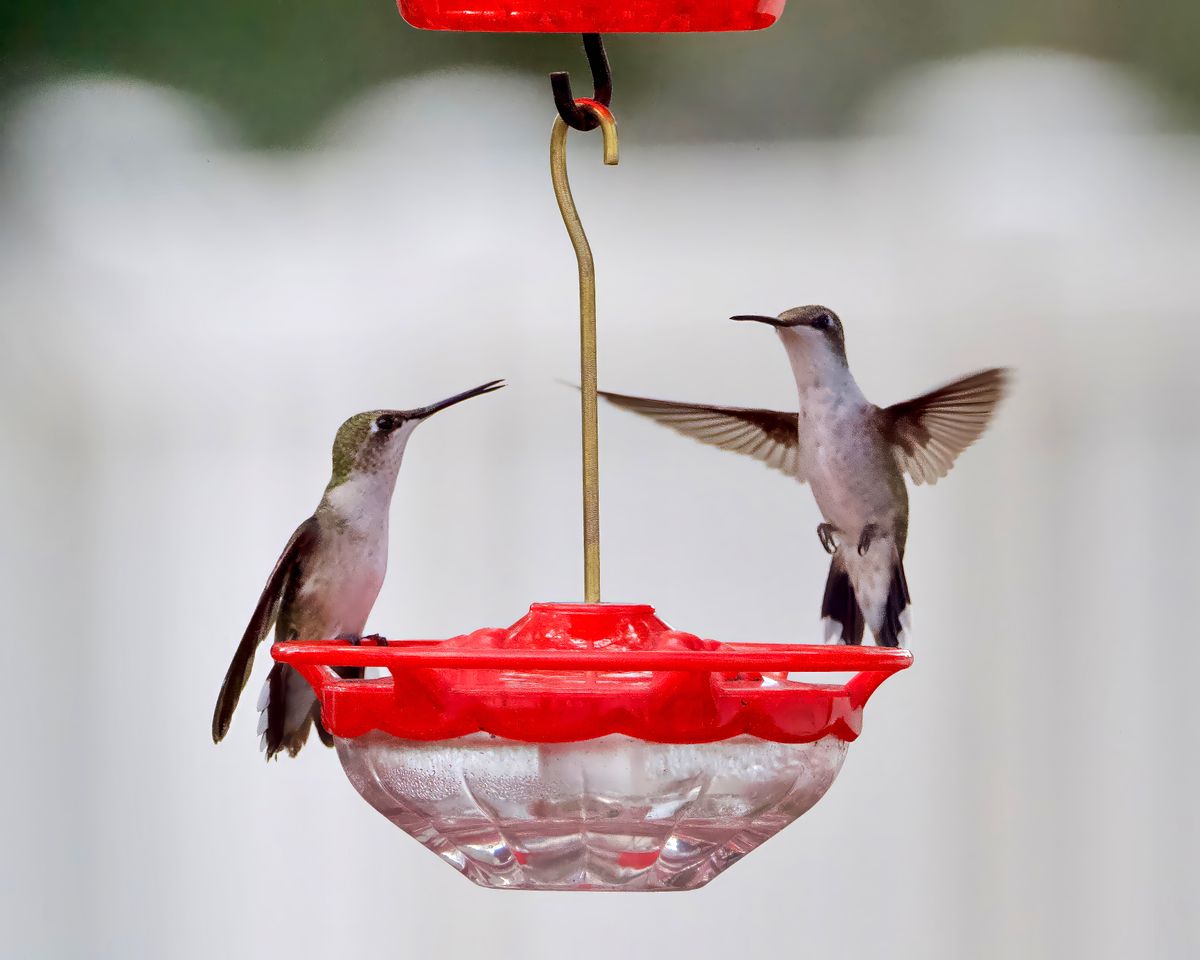
Photo by A. G. Rosales on Pexels
Jewel-toned hand-blown glass outperforms bright neon plastic across both attraction science and garden decor longevity. While neon plastic fades and turns brittle under intense UV sunlight, hand-blown ruby and amethyst glass retain rich color indefinitely, refracting natural sunlight into shimmering focal points during the day while solar RGB lights maintain visibility through dusk.
Best choice for
- Hand-Blown Solar Jewel Glass — Refracts sunlight into shimmering visual cues during peak morning sun hours.
- Solar RGB Jewel Glass Feeder — Internal LED glow illuminates translucent glass during dusk twilight feeding sessions.
- Artisan Hand-Crafted Glass Feeder — Individually blown glass patterns serve as garden art even when birds are not actively feeding.
- You are seeking a temporary, single-season disposable container for seasonal travel.
- Molded Tinted Glass — Provides glass durability but lacks the unique multi-layered color swirls and light refraction of 2,300°F hand-blown art.
Real-World Backyard Lighting Scenarios
Full Midday Sunlight (12:00 PM - 3:00 PM) — Jewel-toned glass shines brightest. The 2,300°F hand-blown curves capture direct overhead sunlight, sending dynamic glints into surrounding trees. Neon plastic creates a flat glare that can look washed out under intense sun.
Twilight & Dusk Feeding (6:30 PM - 8:00 PM) — Solar RGB jewel glass excels. As natural light fades, the internal solar-charged LED turns on, making translucent ruby or amethyst glass glow softly. Standard plastic feeders turn dark and invisible during this critical feeding window.
Shaded Porch or Under Tree Canopy — Translucent jewel glass allows ambient light to pass through the 32 oz reservoir, maintaining vibrant hue contrast against dark foliage background.
Here is how different feeder materials perform under practical garden conditions throughout the day.
To understand why jewel-toned hand-blown glass attracts more hummingbirds than neon plastic, one must look through the eyes of the hummingbird itself. Unlike human trichromatic vision (which relies on red, green, and blue photoreceptors), hummingbirds possess tetrachromatic vision. They have a fourth retinal cone dedicated exclusively to sensing ultraviolet (UV) wavelengths.
Prismatic Glass Refraction vs. Flat Plastic Absorption
When natural sunlight strikes a handcrafted glass feeder shaped at 2,300°F, the subtle variations in glass density and surface curvature act as natural prisms. Sunlight is broken into spectral highlights, including deep UV reflections that hummers detect from hundreds of feet away.In contrast, factory-molded neon plastic features a flat, uniform surface. Synthetic neon dyes absorb specific light frequencies while reflecting a flat, opaque matte surface. While bright to human eyes, neon plastic lacks the dynamic specular glints and UV depth spectrum that signal abundant nectar in wild flowers.
Why Hand-Blown Glass Retains Vibrant Color Indefinitely
Synthetic neon colors on plastic feeders are applied via surface paints or chemical dye mixes bound within polymer chains. Under intense sunlight, high-energy UV rays break these chemical bonds, causing severe fading, chalking, and structural brittleness within one to two seasons.Hand-blown glass color pigment is completely different. Mineral salts and metallic oxides are fused directly into the molten silicate matrix at temperatures reaching 2,300°F. The vibrant ruby, sapphire, or amethyst tones are chemically locked inside the non-porous glass forever. Rain, snow, and decades of direct sunlight will never bleach or peel the finish.
Continue Exploring Backyard Avian Care
Discover more ways to enhance your garden ecosystem and care for visiting hummingbirds:
- Do Hummingbirds Feed at Night? Understanding Dusk Behavior Around Illuminated Feeders
- How to Clean and Maintain Hand-Blown Glass Hummingbird Feeders Without Fading Color
- The Art of 2,300°F Glassblowing: How Heritage Craftsmanship Shapes Unique Garden Decor
- Spring Outdoor Styling: Enhancing Natural Sunlight with Vibrant Glass Accents
Featured Solar Jewel Glass Feeders
Bring visual enchantment and high bird traffic to your yard with these premium hand-blown solar feeders.
Elevate Your Garden Sightings Today
Your decision: Choose hand-blown jewel-toned solar glass for maximum hummingbird attraction, UV stability, and evening beauty.
Do this next: Select a 32 oz leak-proof solar jewel glass feeder and hang it in an east-facing garden area with partial morning sun.
- Read next: Do Hummingbirds Feed at Night? Understanding Dusk Behavior Around Illuminated Feeders
- Read next: How to Clean and Maintain Hand-Blown Glass Hummingbird Feeders Without Fading Color
LUJII Solar Hand-Blown Jewel-Toned Hummingbird Feeder (32 oz, Metal Base, RGB Lighting)
Transform your outdoor space into an oasis for hummingbirds while adding handcrafted luxury decor.
Cover photo by Chris F on Pexels.