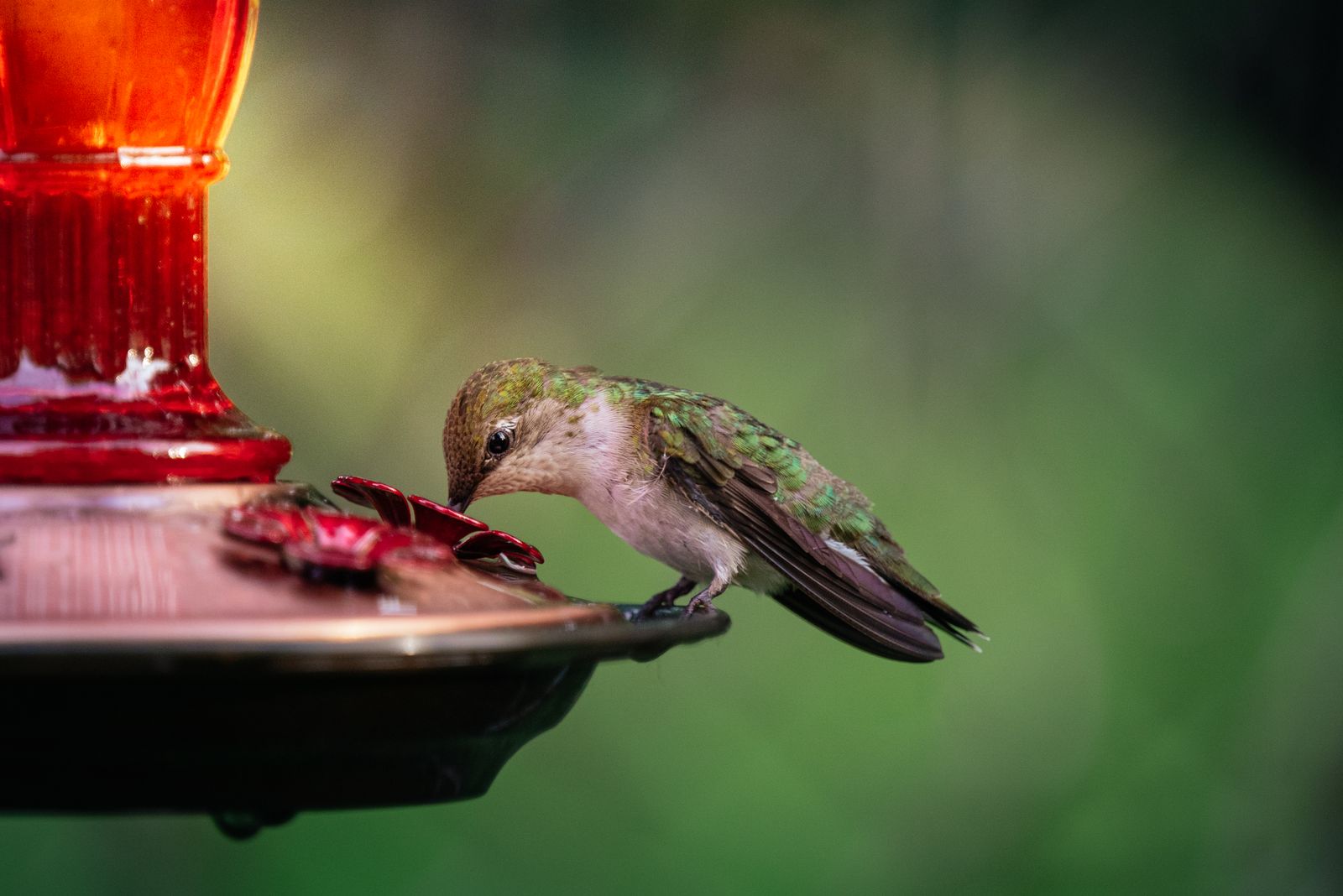
How to Set Up and Use an Ant Moat for Pest-Free Hummingbird Feeding
An ant moat is a small cup that hangs between your hook and your hummingbird feeder, filled with plain water, that ants cannot cross. It works because ants walk down the hanging wire, reach the water, and turn back. Setting one up takes about two minutes, and it is the most reliable non-chemical way to keep ants out of nectar.
What an ant moat is and why it works
A moat is nothing more than a water-filled ring with a hook on top and a hook or rod through the middle. The feeder hangs from the bottom, the moat hangs from your bracket, and the only path from the tree branch to the nectar runs straight through the water. Ants are excellent climbers but they will not swim across an open span of water to get to food.
That is the whole trick, and it is why the moat is described as a physical barrier rather than a repellent. Nothing is being killed and nothing toxic is introduced near a food source birds drink from. Ants arrive, find the crossing impassable, and eventually stop scouting that route.
The reason this matters is that ants in a feeder are not just unsightly. They drown in the nectar, foul it, and speed up spoilage. Ant scouts also recruit: one ant that reaches the ports brings a trail of hundreds within a day.
How to install an ant moat, step by step
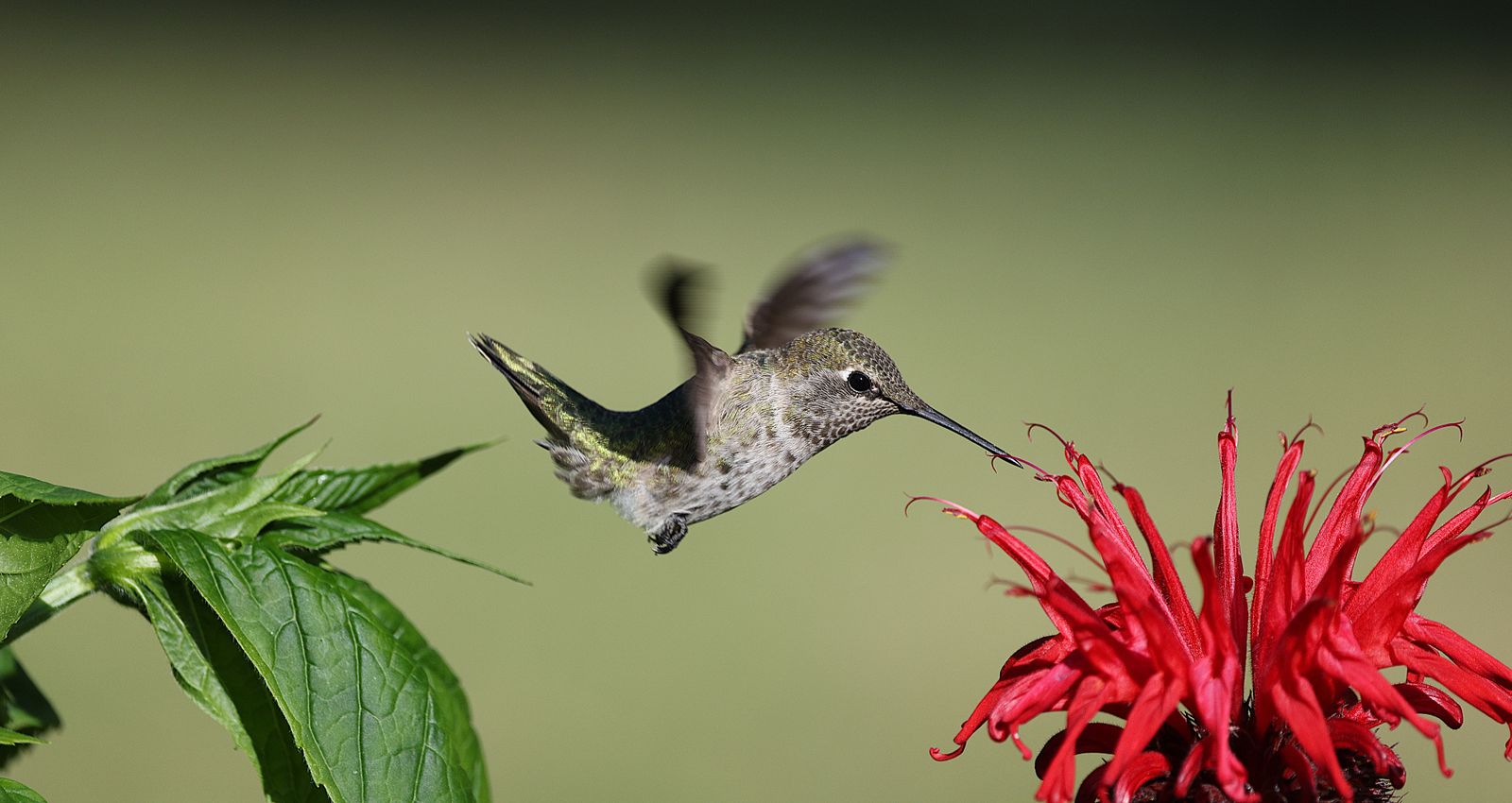
Photo by Veronika Andrews on Pexels
Where should the moat sit relative to the feeder?
Directly above it, in line, with a clear air gap on all sides. Two placement mistakes account for most moat failures.
The first is hanging the moat where the feeder can touch a wall, post, fence, or trunk. Ants will happily walk along the fence and step across onto the feeder body, ignoring the water entirely. Give the feeder at least a foot of clear space in every direction.
The second is hanging the moat under a dense canopy that drops leaves and seeds into it. A moat clogged with debris both wicks water out and gives ants something to walk on. A spot with some overhead cover is fine; a spot directly under a heavy leaf drop is not.
Do you still need a moat if the feeder is well sealed?
A leak-free feeder removes the invitation, and that is genuinely most of the battle. Ants find feeders by following sugar residue, so a feeder with a clean, tight seal and no drip is far less interesting to them. The hand-blown glass feeder on this site uses a sealed base and a slender profile specifically to keep nectar inside rather than running down the outside.
Even so, a moat is worth adding for two reasons. Sugar residue accumulates during filling no matter how careful you are, and a few drops always end up near the ports. And in a yard with an established ant colony, scouts will investigate anything that smells faintly sweet. The moat handles the residual risk that good sealing cannot.
Ant moat vs. the alternatives
| Approach | How it works | Practical result | Concerns | |---|---|---|---| | Water-filled ant moat | Physical water barrier on the hanging path | Very effective, nothing toxic near nectar | Needs topping up; fails if debris or a branch bridges it | | Built-in moat design | Same principle, integrated into the feeder cap | One less part to hang | Usually small, so it dries out faster | | Petroleum jelly or oil on the hanger | Sticky or slick coating ants avoid | Works briefly | Can transfer to feathers; melts and runs in heat; collects dust and stops working | | Insecticide or ant bait near the feeder | Chemical control | Not appropriate around a bird food source | Risk to hummingbirds and other pollinators | | Relocating the feeder | Breaks the established trail | Sometimes buys a few weeks | Ants usually rediscover the site |
The pattern is clear enough: barriers beat chemicals around anything birds drink from, and water is the cleanest barrier available.
Ongoing maintenance that keeps a moat working
Check the water when you check the nectar, which for most yards means every two or three days in warm weather. Tip out debris, rinse the cup, and refill. Once a week, wipe the outside of the feeder near the ports with a damp cloth, since a thin sugar film there is what draws scouts in the first place.
While you have the feeder down, look at the whole hanging assembly. Rust or grit in the moat's hooks makes the feeder hang crooked, and a crooked feeder is more likely to weep from its ports. If the moat has a painted or coated finish, keep an eye on chips, since bare steel in standing water rusts quickly.
Also watch the mounting hardware itself. A filled 32 fluid ounce reservoir plus a moat full of water is real weight on a thin branch or a lightweight suction hook, and a fall costs you both the nectar and possibly the glass.
How the moat fits into a broader pest strategy
Ants, bees, and wasps are drawn by three things: exposed sugar, spilled nectar, and warm nectar that is starting to ferment. A moat handles the walking insects. Keeping the feeder clean and the nectar fresh handles most of the flying ones. Feeders with small ports and no yellow accents tend to attract fewer wasps, since yellow reads as a flower to them.
Fresh nectar is the foundation under all of it. Mix one part plain white sugar to four parts water, skip red dye and honey entirely, and replace the nectar every few days, more often when it is hot or when the liquid looks at all cloudy. A see-through glass reservoir makes that judgment easy because you can see the nectar rather than guessing. If you are also thinking about what else in the yard pulls hummingbirds in, this comparison of live nectar plants and glass solar feeders is a good companion read, and the durability differences between hand-blown glass and plastic feeders explain why the reservoir material affects how long a clean setup stays clean.
FAQ
How much water does an ant moat need? Nearly full, but not brimming. You want the widest possible water gap without water sloshing out when wind swings the feeder. Top it up every couple of days, and daily in hot, dry stretches.
Will hummingbirds drink from the moat? They generally are not interested in the moat, though other birds may occasionally sip from it or bathe at a wide one. That is harmless as long as the water is plain and refreshed regularly, which is another good reason to keep only water in it.
Can I use an ant moat with a feeder mounted on a pole or window bracket? Yes, as long as the feeder hangs below the moat from a hook or arm. What matters is that the only route to the feeder passes through the water, and that the feeder cannot touch the pole, wall, or glass.
What if ants are still getting in? Look for a bridge first. A touching leaf, a vine, a wire, or the feeder brushing a post is almost always the answer. Then check that the moat actually has water in it and that the feeder itself is not leaking sugar down its side.
A practical next step
Bring your feeder down, hang a moat above it, fill the moat with plain water, and then walk around the feeder once looking for anything solid it touches. Clear that contact point, and add moat water to the same routine as your nectar change so it never runs dry.
Cover photo by Chris F on Pexels.