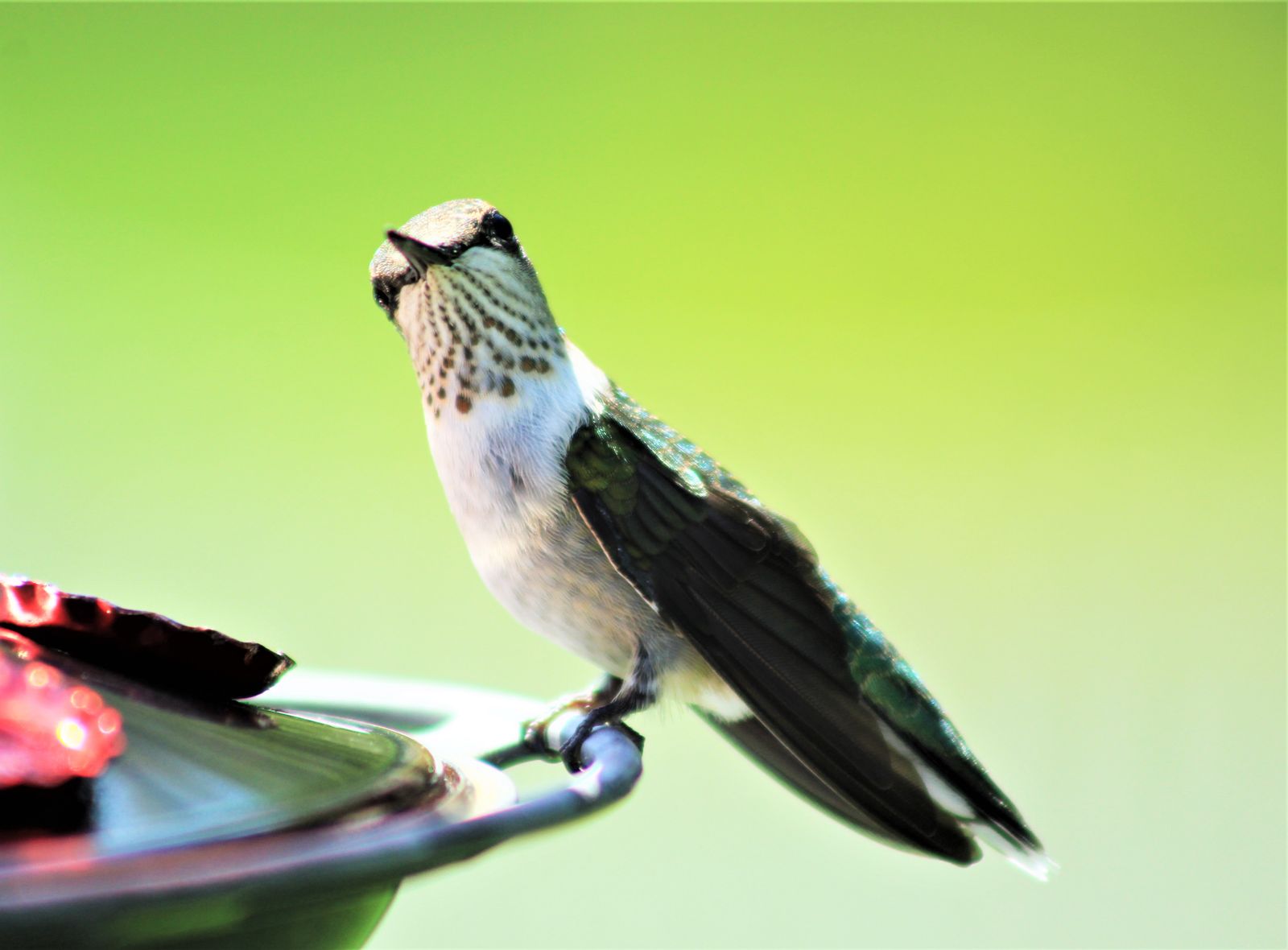
Keep Your Garden Glowing: How to Care for and Troubleshoot Your Solar Hummingbird Feeder Light
A solar hummingbird feeder light that has gone dim, short, or dark almost always has one of four causes: a dirty solar cap, too little direct sun where it hangs, a cell that has not had a full charge cycle in a while, or moisture and grime on the contacts. Cleaning the cap and moving the feeder into four or more hours of unobstructed daylight fixes the large majority of cases. This feeder is rated to run its RGB lights for up to 8 hours after a full recharge, so anything far short of that is a signal worth chasing.
What actually powers the light
The plastic solar cap on top of the feeder does two jobs at once. It shields the nectar below from sunlight, rain, and snow, and it collects the day's energy for the lights that come on after dark. Solar garden lighting of this type stores that energy in a small rechargeable cell inside the housing, then releases it through the RGB lights once the panel stops seeing daylight.
That design has one consequence worth internalizing: run time is a direct function of how much clean, direct light the cap received that day. Shade, dust, pollen, hard-water film, and a low winter sun all reduce the deposit, and the light simply spends less at night. Nothing is broken when a mid-December evening gives you a fraction of a July evening.
Symptom-to-cause reference
Photo by Veronika Andrews on Pexels
| What you see | Most likely cause | First thing to try | |---|---|---| | No light at all after dark | Panel got no meaningful sun, or the light is switched off at the mode control | Cycle the mode control, then leave the feeder in full sun for a full day | | Light runs 1–2 hours instead of most of the night | Partial shade or a filmed-over cap | Wipe the cap with a damp cloth; re-check the hanging spot at midday | | Light is dim or flickers | Weak charge, or a cell nearing the end of its useful life | Give it three consecutive full-sun days before judging it | | Light comes on during the day | Deep shade fooling the light sensor | Move the feeder so the cap sees open sky | | Colors will not change | Mode control not registering the press | Press deliberately once, wait, then press again | | Light works but the glass looks cloudy from inside | Nectar residue, not a lighting fault | Empty, rinse, and refill with fresh nectar |
A step-by-step reset for a light that stopped working
Work through these in order rather than jumping to a conclusion. Each step rules out a cause, so stopping early tells you what the problem was.
Why did the run time get shorter without anything changing?
Two seasonal factors do this quietly. First, day length: fewer daylight hours means a smaller charge, so a feeder that ran most of the night in June may run a couple of hours in November. Second, sun angle and new shade. A tree that was bare in April carries full leaf by July, and a spot that was in open sun becomes dappled shade without anyone moving anything.
Walk the yard at solar noon once each season and look up from where the feeder hangs. If you cannot see open sky from the cap, the panel cannot either. Rechargeable cells also lose capacity gradually over years of daily cycling, which shows up as a steadily shorter evening rather than a sudden failure.
Caring for the cap and glass without wrecking the seal
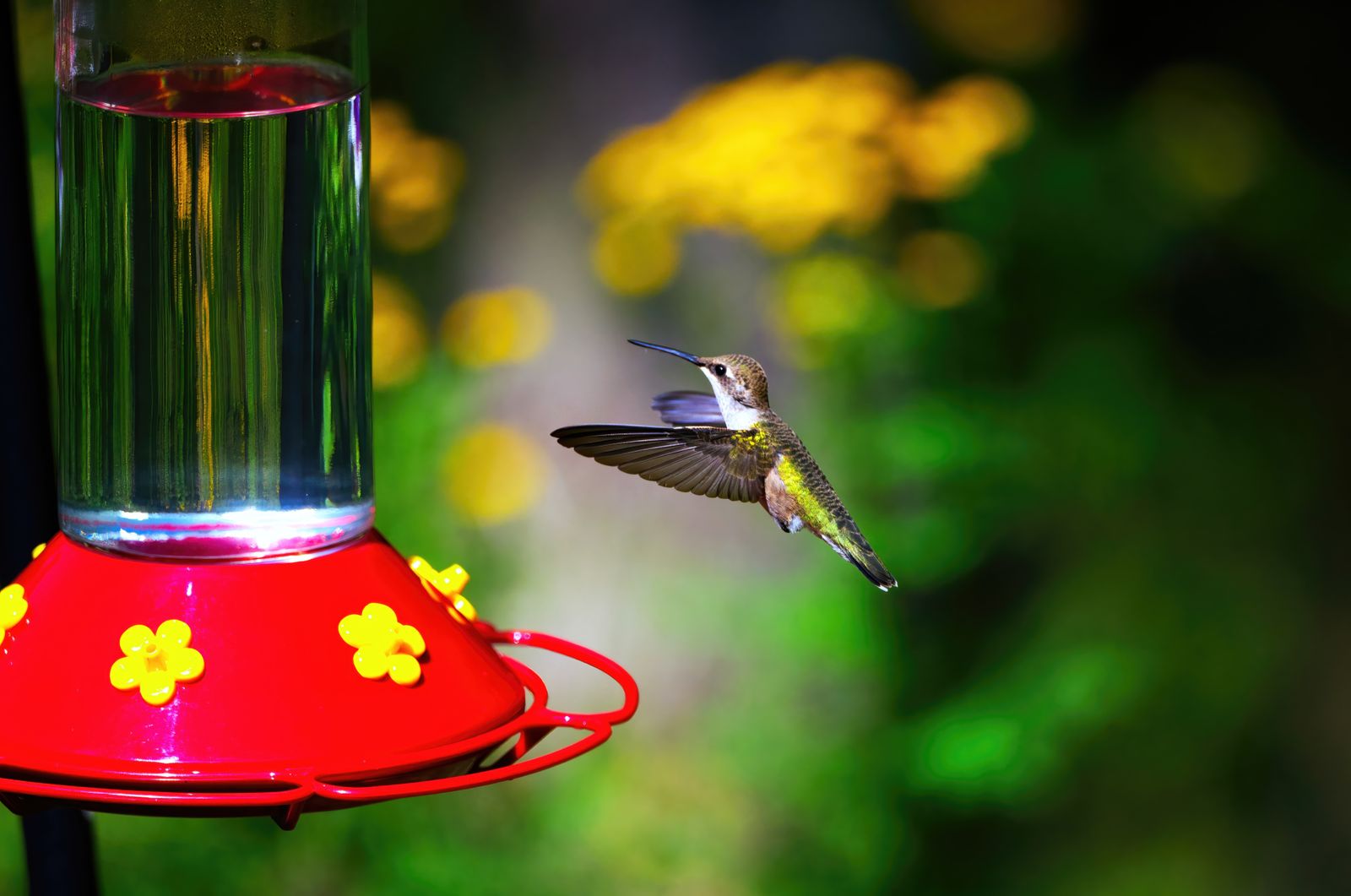
Photo by DANNIEL CORBIT on Pexels
The lighting system and the sealed base are separate concerns, and the mistakes that ruin them are different. For the cap, the rule is gentle: damp cloth, no scouring, no dishwasher, no pressure washer, and no soaking. Hazed plastic never recovers.
For the reservoir, the see-through hand-blown glass is an advantage — you can read the nectar level and spot cloudiness without disassembling anything. Rinse it with hot water and a bottle brush, and keep any strong cleaner away from the sealed base and its gasket surfaces so the leak-resistant fit stays intact. Let every part dry before reassembly, because trapped moisture is how a clean feeder still ends up growing something.
Nectar care is where most feeder problems actually start. Mix one part plain white sugar to four parts water, use no red dye, no honey, and no brown sugar, and change the nectar more often in hot weather — every day or two during a heat wave. If ants find the feeder, hang a water-only ant moat above it and refill it with plain water.
Off-season storage that protects the light
At the end of the season, empty and dry the feeder completely, then store the whole unit somewhere cool and dark but not freezing if you can manage it. Hand-blown glass is best stored upright and padded rather than stacked, since each reservoir is shaped individually and the curves do not nest.
One habit pays off in spring: give the cap a few hours of sun before the first night you want light. A cell that has sat discharged all winter needs a charge cycle or two before it delivers a normal evening.
FAQ
How many hours of sun does the feeder need each day? Aim for at least four hours of direct, unshaded light on the cap. Less than that and the evening run time shortens in proportion. Bright overcast still charges, just more slowly than clear sun.
Can the solar cap go in the dishwasher with the glass? No. Heat and detergent damage the panel surface and the electronics inside. Wipe the cap by hand with a damp cloth and keep it out of any soak or wash cycle.
Is it normal for the light to be dimmer at the end of the night? Yes. Output tapers as the stored charge runs down, so the last stretch before the light goes out is usually the faintest. A light that starts dim on a sunny day is the real warning sign.
The lights work but the nectar keeps going cloudy. Is that a solar problem? No. Cloudy nectar means spoilage from heat, sun exposure, or too long between changes. Move the feeder out of harsh afternoon sun, shorten the refill interval, and scrub the reservoir at every change.
A practical next step
Do a one-day controlled test: empty the feeder, wipe the cap, hang it in your sunniest open spot for a full day, and check it after full dark. That single test separates a placement problem from a hardware problem faster than any other move. If you are still comparing how different feeder materials hold up to years of this routine, the look at hand-blown glass versus plastic feeders is a useful companion, and the piece on live nectar plants alongside glass solar feeders covers what to plant so the feeder is not doing all the work.
Cover photo by Karen F on Pexels.