How to Incorporate Hand-Blown Glass Decor into Your Backyard Bird Sanctuary
Hand-blown glass works in a bird garden because it does two jobs at once: it catches light the way water and petals do, and it can be functional rather than purely ornamental. The approach that looks best is restraint with a plan, which means choosing one dominant color family, placing pieces at three different heights, and putting the most detailed piece where you actually sit. A hand-blown glass feeder is the natural anchor, since it earns its place by feeding birds as well as decorating the yard.
Why glass belongs in a bird garden at all
Gardens are mostly matte. Leaves, bark, soil, and mulch absorb light, so anything translucent reads as a highlight rather than as another object. Glass takes that role without adding visual weight the way a painted metal ornament does.
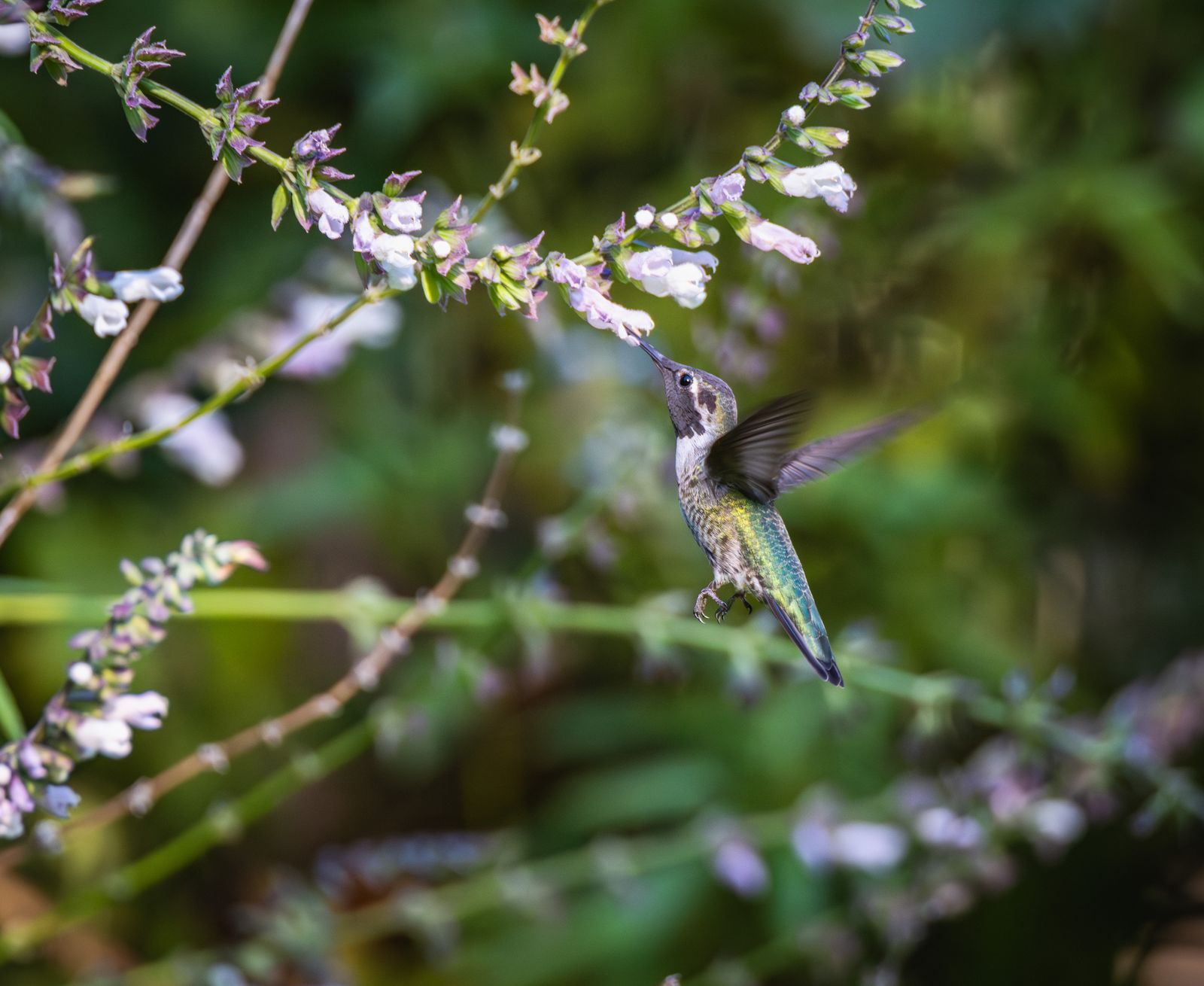
It also aligns with what draws birds. Hummingbirds respond to color and to movement, and colorful translucent glass in sunlight is a genuine visual cue in a way that a gray stone feature is not. That is a happy overlap rather than a trick: the thing that pleases you is close to the thing that catches a bird's eye.
The other reason is longevity. Glass does not fade in ultraviolet light, does not chalk, and does not warp in heat, so a glass piece looks the same in its fifth summer as its first. That matters in a garden, where most decor ages visibly within two seasons.
What hand-blown means and why it looks different
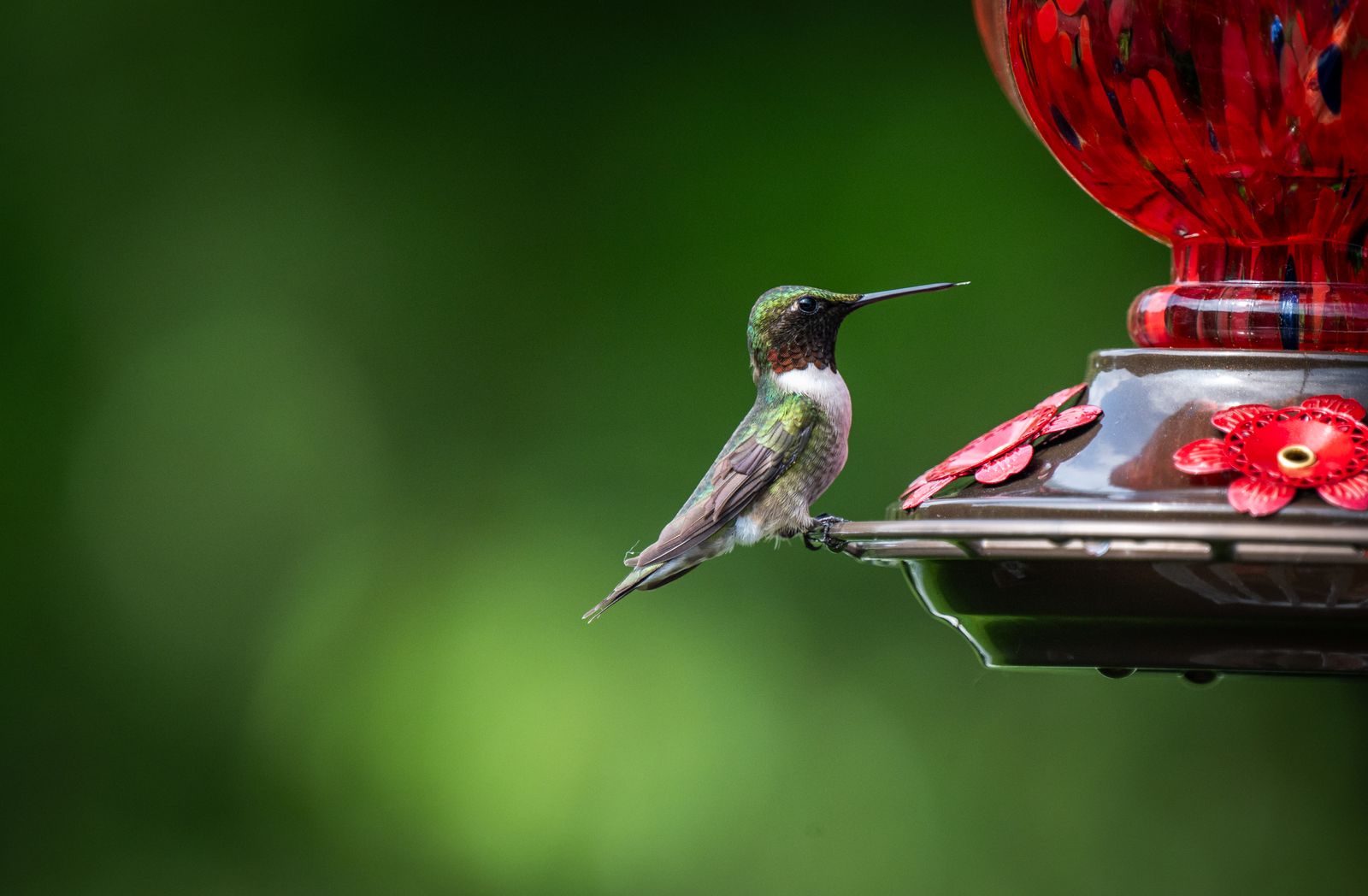
Hand-blown glass is shaped by a person at the furnace rather than pressed into a mold. On the feeder sold here, each reservoir is handcrafted by glass artists working the material at around 2,300 degrees, shaping the curves and patterns individually using techniques passed down through generations, so no two pieces come out identical.
The visual consequence is subtle but real. Wall thickness varies slightly, color moves through the piece rather than sitting in a uniform layer, and the surface has small irregularities that scatter light unevenly. That unevenness is why hand-blown glass looks alive in sun and molded glass often looks flat. Variations are characteristics of the process, not defects.
Start with one anchor piece, not a collection
The most common mistake is buying several glass ornaments at once, in unrelated colors, and distributing them evenly. The result reads as clutter, and nothing gets looked at.
A better sequence:
Placement that flatters glass
| Location | Why it works | Watch out for | |---|---|---| | Backlit by low afternoon sun | Light passes through and the piece glows | Nectar in a feeder heats up in full sun | | Against dark evergreens | Dark backdrop makes translucent color pop | Dense cover can let insects walk onto a feeder | | Beside a path or step | Rewards close viewing of detail | Foot traffic and knocks; keep it slightly off the path | | Near a seating area | The anchor position; you see it daily | Give a feeder a foot of clearance from walls and rails | | In front of a plain fence or wall | Uncluttered background | Reflected heat from light-colored walls | | Deep shade | Restful, sculptural | Glass reads dull, and a solar cap will not charge |
How to combine a glass feeder with planting
Treat the feeder as the center of a small planted composition rather than an object hung in isolation. A few principles that hold up:
- Put tubular, nectar-rich flowers in warm colors nearby, so the area reads as a feeding zone rather than a single station.
- Use plants of staggered height so the feeder sits above the foliage rather than being swallowed by it.
- Keep a thin bare branch or a slim stake within a few yards as a perch. Hummingbirds like somewhere to rest and watch from between visits.
- Keep foliage from touching the feeder or its hanger. Anything touching becomes an ant bridge.
- Mulch or a low groundcover underneath keeps the area looking finished and makes any spill obvious.
Making the display work after dark
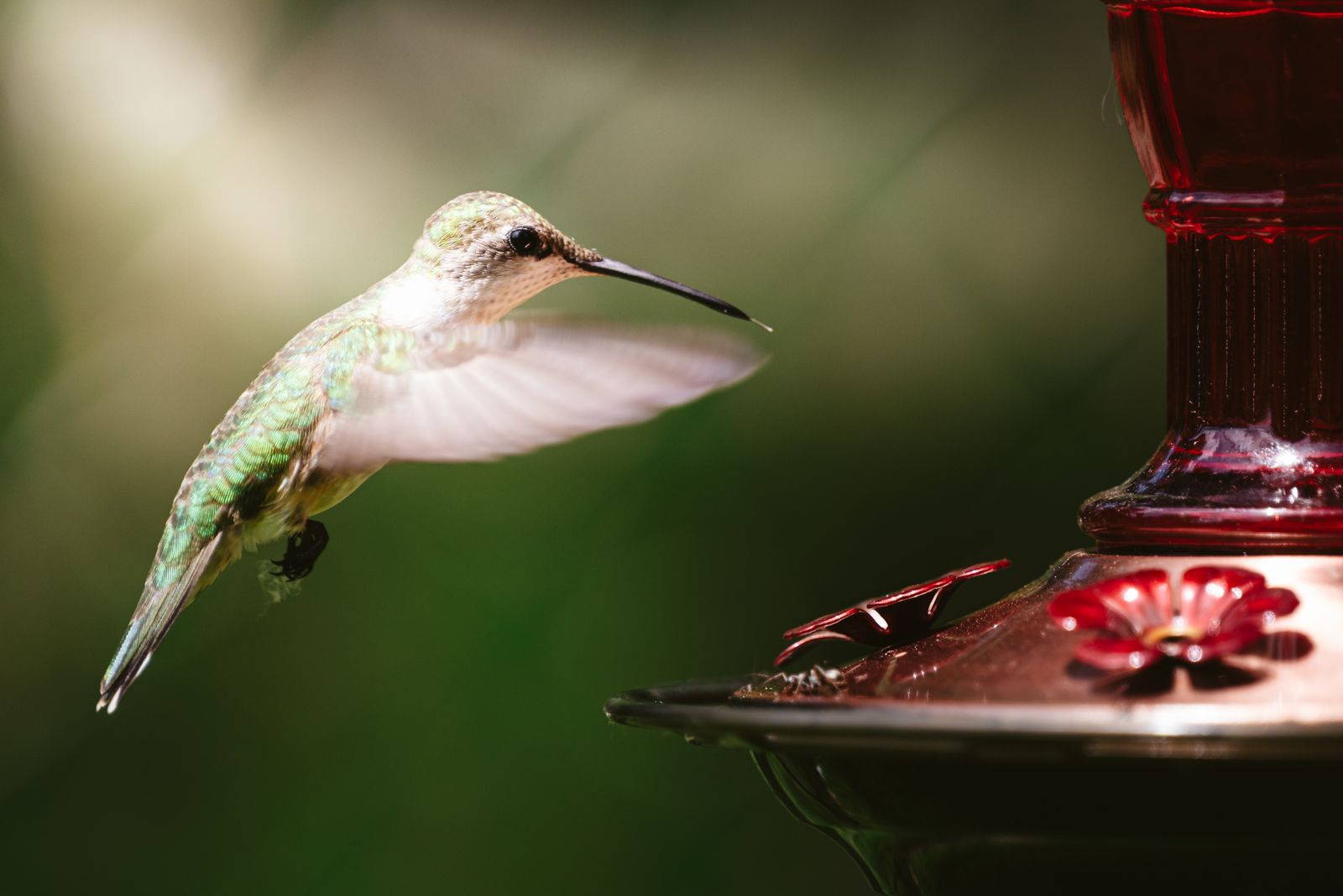
Glass decor is at its best when light passes through it, and after sunset that means lighting from within or above. A solar cap does this automatically without wiring, cords, or a switch. The feeder on this site lights up automatically at night for up to 8 hours after a full recharge, with RGB lights and multiple lighting mode options, so a translucent hand-blown reservoir becomes the lit focal point of an evening yard.
Two practical notes. First, a solar panel needs several hours of real direct sun, so the anchor position has to satisfy both charging and nectar temperature, and morning sun with afternoon shade is the compromise that works. Second, aim the glow at the glass rather than washing light into hedges and dense shrubs, since that is where birds actually roost at night.
For everything else in the display, uplighting a piece from below with a small solar spike light produces the same effect at a lower cost than replacing pieces.
Keeping glass decor looking good, and a feeder safe
Ornamental glass needs almost nothing: a rinse with plain water and a soft cloth when dust and pollen dull it, and a check that stakes and hooks are still solid after storms.
A feeder is different, because it holds food. Mix nectar from one part plain white granulated sugar and four parts water, stirred until fully dissolved and cooled before filling. No red dye, no honey, no brown sugar, no artificial sweeteners.
Empty, wash, and refill every few days, and more often in hot weather or any time the nectar looks cloudy or shows dark specks. Hot water and a bottle brush are enough. Scrub the ports and the sealing surfaces, rinse thoroughly, and wipe a solar cap rather than submerging it. Mold in sugar water is a real hazard for hummingbirds, and being able to see into a translucent reservoir is what lets you catch it early.
Hang glass on hardware rated for real weight. A full 32 fluid ounce reservoir plus a metal base is heavier than a thin branch or a lightweight stick-on hook should carry, and the difference between glass and plastic here is worth understanding, as covered in glass versus plastic on aesthetics and durability.
FAQ
Will glass decor look out of place in a natural or cottage garden? Not if the color follows the planting. Amber, rose, and green pieces sit comfortably in an informal border, while strong primary colors and geometric forms read as modern. Match the piece to the garden's palette rather than to a season's trend.
Should glass pieces come indoors for winter? Ornamental glass usually overwinters fine outdoors, though a hard freeze can stress any hollow piece and freeze-thaw cycles loosen stakes. A feeder should always come in at the end of the season, which protects the gasket, the finish, and the solar cap as well.
How many glass pieces is too many? When you stop noticing any individual piece, you have too many. Three well-placed items in one color family look intentional; seven scattered ones look like inventory.
Does colored glass really help attract hummingbirds? Color is one of the cues they use, and warm tones in the red and orange range are worth leaning on. What actually keeps birds returning is fresh nectar in a clean feeder, so treat color as the invitation and maintenance as the reason they stay.
A practical next step
Pick the chair you sit in most, look at what is directly in your view about fifteen feet out, and put your anchor piece there. Then choose a color family, add no more than two smaller echoes at different heights, and stop. A garden with one glass piece placed well beats one with six placed evenly.
Cover photo by Robert So on Pexels.