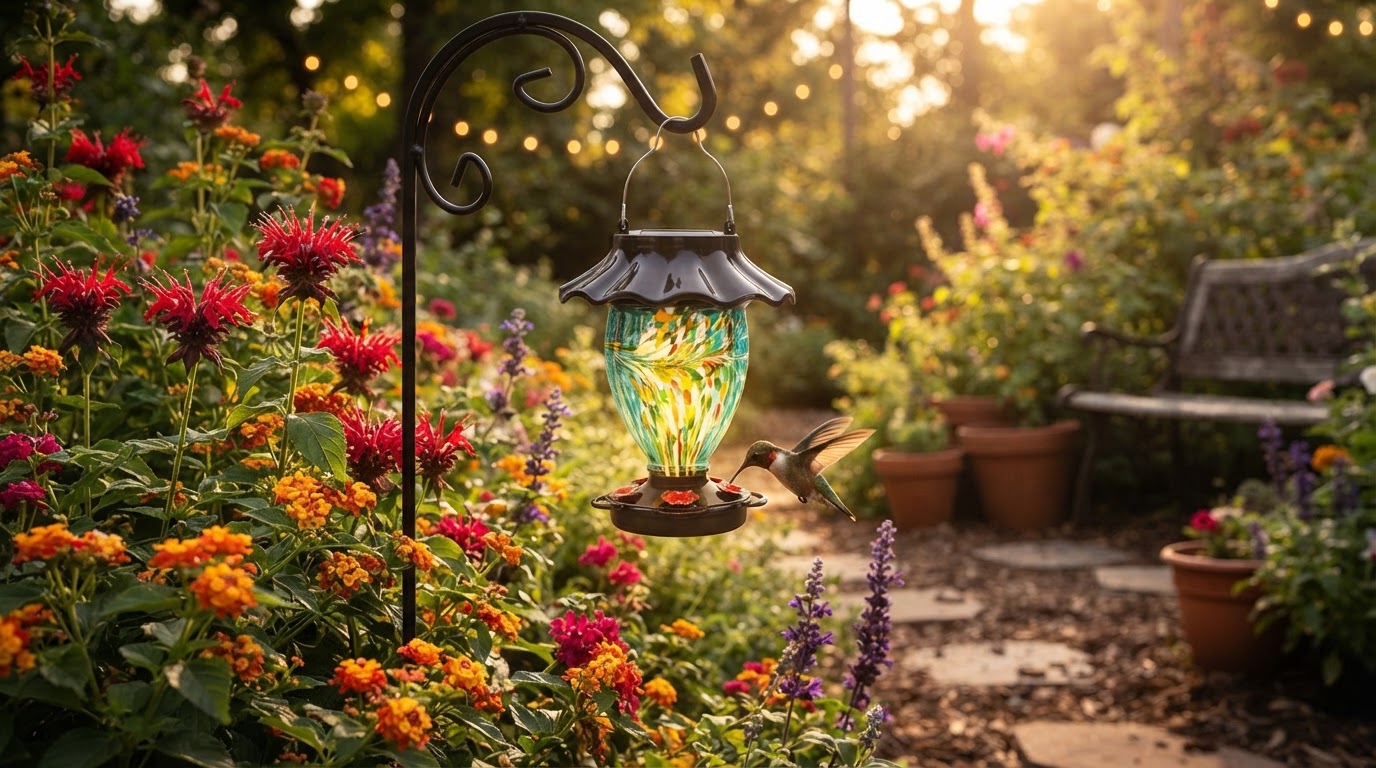
How to Design a Hummingbird Haven with Flowers and Solar Feeders
How to Design a Hummingbird Haven with Flowers and Solar Feeders
Transforming an ordinary garden into a thriving hummingbird sanctuary requires combining natural floral sources with accessible artificial feeding points. Follow these simple steps to build an inviting landscape for feathered visitors. To review broader habitat principles, consult [the main guide].
Step 1: Select High-Nectar Plant Varieties
Begin by choosing red, orange, and purple flowers with tubular shapes. Select species with staggered bloom cycles—from early spring to early autumn—so your yard remains an attractive food source all season long.
Step 2: Establish Vertical Layering
Arrange plants by height. Position taller nectar vines and shrubs in the back, medium-sized perennials in the center, and lower flowering ground cover along borders. This arrangement gives birds clear sightlines and easy access to every layer of blossoms.
Step 3: Integrate Artificial Feeders Correctly
Mount your feeder at a RECOMMENDED_FEEDED_HANG_HEIGHT of RECOMMENDED_HANGING_HEIGHT from the ground. Keep the unit placed approximately DISTANCE_FEET_FROM_FEEDER from primary garden walkways to give territorial hummingbirds a safe, quiet space to reuel.
Step 4: Add Nighttime Decorative Accents
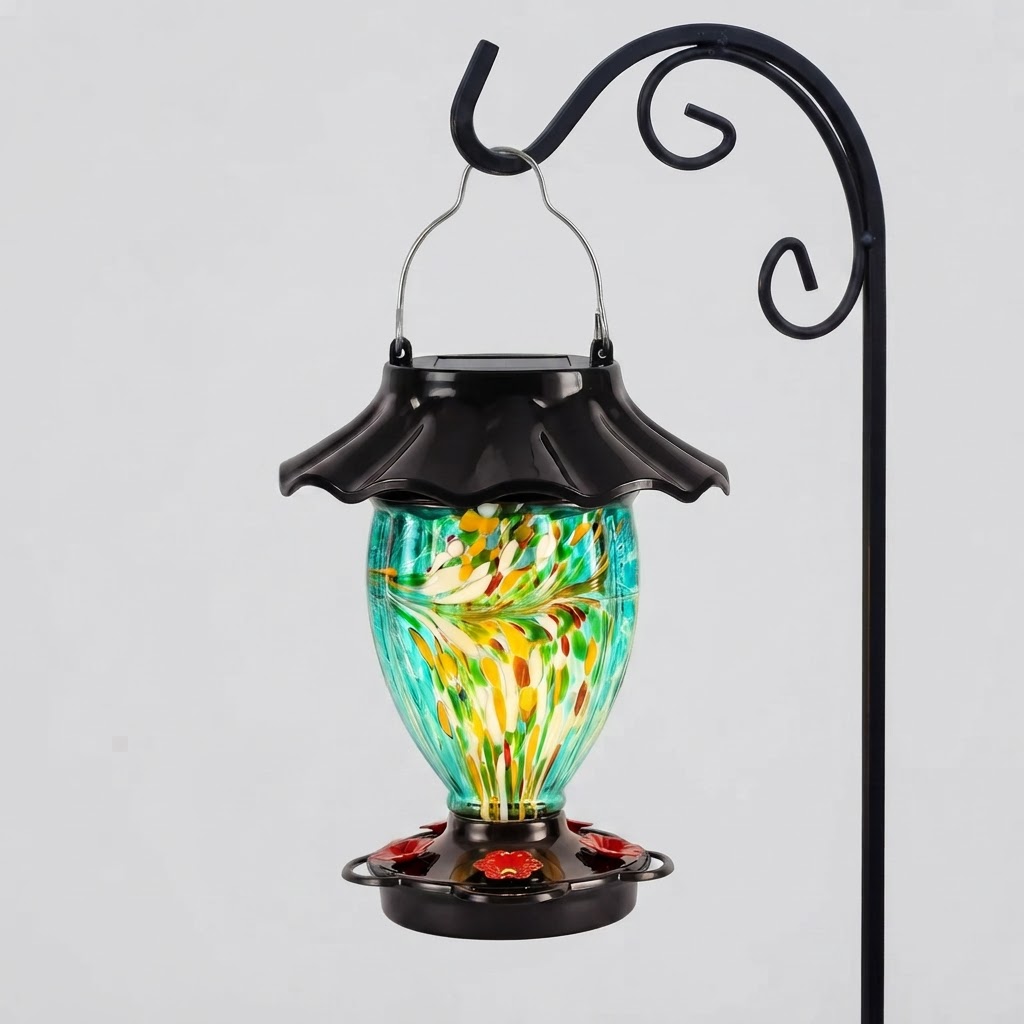
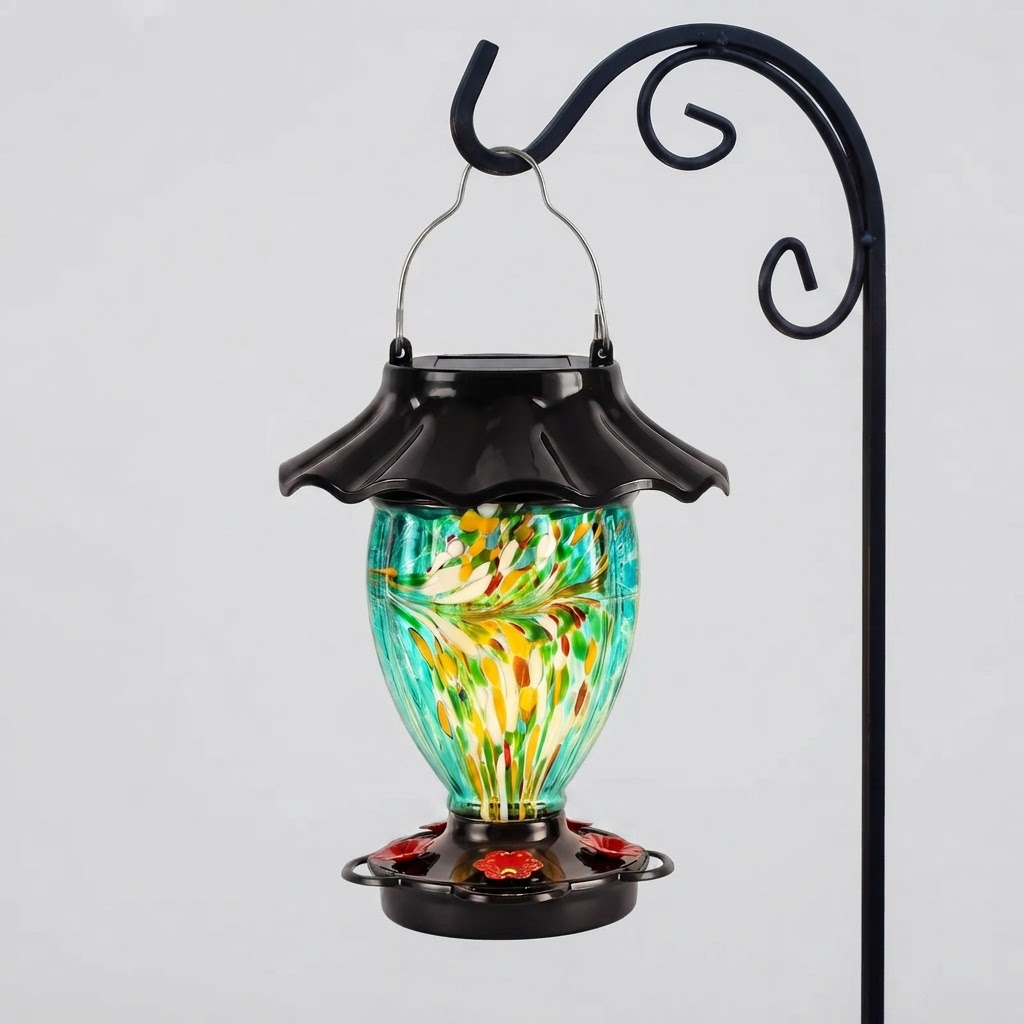
Incorporate solar garden features like the Solar Hummingbird Feeder. Featuring hand-blown glass construction and illuminated solar accenting, it provides visual charm by day and ambient RGB lighting after dusk, enhancing your garden long after the birds have settled for the night.
Read the full guide: The Ultimate Guide to Attracting Hummingbirds: Best Plants and Garden Setup