The Ultimate Guide to Attracting Hummingbirds: Best Plants and Garden Setup
The Ultimate Guide to Attracting Hummingbirds: Best Plants and Garden Setup
Creating a sanctuary for hummingbirds requires a thoughtful blend of vibrant nectar sources, proper shelter, and reliable supplemental feeding stations. While natural foliage provides essential nutrition, understanding the best plants for attracting hummingbirds is the foundation of any successful bird-friendly garden.
Why Plant Selection Matters for Hummingbirds
Hummingbirds possess exceptionally high metabolic rates, requiring them to consume their weight in nectar every day. They rely on visual cues—primarily bright warm colors like red, orange, and deep pink—to identify nutrient-rich flowers. Tubeware-shaped blossoms are especially attractive because they accommodate the hummingbird's long bill and extendable tongue, preventing larger insects like bees from easily accessing the nectar reserves.
Selecting native plant varieties ensures that your garden aligns with local migration patterns and flowering schedules. Native plants generally require less water and maintenance while producing optimal nectar concentrations favored by resident hummingbird populations.
Top Plant Species to Attract Hummingbirds
When curated thoughtfully, specific perennials and annuals can convert your yard into an active feeding zone across spring and summer:
- Salvia (Salvia spp.): Offering long tubular stalks, salvias produce rich nectar reserves over extended bloom periods.
- Bee Balm (Monarda): Known for vibrant, tiered flower heads, Bee Balm is an absolute magnet for passing hummingbirds.
- Trumpet Vine (Campsis radicans): A rapid-growing vine that yields large orange-to-red trumpets, providing high yields of nectar.
- Fuchsia: Ideal for hanging baskets or shaded patios, fuchsias deliver continuous pendulous blossoms.
- Cardinal Flower (Lobelia cardinalis): Renowned for intense scarlet blooms that match the visual preference of hummingbirds.
Designing Your Garden Layering and Placement
Layout plays an indispensable role in attracting and retaining territorial birds. Plant low-growing ground cover near higher shrubs and trees to offer safe vantage points and rest stops. Hummingbirds like to survey their surroundings before dropping down to feed.
To ensure comfortable access, keep plants separated enough to give tiny wings room to maneuver. Place key nectar points roughly DISTANCE_FEET_FROM_FEEDER apart from heavy foot traffic zones to reduce disturbance.
Combining Nectar Plants with Feeders for Year-Round Visitors
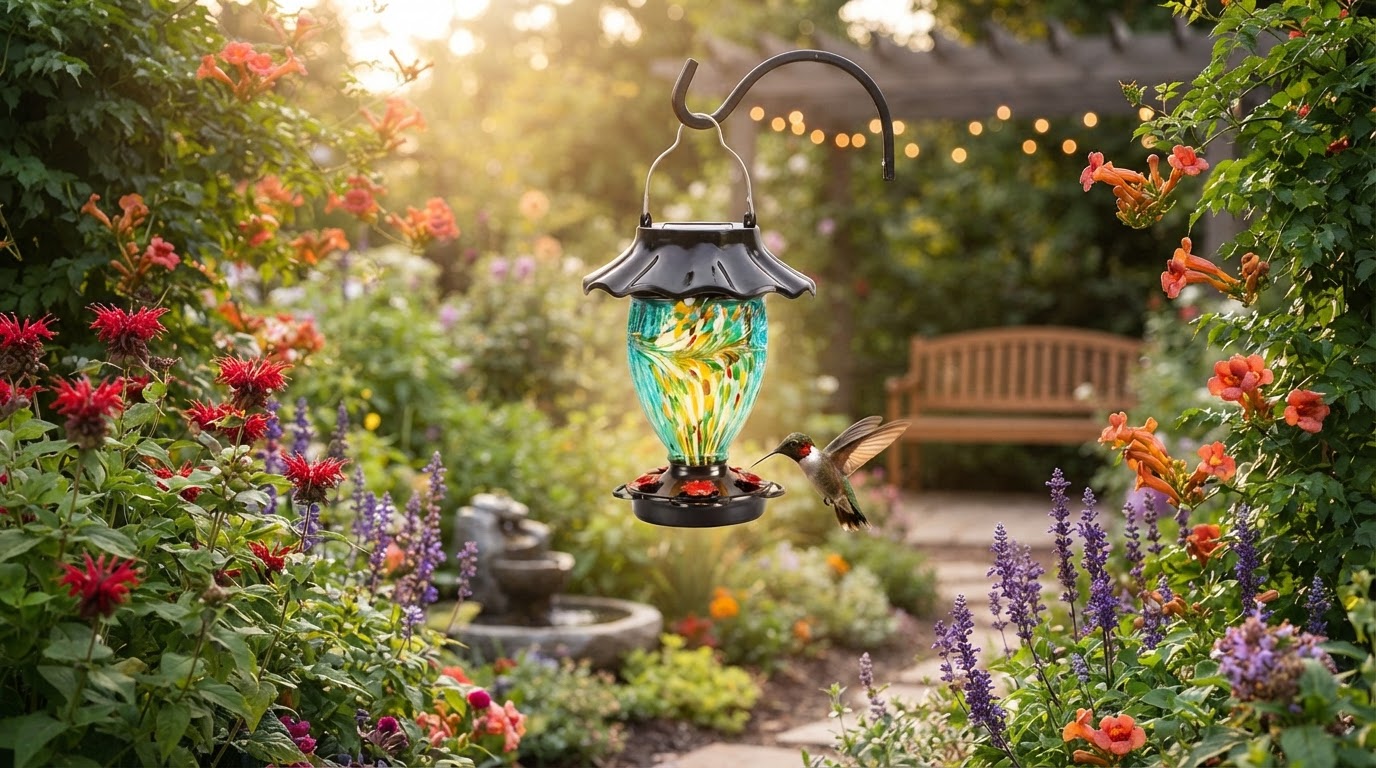
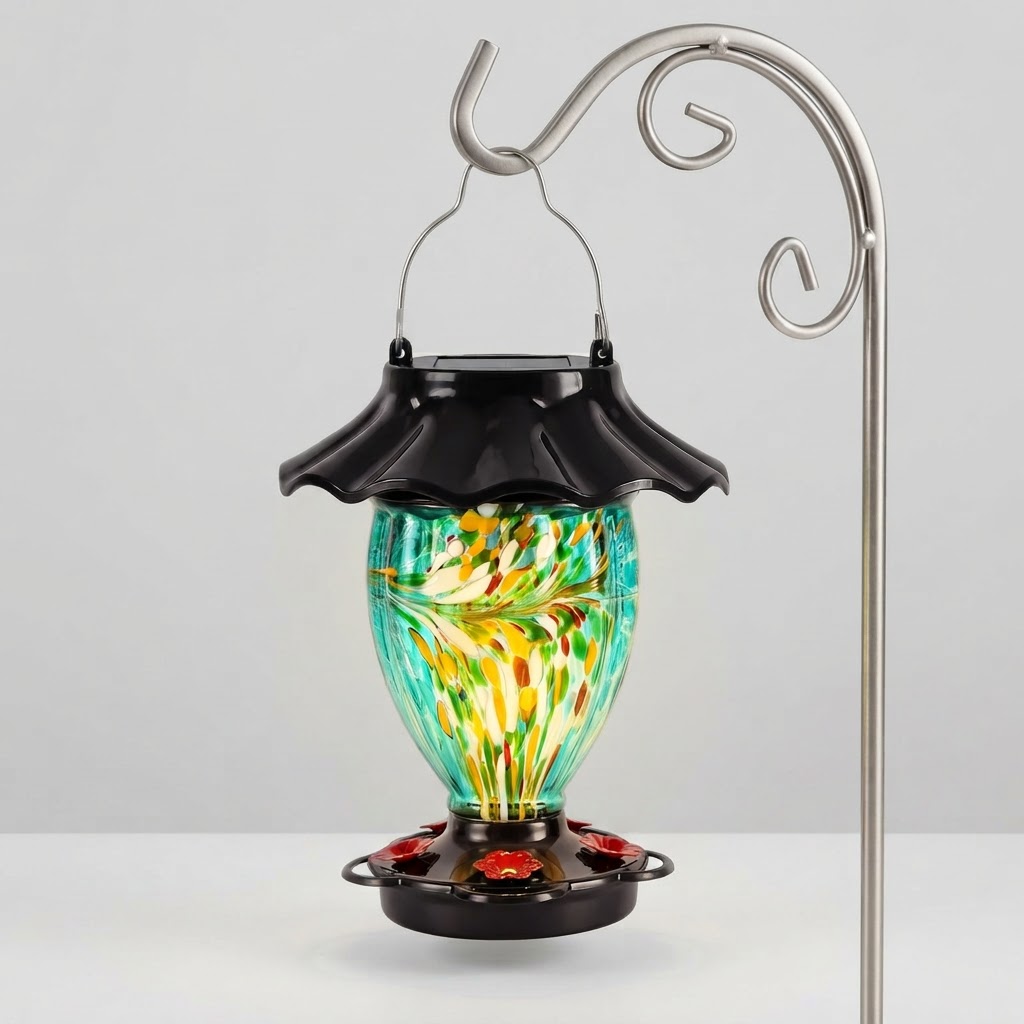
While natural blooms provide nutrition, flowers inevitably cycle out of bloom. Integrating dedicated artificial feeding stations bridges seasonal gaps and guarantees a reliable food supply. Placing a handcrafted glass feeder near your blooming beds creates an irresistible visual anchor.
When hanging a dedicated supplemental feeder, aim for a RECOMMENDED_FEEDER_HANG_HEIGHT elevation. Hanging your feeder at RECOMMENDED_HANGING_HEIGHT keeps nectar safely out of reach from grounded pests while remaining perfectly aligned with natural floral canopy heights. Position feeders within DISTANCE_FEET_FROM_FEEDER of floral groupings to help birds transition easily between natural nectar and supplemental nectar.
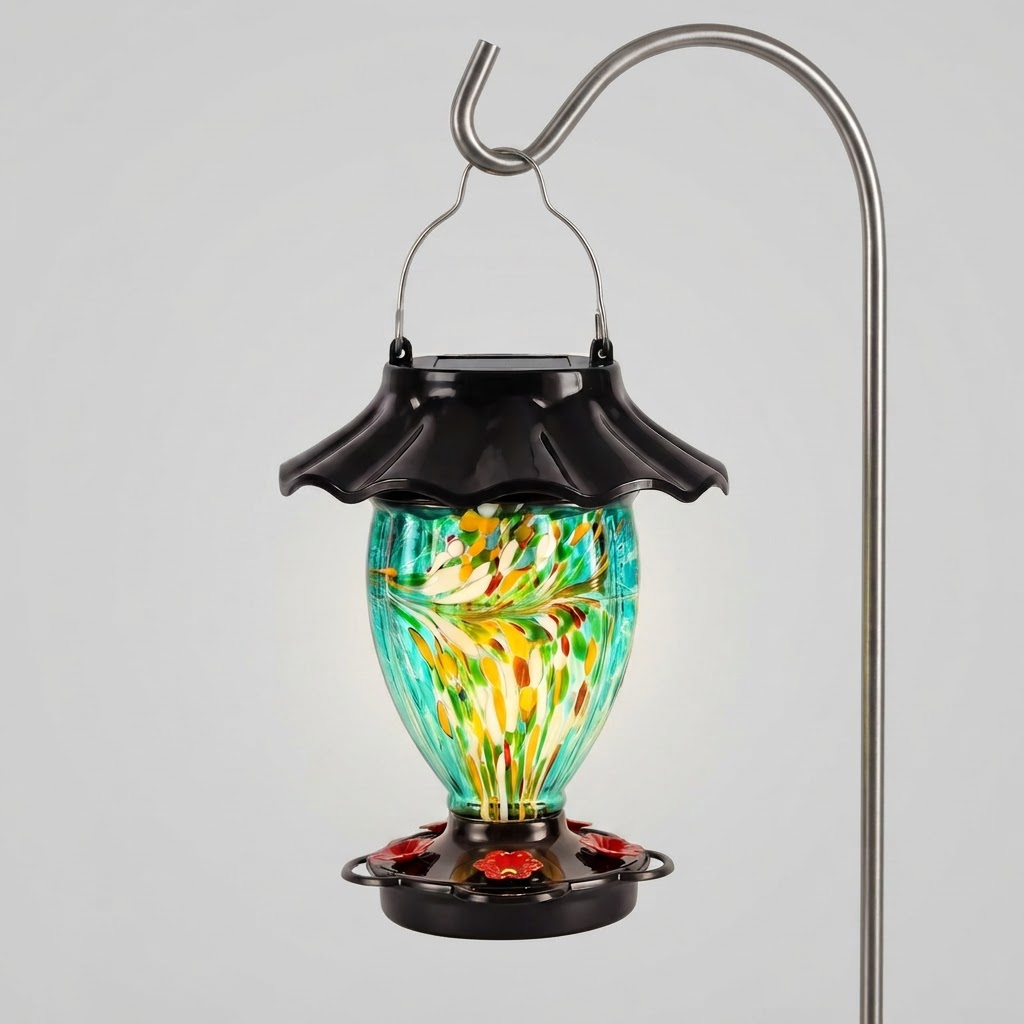
For evening appeal, solar-lit feeders elevate garden ambiance. A quality unit like the Solar Hummingbird Feeder provides illumination at night while highlighting handcrafted patterns during daylight hours.
Proper Maintenance for a Safe Bird Environment
Maintaining garden hygiene is critical. Avoid systemic chemical pesticides on floral beds, as hummingbirds ingest small insects for vital protein. Ensure artificial feeders are rinsed thoroughly during regular refills to prevent mold formation and maintain clean, healthy visiting stops for your flying guests.
Related in this cluster
- Top 10 Native Flowers for Attracting Hummingbirds to Your Yard
- How to Design a Hummingbird Haven with Flowers and Solar Feeders
- Live Nectar Plants vs. Glass Solar Feeders: Which Attracts More Hummingbirds?
- Why the Solar Hummingbird Feeder Complements Your Nectar Garden
- Frequently Asked Questions About Hummingbird Garden Plants and Feeders
- The Science of Hummingbird Color Preference: Red Flowers vs RGB Light Feeders