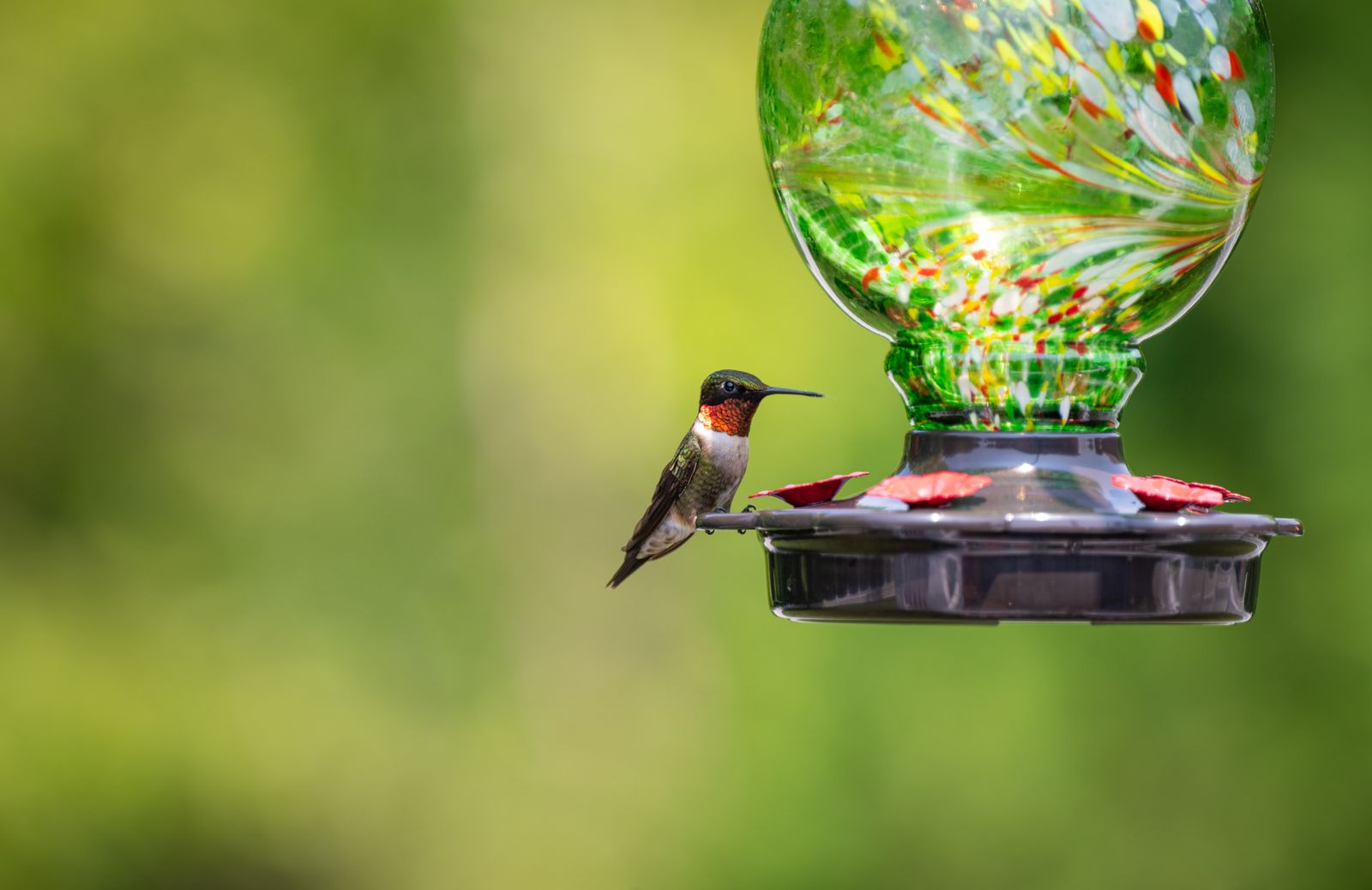
Seasonal Care for Artisan Glass: How to Protect and Clean Your Glass Feeder All Year
An artisan glass feeder needs a different kind of attention in each season: a careful inspection and seal check in spring, aggressive nectar turnover and shade management through summer, sustained feeding plus hardware checks in fall while migrants pass through, and a full clean-and-store routine before the first hard freeze. The one thing that never changes is the nectar mix — one part plain white sugar to four parts water, with nothing else added. What changes is how fast it spoils, how long the solar lighting runs, and how much risk the weather poses to a glass reservoir.
Spring: inspection before the first fill
The season starts with an audit, not a refill. A feeder that spent winter in storage or, worse, outdoors needs checking before nectar goes in.
Fill lightly at first. A few ounces is plenty in early spring, when traffic is unpredictable and cool weather means you are not fighting spoilage yet.
Summer: the season that actually tests you
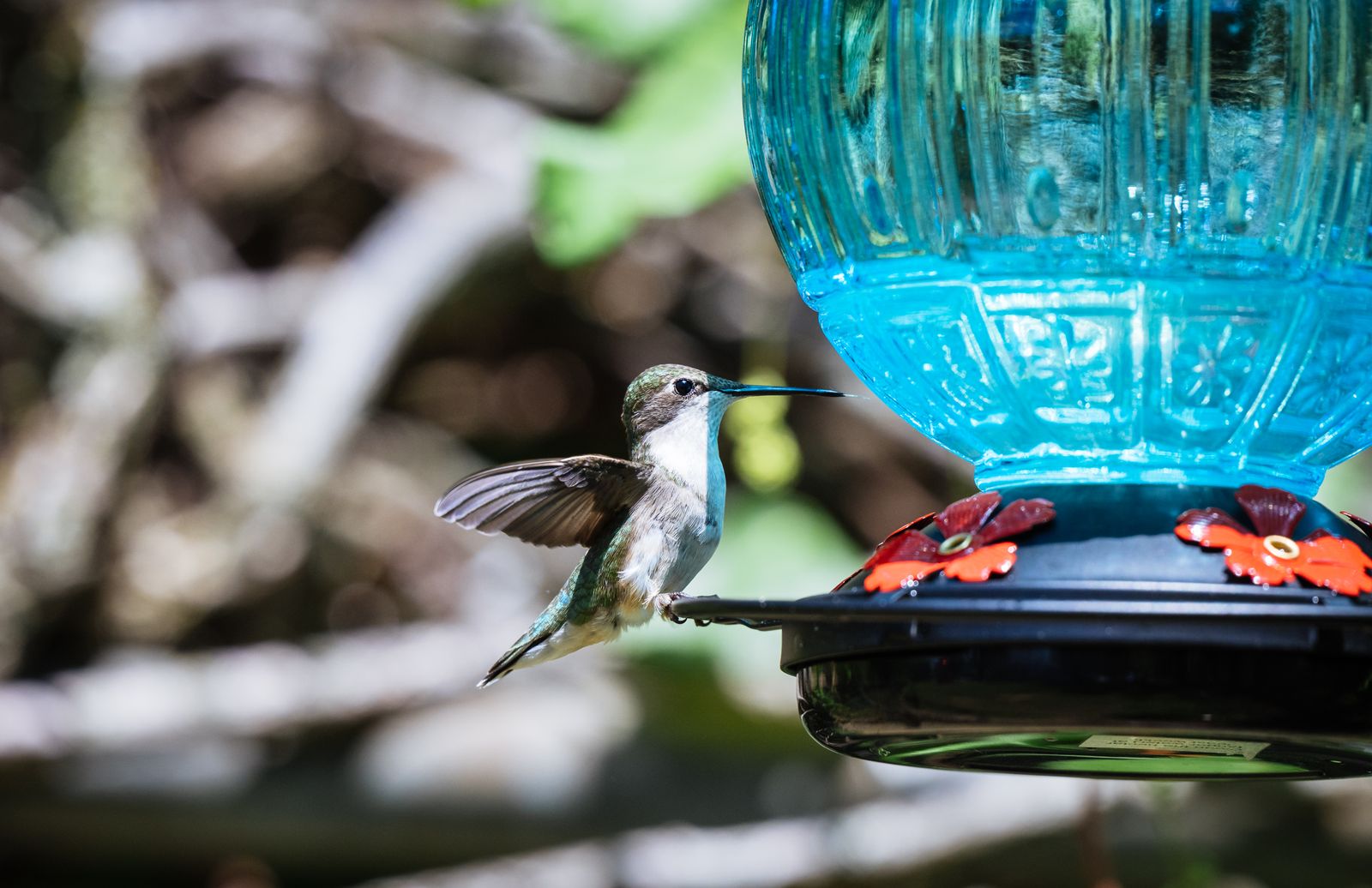
Heat is the enemy, and the only real defenses are frequency and shade.
| Daytime high | Nectar change | Fill volume on a 32 fluid ounce reservoir | |---|---|---| | Above 90 degrees | Daily | A quarter or less | | 80 to 90 degrees | Every 1 to 2 days | A quarter to a third | | 70 to 80 degrees | Every 2 to 3 days | A third to half | | 60 to 70 degrees | Every 3 to 4 days | Half | | Below 60 degrees | Every 4 to 5 days | Half to full |
Full wash at every change, not just a rinse. Two or three minutes with a bottle brush on smooth glass is all it takes, and glass has the advantage of staying smooth rather than accumulating the micro-scratches that give mold a foothold in plastic.
Other summer specifics:
- Manage sun exposure in two directions. The solar cap wants unobstructed midday light; the nectar wants afternoon shade. Morning and midday sun with late-day shade is the best compromise.
- Watch for cloudiness. The translucent hand-blown glass on this feeder lets you spot cloudy nectar, floating strings, or dark specks from several feet away. Any of those means dump and wash now.
- Keep the exterior wiped. Dried nectar on the glass is what recruits ants. The sealed base and slender profile are designed to minimize drips, but a base reseated crookedly after washing will still leak.
- Keep the ant moat topped off. Plain water only, refreshed rather than topped up, and never oil or insecticide.
- Expect long evening glow. Long days and high sun mean the panel gets a full charge, and up to 8 hours of nighttime lighting after a full recharge is realistic in midsummer.
Fall: migration season, then winding down
Fall is the highest-traffic period in many yards, and it is the season most people shorten by mistake.
Keep feeders up until you have gone about two weeks with no visitors. Leaving a feeder out does not prevent birds from migrating — migration is triggered by day length, not food availability — and a late feeder supports stragglers passing through. Fresh nectar matters more in fall than at any other time because birds are fueling for a long trip.
Practical fall tasks:
- Increase fill volume as traffic climbs, while keeping the change schedule appropriate to temperature
- Clear fallen leaves and debris off the solar cap, which shades the panel and cuts run time
- Expect shorter evening lighting as days shorten and the sun sits lower
- Inspect hardware before storm season, especially hooks and brackets
- Rinse the exterior glass more often, since wasps and ants press harder as natural food sources fade
Winter: storing artisan glass safely
Cold air by itself does not break glass. Two things do: liquid freezing inside and expanding, and rapid temperature swings. Both are avoidable.
The storage routine:
If you feed through winter in a mild climate: keep the reservoir only partly filled, change the nectar on the cool-weather schedule of every four to five days, and bring the feeder in on any night that will drop below freezing. Expect noticeably shorter lighting, since short days, low sun angles, and cold all reduce what the panel can store and deliver.
Year-round habits that matter more than any single task
- Wipe the solar panel at every nectar change. A film of pollen or dust costs you evening run time for free.
- Reseat the base carefully every time. Most drip problems start with a rushed reassembly.
- Use hot tap water, never boiling. Thermal shock is what cracks glass, not cold. Work in stages when the temperature gap is wide.
- Skip abrasives. No scouring pads or steel wool on glass or plastic parts.
- Keep dedicated brushes. A reservoir brush and a port brush kept near the sink are the strongest predictor of whether cleaning actually happens on schedule.
- Never add anything to the nectar. No red dye, no honey, no brown sugar, no artificial sweeteners.
Frequently asked questions
When should a feeder come down for the season? Wait until roughly two weeks have passed with no birds visiting, then bring it in. Feeders do not delay migration, which is driven by day length. Late-season nectar helps stragglers and birds passing through from farther north.
Can a glass solar feeder stay outside all winter? The lighting will keep working on short winter days, but an empty feeder left outdoors is exposed to hail, ice, and falling branches, and a full one risks cracking as the liquid freezes and expands. Emptying, cleaning, and storing it indoors is the low-risk choice and costs ten minutes once a year.
Does the solar lighting need any off-season attention? Wipe the panel clean before storing, keep the cap dry, and store it somewhere that does not swing between extremes. When you bring it out in spring, give it a full day in direct sun before judging whether the lighting still performs.
How do you keep nectar fresh during a heat wave? Reduce the fill volume sharply, change it daily, and move the feeder to a spot with afternoon shade while keeping the cap in enough sun to charge. Filling a quarter of a 32 fluid ounce reservoir during a hot week means the nectar turns over before it can spoil. Planting nectar sources nearby also gives birds an alternative, as discussed in live nectar plants versus glass solar feeders.
A practical next step
Put four dates on your calendar right now: a spring inspection two weeks before you expect the first birds, a mid-summer reminder to reduce fill volume and check the base seal, a fall reminder to clear debris off the solar cap, and a storage date tied to the first expected hard freeze in your area. Seasonal care fails from forgetting, not from difficulty.
Cover photo by Chris F on Pexels.