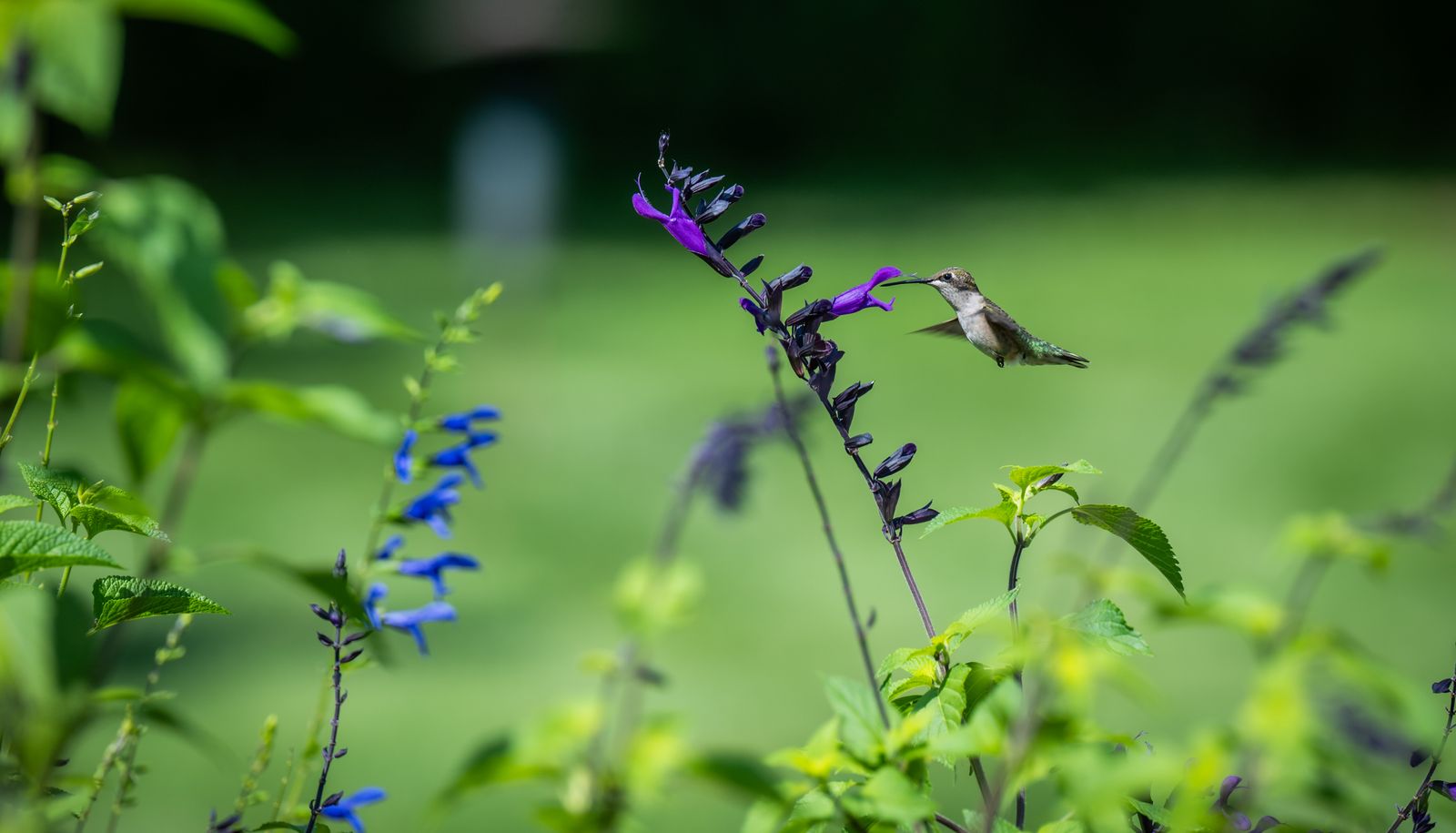
Cats in the Garden: How to Run a Hummingbird Feeder Safely
A hummingbird feeder can be run safely in a garden with cats, and the answer is geometry rather than deterrence. Hang the feeder high, keep it well clear of any surface a cat can sit or launch from, and leave open ground directly beneath it so nothing can wait in ambush. Placement does more for bird safety than any spray, sound device, or collar.
Why placement matters more than deterrents
Cats hunt from cover and from height. A feeder is a predictable destination, which means a cat that finds it will return, and the risk is concentrated in the moments birds are hovering, perched, or descending toward the ground.
Deterrent products aim at the cat. Placement aims at the situation, which is why it works better. A feeder suspended in open air, out of leaping range, with no cover underneath, does not become safer or less safe depending on which cat walks through the garden. That is the property you want.
This also means the usual advice about feeder locations changes in a garden with cats. The cozy spot beside the hedge, next to the fence, or over the low shrub is exactly the wrong place, however good it looks.
The three clearances that matter
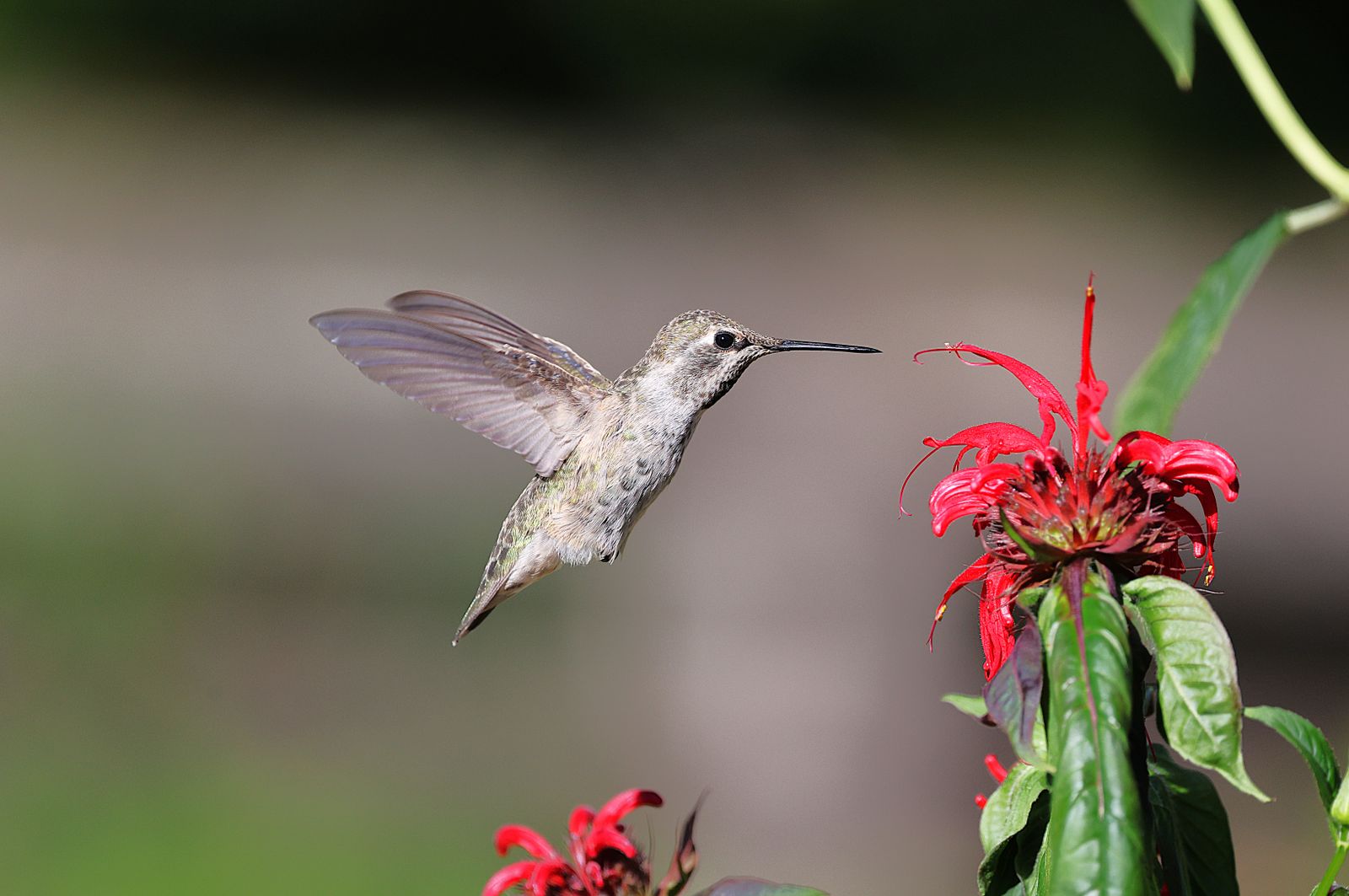
Photo by Veronika Andrews on Pexels
| Clearance | Target | Why | |---|---|---| | Height above ground | Well above head height | Removes the standing jump | | Distance from any platform | At least an arm's span, more if possible | Fences, walls, sheds, rails, and low roofs all count as platforms | | Open ground beneath | A few feet in every direction | Removes ambush cover under the feeder |
Work through all three, not just the first. A feeder eight feet up is not safe if it hangs two feet from a fence top, and a feeder in open air is not safe if a dense shrub sits directly underneath it.
Wall tops are the clearance people forget, particularly in enclosed gardens and courtyards where the boundary wall is itself a walkway at height. Measure from the wall top, not from the ground.
Choosing a mount with cats in mind
A freestanding pole or shepherd's hook in open ground is the strongest option, because it offers no route up and no adjacent platform. A smooth metal pole is harder to climb than a textured or wooden one, and a baffle fitted below the crook blocks the climb entirely.
Wall brackets and railing mounts are the weakest, since they put the feeder within reach of exactly the surfaces cats use. If a bracket is your only option, choose one that holds the feeder well out from the wall, mount it as high as you can still reach for refills, and keep furniture, planters, and bins from accumulating underneath it.
Tree branches sit in the middle. A branch is a climbing route and a perch, so hanging from one puts the feeder on a cat's path. If a branch is unavoidable, hang from a thin outer section rather than close to the trunk, and use a rigid hanger so the feeder cannot be batted around.
Cover: where to put it and where not to
Birds need somewhere to retreat to, but cover in the wrong place hides a cat instead. The rule is simple: cover at a distance, open ground close in.
Put shrubs, small trees, and trellises eight to twelve feet from the feeder, so birds have a bolt-hole they can reach without crossing a cat's reach. Keep the few feet directly under and around the feeder clear, so there is nothing to crouch in.
Nectar plants are worth planting on the same principle, out at the cover distance rather than immediately beneath the feeder. That gives you the benefit discussed in the comparison of live nectar plants and glass solar feeders without creating a hiding place at the base of the feeder.
A step-by-step safety audit
Step seven is what tells you whether the audit worked. A cat that has established a waiting spot will use it consistently, so a few early-morning looks reveal it quickly.
Managing your own cat
Photo by Veronika Andrews on Pexels
If the cat is yours, you have options the geometry cannot give you. Keeping a cat indoors, or restricting outdoor access to a fenced run, removes the risk entirely at that feeder.
Where that is not possible, keep the cat in during the hours around dawn and dusk when bird activity and hunting activity overlap most. A collar with a bell or a bright, high-visibility collar cover reduces successful hunts, though neither replaces good placement. Fit any collar with a safety release so it cannot snag.
Timing your own routine helps too. Refill and clean the feeder at a time when the cat is indoors, so you are not standing at the feeder with a cat learning that the spot is interesting. Refill indoors over a sink rather than in place, which keeps you from spilling nectar on the ground and creating a scent trail at the base of the mount.
Handling matters for a different reason here. A filled reservoir carried across a garden with a cat underfoot is a real drop risk, and the durability differences between hand-blown glass and plastic feeders are worth weighing if you are frequently carrying one across paving.
What not to rely on
- Ultrasonic devices and sprays. Inconsistent in practice, and they do nothing about the underlying geometry.
- Chili powder or other irritants. Do not use them near a feeder. They risk harming birds as well as cats.
- A feeder that is merely hard to reach. Difficulty is not the same as impossibility, and cats are patient.
- Assuming a quiet garden has no cats. Cats travel, and the ones you never see are the ones you have not planned for.
- Removing all cover. Birds need a retreat. Move it out to a safe distance rather than eliminating it.
FAQ
How high should a feeder hang in a garden with cats? Above head height, and measured from the highest surface a cat can reach nearby rather than from the lawn. A wall top or shed roof next to the feeder effectively lowers its height.
Does a bell on a collar solve the problem? It reduces successful hunts but does not eliminate them, and it does nothing for neighborhood cats. Treat it as a supplement to placement, never a substitute.
Should ground planting under the feeder be removed? Low dense planting immediately beneath the feeder should go, because it provides ambush cover. Keep retreat cover eight to twelve feet away instead.
Is a wall-mounted feeder ever safe with cats around? It can be, if the bracket holds the feeder well clear of the wall, sits high, and nothing accumulates below it. A freestanding pole in open ground is still the safer option where there is room.
Where to start
Walk out to the feeder and look for the nearest surface a cat could sit on, then measure from there rather than from the ground. If that distance is less than an arm's span, move the feeder before changing anything else. It is the single adjustment that improves safety most, and it costs nothing.
Cover photo by Chris F on Pexels.