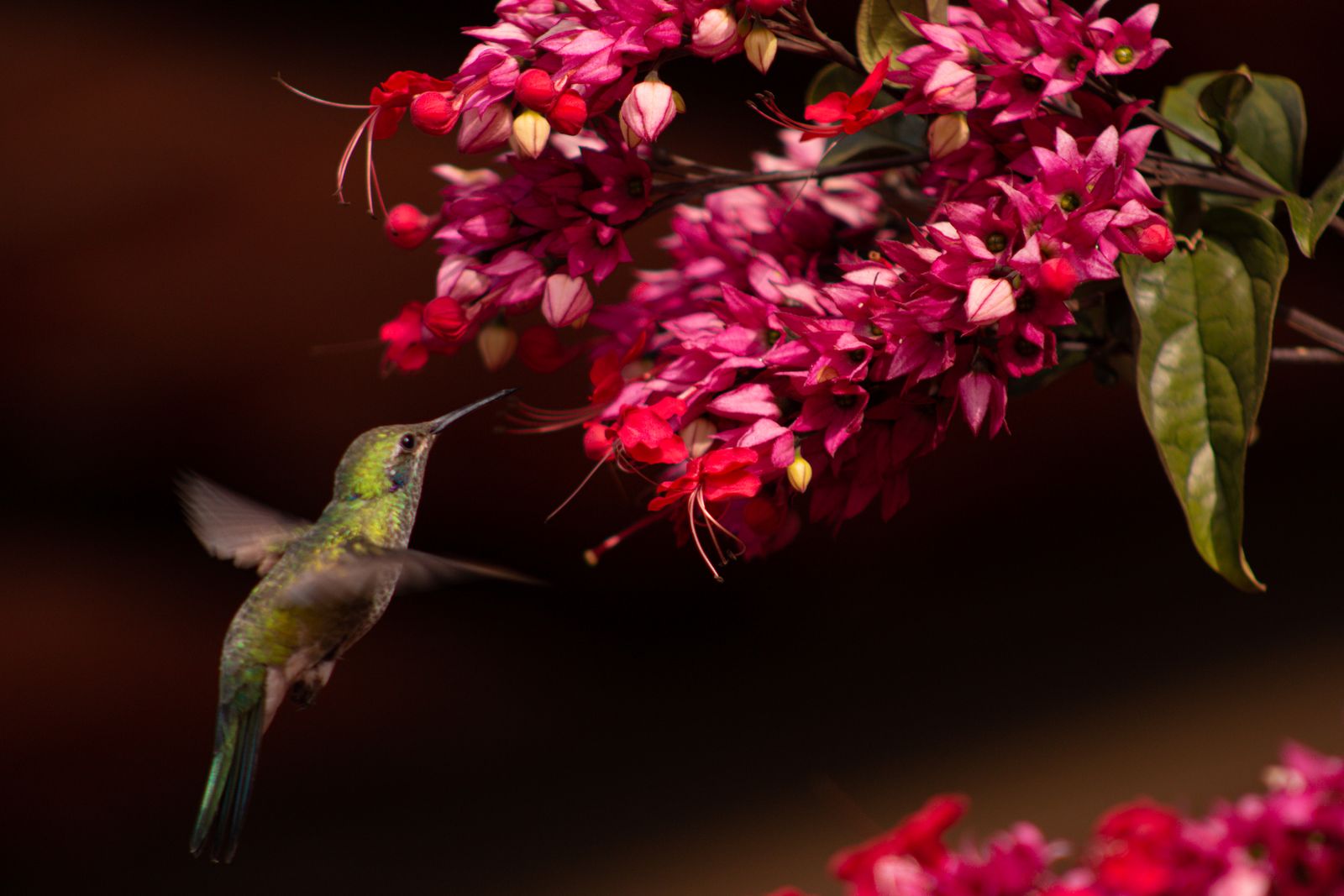
The Best Bug-Repelling Flowers to Plant Near Your Hummingbird Feeder
Should you plant bug-repelling flowers directly under your hummingbird feeder? No—plant strong aromatic herbs like peppermint, lavender, and marigolds 3 to 8 feet away. Keep scent-free, bright red tubular flowers within 0 to 3 feet. This creates an outer scent barrier against wasps and mosquitoes while leaving feeder ports clear.
Botanical Pest Defense Specifications & Planting Zones
| Plant Species | Active Compound | Target Pest | Effective Scent Zone | Avian Safety Tier | Sun & Soil Requirements |
| --- | --- | --- | --- | --- | --- |
| French Marigold (Tagetes patula) | Alpha-terthienyl & Limonene | Mosquitoes, Whiteflies, Aphids | 3 to 6 feet | Safe (Scent-Deterrent Only) | Full Sun / Well-Drained Soil |
| English Lavender (Lavandula angustifolia) | Linalool & Linalyl Acetate | Mosquitoes, Fleas, Moths | 3 to 8 feet | Safe (High Terrene Tolerance) | Full Sun / Low Moisture |
| Peppermint / Spearmint (Mentha spp.) | Menthol & Pulegone | Wasps, Yellowjackets, Ants | 5 to 10 feet (Container Only) | Safe (Strict 3ft+ Radius) | Partial to Full Sun / Moist Soil |
| Garlic Chives (Allium tuberosum) | Allicin & Diallyl Disulfide | Aphids, Japanese Beetles, Ants | 4 to 8 feet | Safe (Non-Ingestible Zone) | Full Sun / Rich, Moist Soil |
| Fuchsia & Pineapple Sage | Low-VOC Nectar Matrix | None (Nectar Source) | 0 to 3 feet (Inner Zone) | Ideal Nectar Target | Full Sun to Partial Shade |
Evaluating companion flowers requires mapping their active volatile organic compounds (VOCs) against targeted backyard pests and establishing precise radial clearance zones around your feeding station.
Visualizing the Three-Tier Radial Defense Layout
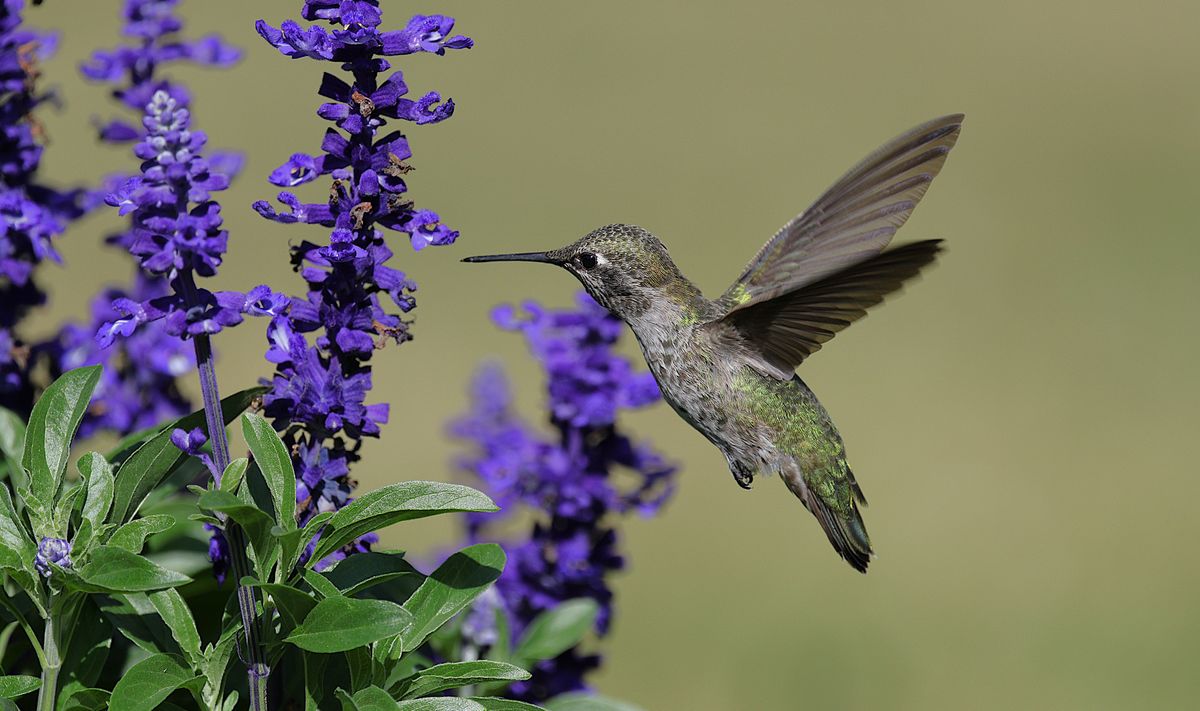
Photo by Veronika Andrews on Pexels
Proper physical architecture prevents high-potency herbal scent plumes from overwhelming the unrefined olfactory systems of feeding birds while maximizing insect interception.
Top Recommended Companion Plant Combination
For immediate backyard deployment, pair French Marigolds with Containerized Spearmint positioned in a semi-circle 4 to 6 feet downwind of your feeder pole. This creates an invisible chemical wall against yellowjackets and mosquitoes. Combine this arrangement with a clean, leak-proof feeder hardware setup to eliminate drip attractants entirely.
Recommended Hardware Integration: Pair your botanical barrier with the LUJII Hand-Blown Glass Solar Hummingbird Feeder. Its rubber-sealed base prevents sweet leaks that attract ants, while its integrated solar RGB lighting accents your pest-free flower defense layout at night.
Expert Botanist Tip: Managing Solar LED Light Attraction at Night
Solar-powered hummingbird feeders feature dusk-activated RGB lights that transform your night garden. However, artificial light can attract night-active insects like moths and mosquitoes. To neutralize this attraction without dimming your solar glow, plant night-blooming repellent species like Evening Primrose or Lemon Balm in containers 5 to 8 feet away near garden seating areas. Insects drawn toward the light are intercepted by the localized scent barrier before reaching your porch or viewing space.
Immediate Action Plan for a Pest-Free Garden Setup
Your decision: Determine your primary backyard pest threat (crawling ants, aggressive yellowjackets, or dusk mosquitoes) and measure your feeder clearance radius.
Do this next: Set up a potted aromatic defense zone 3 to 8 feet away from your solar glass feeder using Marigolds and Lavender, while maintaining bright, scent-free tubular flowers directly beneath the feeder.
- Read next: How to Hang Your Solar Hummingbird Feeder to Block Ants and Crawling Insects
- Read next: Best Ant Moats for Hummingbird Feeders: Built-In vs. Hanging Hooks
LUJII Hand-Blown Glass Solar Hummingbird Feeder with Leak-Proof Metal Base
Follow these steps to establish your botanical pest defense around your hanging solar feeder station.
Frequently Asked Questions About Pest-Repelling Flowers
Common questions regarding botanical pest control, avian safety, and solar lighting integration.
Key Takeaways: Safe Pest Repelling Around Hummingbird Feeders
Essential guidelines for building a bird-safe, insect-repellent flower defense.
Choosing the Right Defense Strategy for Your Specific Pest Problem
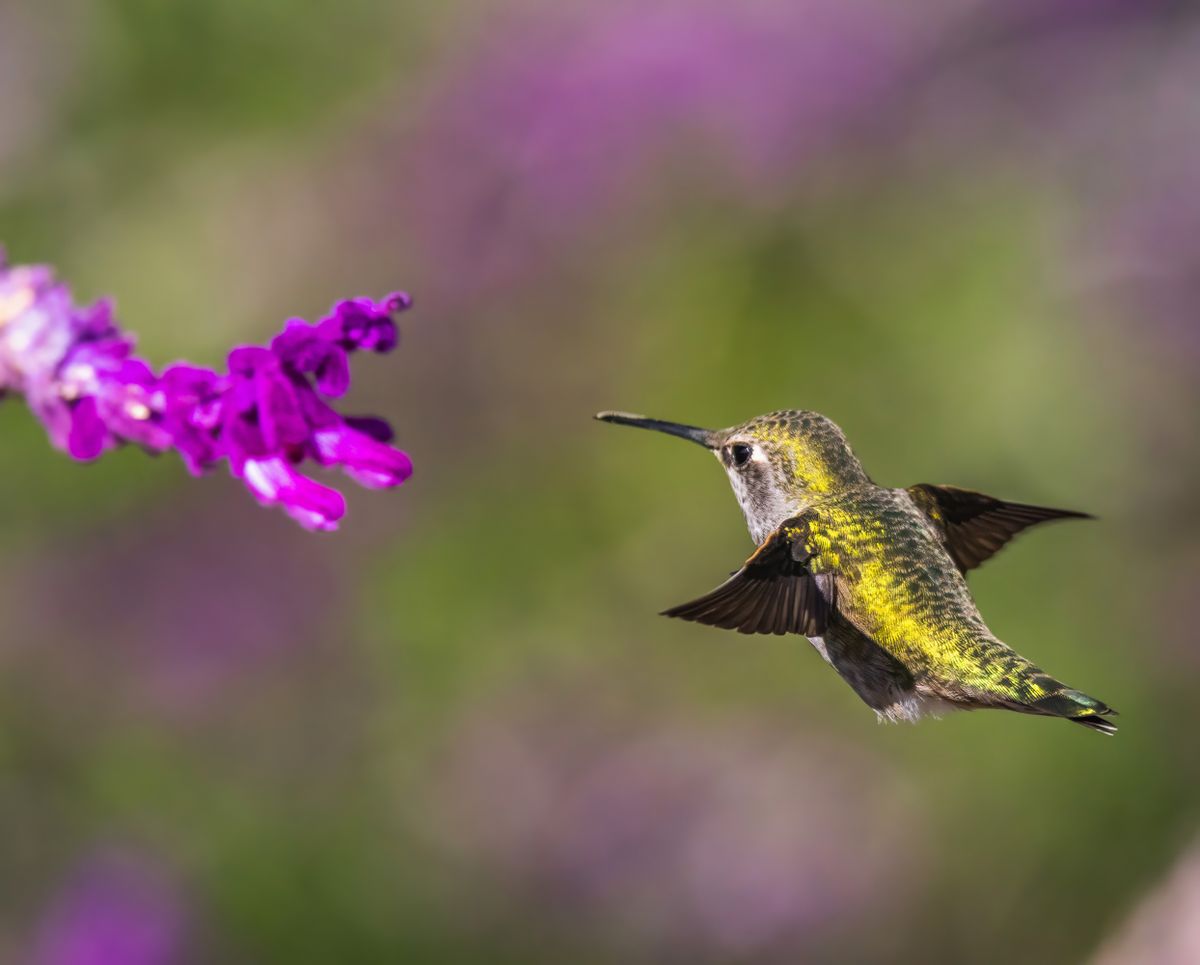
Selecting companion plants based on target insect behavior ensures maximum repellent efficacy while protecting hummingbird feeding ports.
Best choice for
- Potted Mentha Species (Spearmint/Peppermint) at 5-8 Feet — High concentrations of menthol mask sweet nectar aromas and actively irritate wasp olfactory receptors.
- French Marigolds & English Lavender at 3-6 Feet — Emits airborne linalool and limonene continuously throughout hot afternoon hours when mosquitoes harbor in foliage.
- Allium Border (Garlic Chives) Around Pole Base — Sulfur compounds disrupt ant pheromone trails, preventing scout ants from locating pole hardware.
- Do not plant aggressive mints directly in garden beds beneath the feeder pole, as their invasive root runners make maintenance impossible.
- Do not apply concentrated essential oil sprays to flower petals or feeder poles, as oily residues ruin bird feather insulation.
- Physical Mechanical Ant Moats — Provides a water barrier directly on the hanging rod when crawling insect pressure exceeds plant defense capabilities.
To build an effective natural pest barrier, one must understand the biological contrast between insect sensory organs and avian physiology. Insects rely heavily on antennal olfaction—detecting minute traces of volatile organic compounds (VOCs) to navigate, locate food, and identify danger. Plants such as marigolds, mints, and lavender have evolved concentrated VOCs like linalool, menthol, and alpha-terthienyl specifically as defense mechanisms against herbivorous and predatory insects.
Hummingbirds, by contrast, navigate almost entirely by visual perception. Their eyes feature specialized cone photoreceptors that detect vivid colors in the red, orange, and ultraviolet spectrums. While hummingbirds possess functional olfactory structures, their sense of smell is far less acute than their hyper-tuned sight. A strong plume of menthol or linalool placed 4 feet away from a feeder will completely disrupt a yellowjacket's navigational radar while remaining essentially invisible to a feeding Ruby-throated or Anna's Hummingbird.
The Failure Mode of Direct Contact & Over-Concentration
The primary failure mode in botanical pest control occurs when gardeners confuse living companion plants with concentrated essential oils. Spraying essential oil mixtures (such as peppermint oil sprays) directly onto feeder bodies, perches, or nearby foliage is hazardous. Concentrated oils do not evaporate cleanly; they leave an oily sheen on feeder ports that can transfer to a hummingbird's plumage. Once oil coats a hummingbird's flight or contour feathers, it disrupts their intricate barbs and barbules, destroying their natural waterproofing and thermal regulation capabilities.
Furthermore, placing high-VOC aromatic plants directly under nectar ports (within the 0 to 3-foot inner zone) creates a dense scent cloud around the feeding holes. While this does not harm the birds physically, heavy scent concentrations can cause momentary hesitation or disorientation during landing maneuvers. Maintaining the Three-Tier Radial Layout eliminates this risk completely.
Integrating Botanical Defenses with Solar Glass Feeders
A botanical defense strategy works hand-in-hand with leak-proof feeder hardware. Hand-blown glass solar feeders feature thick, non-porous glass reservoirs sealed with anti-rust metal bases. Unlike thin plastic feeders that crack under intense summer heat and drip nectar onto ground foliage, sealed glass feeders hold liquid securely under atmospheric pressure changes. When sweet nectar drips are prevented, wasps and ants have no ground-level reward, forcing them to interact directly with your outer ring of repellent aromatic plants.
Bug-Repelling Plant Matrix for Hummingbird Gardens
| Evaluation Criteria | French Marigold | English Lavender | Spearmint (Potted) | Garlic Chives |
| --- | --- | --- | --- | --- |
| Primary Active Volatile | Alpha-terthienyl | Linalool & Linalyl Acetate | Menthol & Carvone | Allicin & Disulfides |
| Target Pest Spectrum | Mosquitoes, Whiteflies | Mosquitoes, Moths, Fleas | Wasps, Yellowjackets, Ants | Ants, Aphids, Beetles |
| Recommended Radial Distance | 3 to 6 feet | 3 to 8 feet | 5 to 10 feet | 4 to 8 feet |
| Hummingbird Attraction Level | Low (Visual Accent) | Moderate (Secondary) | Low (Deterrent Ring Only) | Low (Pure Barrier) |
| Invasiveness Risk | None (Annual) | None (Non-spreading Perennial) | High (Must Pot) | Moderate (Self-seeding) |
| Drought & Heat Hardiness | High | Very High | Moderate | High |
A structured comparison evaluating companion flower performance across key botanical criteria.
Failure Modes: Critical Mistakes to Avoid in Backyard Pest Control
Avoid these common procedural errors that can harm birds or worsen insect swarms.
Recommended Setup: LUJII Solar Glass Hummingbird Feeder
Pair your natural floral pest barrier with a premium feeder engineered to prevent leaks and elevate nighttime garden aesthetics.
Final Summary & Actionable Steps
Your decision: Choose between potted mints for wasp defense or marigolds for mosquito deterrence based on your local insect population.
Do this next: Position your hand-blown glass solar feeder on a shepherd's hook with 3 to 8 feet of clear clearance from aromatic herb pots, ensuring bright nectar flowers occupy the base zone.
Related resource: Pest-Free Feeding Hub: Keeping Bees, Wasps, and Ants Away from Nectar
LUJII Hand-Blown Glass Solar Hummingbird Feeder
Complete your garden transformation with these final implementation steps.