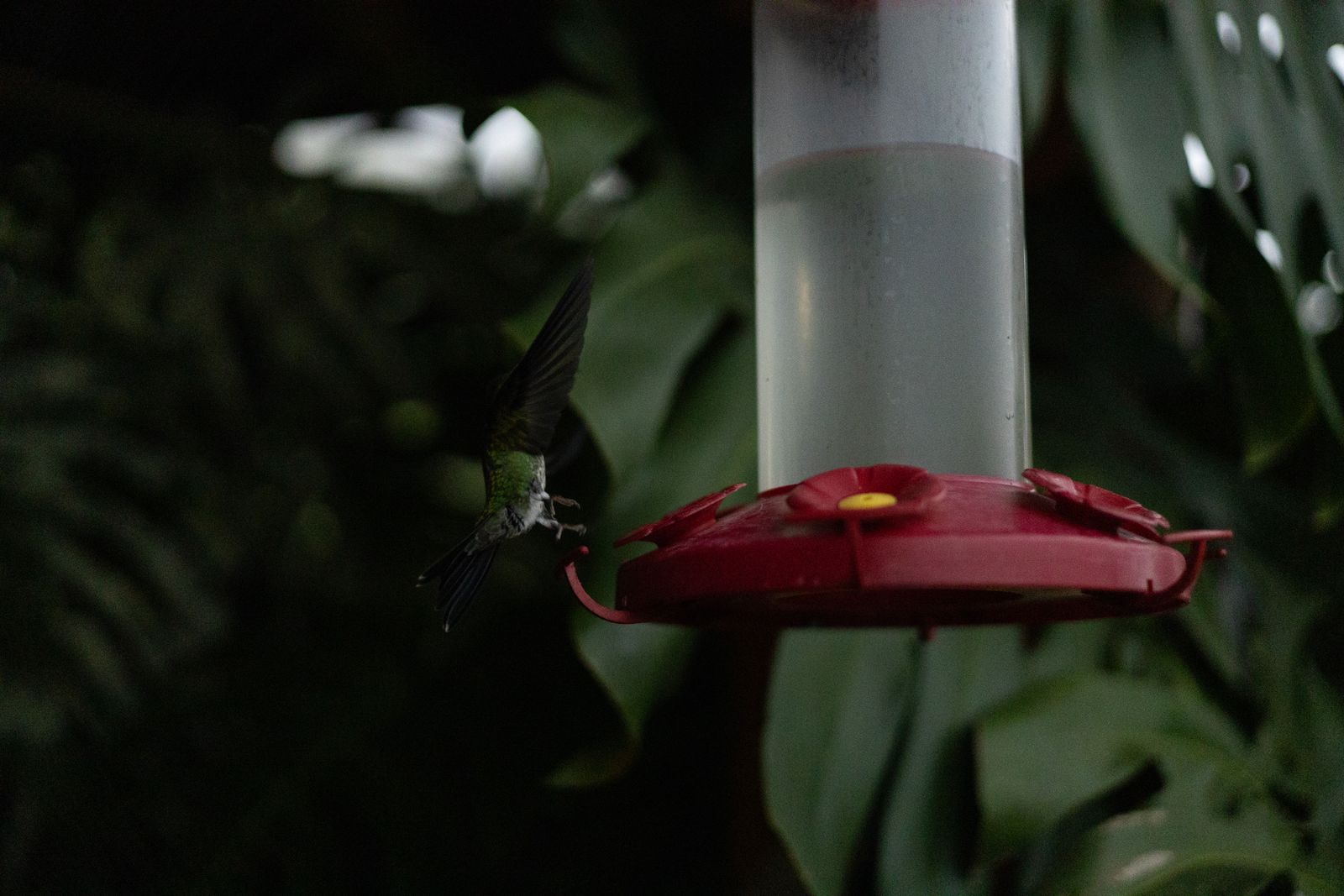
Illuminate Your Backyard Sanctuary: The Ultimate Solar Hummingbird Feeder Buying Guide
A good solar hummingbird feeder has to succeed at two jobs that pull in different directions: serve clean nectar to birds during the day, and put usable light into the garden at night. Judge one on six things — how easy it is to clean, how the ports and base are built, reservoir capacity relative to your bird traffic, where the solar panel sits, how long it runs after a full charge, and what the body is made of. Anything that fails the cleaning test is disqualified regardless of how it looks, because a feeder that is hard to clean gets cleaned less, and dirty nectar is how you lose your birds.
The six criteria that matter
| Criterion | What to look for | Why it decides the outcome | |---|---|---| | Cleaning access | Wide opening, a brush reaches every interior surface, ports that come apart | Mold starts in ports; if you cannot reach them, it wins | | Port and base design | Ports sized for a hummingbird bill, base that seats and seals squarely | Controls drips, which control ants and wasps | | Capacity | Matched to traffic, with the option to fill partway | Oversized fills spoil before they are drunk | | Solar panel position | Unobstructed, upward-facing, wipeable | Sets how long the lighting runs | | Run time and modes | A stated run time after a full recharge; multiple modes | Tells you what an evening actually looks like | | Body material | Non-porous, color that will not fade, weight your support can carry | Determines how the feeder ages |
Everything else — bundled hooks, decorative toppers, brush accessories — is nice to have.
Cleaning access comes first
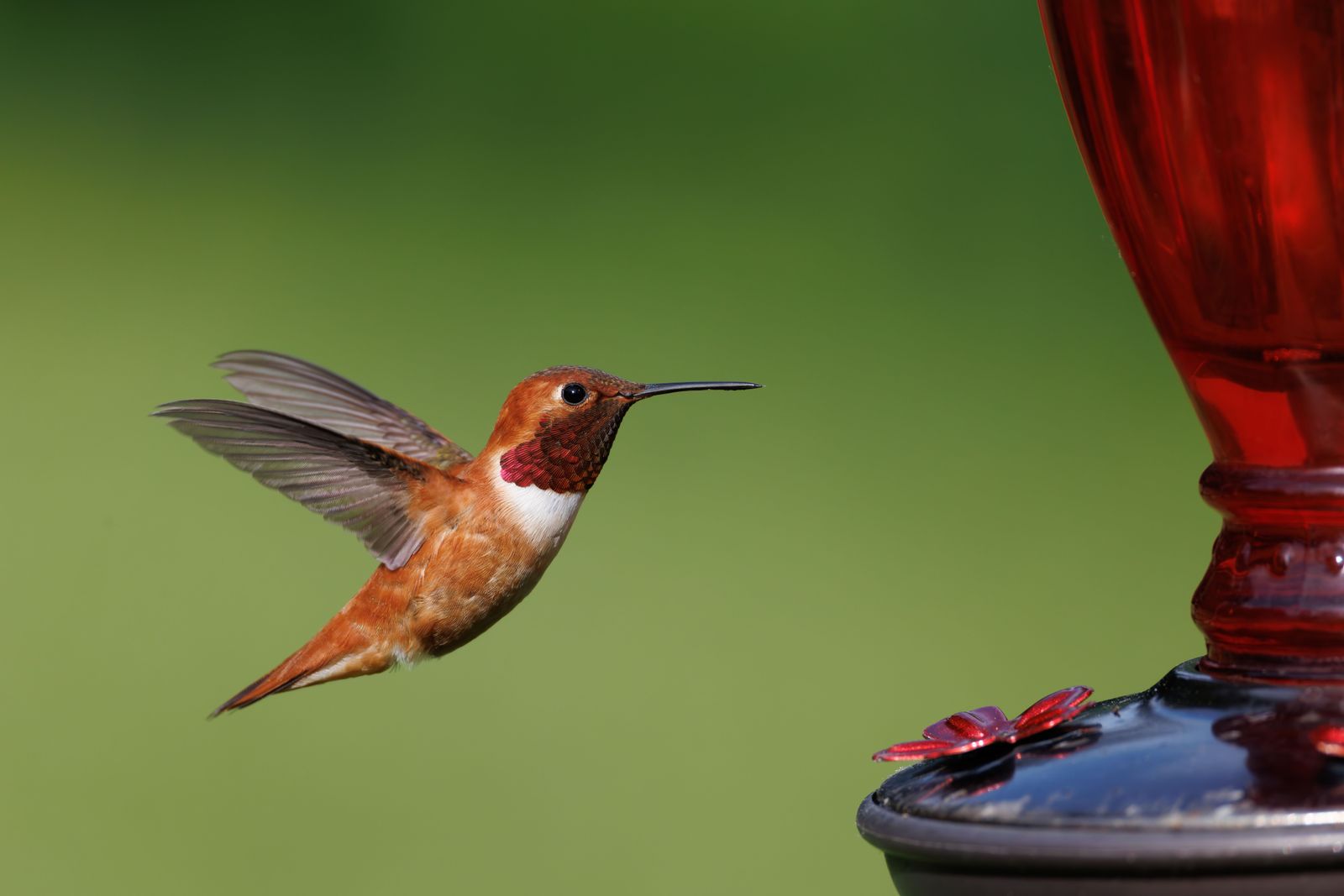
Photo by Veronika Andrews on Pexels
In hot weather, nectar needs changing every day or two, with a full wash each time. That is a task you will perform dozens of times a season, so the design either cooperates or it does not.
Check for:
- An opening wide enough to admit a bottle brush at a comfortable angle
- A reservoir with no interior pocket a brush cannot reach
- Feeding ports that separate from the base for individual cleaning
- Smooth, non-porous interior surfaces that do not accumulate brush scratches
- A base assembly that reseats correctly without fighting it
Capacity: bigger is not better
A large reservoir is only an advantage if your birds drink it before it spoils. In midsummer, nectar left more than a day or two in the heat is finished regardless of how much is left.
The right approach is to buy generous capacity and use it selectively. The Solar Hummingbird Feeder holds 32 fluid ounces, which covers a busy yard at peak migration, and lets you fill a quarter of it during a hot July week so the batch turns over fast. The slender shape and sealed base are aimed at keeping that nectar in the reservoir instead of dripping down the outside.
Rough guidance for fill volume, not tank size:
- One or two regular visitors: 4 to 8 fluid ounces per fill
- A steady handful of birds: 8 to 16 fluid ounces
- Peak migration or a well-established yard: fill fuller, and expect to refill more often, not less
Judging the solar side honestly
Solar lighting on a garden object is a closed loop: the panel collects during the day, a cell stores the charge, a dusk sensor switches the light on, and the stored energy runs out at some point in the night. Every specification you see assumes a full charge from a genuinely sunny day.
What to check before buying:
Expect run time to fall in winter. Shorter days, low sun angles, overcast weather, and cold all reduce what gets stored, and a pollen film on the panel makes it worse.
Body material and weight
Non-porous materials that hold color permanently age best outdoors. Hand-blown glass keeps its clarity and its color because the color comes from metal oxides melted into the glass rather than paint on the surface. It also varies in wall thickness, since it is shaped by hand at 2,300 degrees, and that uneven glass bends light into moving ribbons of color at night instead of a flat glow.
The tradeoff is weight and impact. Glass plus a full reservoir needs real support: a firmly set shepherd's hook, a bracket screwed into solid framing, or a substantial branch near the trunk. It does not belong on a thin decorative hook, a suction mount, or a deck rail where it will be knocked. For a fuller treatment, see the comparison of hand-blown glass versus plastic feeders.
Features worth paying for, and ones that are not
Worth it:
- Ports that disassemble for cleaning
- A base that seals reliably
- A translucent body you can read at a glance
- A panel you can wipe clean in one motion
- Color that is part of the material rather than applied to it
- Red dye or nectar concentrate included in the box, since plain white sugar and water is the correct mix
- Built-in bee guards that block the ports so tightly hummingbirds struggle
- Very small reservoirs sold as "fresh nectar" designs, which mostly mean constant refilling
- Decorative elements that shade the solar panel
Setting it up so it actually works
Frequently asked questions
How long should a solar feeder stay lit at night? Several hours after a genuinely sunny day is a reasonable expectation, and this feeder is rated for up to 8 hours after a full recharge. Treat any stated figure as a best-case number under good sun. Overcast days, short winter daylight, low sun angles, and a dusty panel all shorten it.
Does a lit feeder attract more hummingbirds? No. Hummingbirds are active in daylight and settled in at night, so the lighting is for the people enjoying the garden. What attracts birds is warm color on the feeder, an open and visible location, clean ports, and fresh one-to-four sugar water. Nearby blooms help, which is the subject of live nectar plants versus glass solar feeders.
Is a bigger reservoir better value? Only if you use it well. Large capacity gives you headroom during migration, but nectar spoils on a temperature clock rather than a volume clock. Buy generous capacity, then fill to match a few days of real consumption.
Can a solar feeder stay out all winter? The lighting will still work, just for shorter stretches. The bigger issue is the reservoir: liquid expands when it freezes and can crack a full container, so empty, wash, dry, and store the feeder before hard freezes arrive in your area.
A practical next step
Before ordering anything, stand where the feeder will hang and run three quick checks: is there unobstructed sun overhead at midday, can the support carry roughly two pounds of nectar plus the body without flexing, and can you reach the feeder easily enough to wash it every couple of days. A feeder that passes all three will get used properly. One that fails the third check will not.
Cover photo by Dante Muñoz on Pexels.