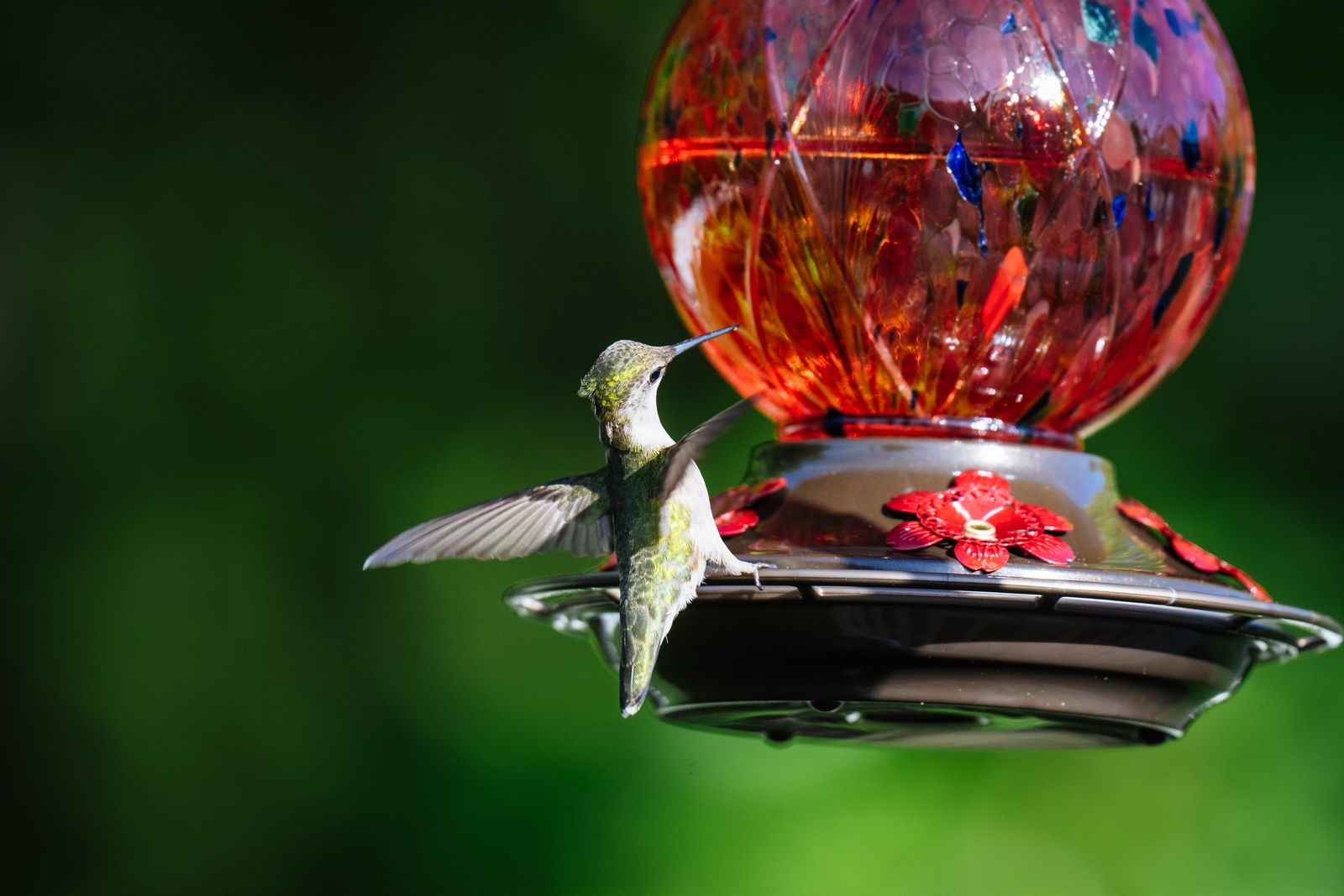
Best Early Spring Hummingbird Feeder: Hand-Blown Glass vs. Standard Plastic
For early spring, hand-blown glass hummingbird feeders outperform standard plastic models by offering superior thermal mass against sudden overnight frosts, high weight stability during turbulent wind gusts, and vibrant light refraction that—when paired with dusk solar RGB illumination—helps migrating scout hummingbirds easily spot your feeding station.
Early Spring Material Comparison: Glass vs. Plastic
| Evaluation Criteria | Hand-Blown Glass Solar Feeder | Standard Plastic Feeder |
| --- | --- | --- |
| Thermal Retention & Frost Shielding | Thick 2,300°F glass holds day heat longer, delaying nectar slush during 28°F–32°F morning dips. | Thin plastic walls lose heat rapidly, allowing nectar to chill or freeze quickly in early cold snaps. |
| Wind & Storm Stability | Heavy solid glass reservoir with metal base resists 20+ mph spring wind gusts without tipping. | Lightweight structure sways significantly in gusts, leading to nectar sloshing, leakage, and spills. |
| Visual Attractiveness & Dusk Visibility | Vivid translucent patterns with solar RGB LED lights draw migrating scouts from afar at twilight. | Opaque or fading plastic lacks dynamic light refraction, making it harder for scouts to spot at dusk. |
| Leakage & Seal Mechanics | Threaded gasket metal base and leak-proof slender geometry minimize dripping and sugar waste. | Snap-on plastic bases warp easily under temperature swings, causing frequent nectar leaks. |
| UV Resistance & Material Longevity | 100% UV-proof glass never turns brittle, yellows, or degrades over years of outdoor exposure. | Sustained spring and summer UV sunlight breaks down plastics, causing cloudiness and cracks. |
| Cleaning Efficiency & Pest Resistance | Smooth glass surface clears mold easily; built-in ant moat and metal base keep crawlers out. | Scratches in soft plastic harbor bacteria and mold; lightweight plastic moats evaporate quickly. |
This head-to-head matrix evaluates how artisan hand-blown glass solar feeders compare against standard factory-molded plastic feeders across essential early spring environmental factors.
Material Trade-Offs: Artisanal Glass vs. Standard Plastic
Pros
- Hand-blown glass provides superior thermal insulation during early morning spring chills.
- Integrated solar caps charge by day to emit glowing RGB dusk lighting for late-arriving migrants.
- Substantial weight prevents swaying and nectar spills during turbulent spring windstorms.
- Non-porous glass surfaces resist micro-scratches where mold and bacterial spores accumulate.
- Handcrafted at 2,300°F, creating a unique heirloom garden accent that never fades in sunlight.
- Requires careful handling during deep cleaning to avoid dropping on hard patio pavers.
- Slightly higher initial investment than disposable plastic models.
Top Spring Recommendation: LUJII Hand-Blown Solar Glass Feeder
For bird lovers preparing for early spring migration, the LUJII Solar-Powered Hand-Blown Glass Hummingbird Feeder offers the ultimate blend of functional weatherproofing and artistic garden charm.
- 32 fl. oz Capacity: Generous translucent reservoir lets you check nectar levels at a glance without disturbing birds.
- Dusk RGB Illumination: Solar cap recharges during daylight to light up automatically for up to 8 hours with multiple colorful lighting modes.
- Weatherproof Metal Base: Leak-proof, anti-rust coated metal base with sealing gaskets shields nectar from rain, snow, and wind.
- Artisan Craftsmanship: Each piece is individually hand-blown at 2,300°F, giving your garden a unique, light-refracting masterpiece.
Expert Spring Feeding Tip: Managing Late Season Frosts
> Pro Tip: In early spring, night temperatures frequently hover between 28°F and 34°F. Because standard 1:4 sugar nectar freezes around 27°F, your liquid will usually remain fluid while plain water freezes. However, if a severe arctic blast drops temperatures below 25°F, bring your glass feeder inside overnight. Never pour boiling liquid directly into a chilled glass feeder in the morning—allow the glass to acclimate to room temperature first to prevent thermal shock micro-fractures.
Immediate Spring Setup Actions
Your decision: Choose a hand-blown glass solar feeder for superior durability, wind stability, and dusk attraction during early spring.
Do this next: Hang your glass feeder 2 to 3 weeks before expected regional spring arrivals, filling it with a fresh 1:4 or 1:3 nectar solution.
Related resource: Download our Early Spring Hummingbird Nectar FAQ & Freeze Chart.Explore the LUJII Solar-Powered Hand-Blown Glass Hummingbird Feeder (32 oz capacity, leak-proof metal base).
Prepare your backyard sanctuary for early migrating scouts with these practical steps.
Frequently Asked Questions: Early Spring Feeding
Answers to common questions about managing feeder materials, cold snaps, and dusk solar lighting during early spring migration.
Key Takeaways for Early Spring Feeder Selection
- Hand-blown glass provides superior thermal density, delaying nectar freezing during erratic spring temperature drops.
- Solar-powered RGB illumination turns your feeder into a beacon for twilight-foraging scout hummingbirds.
- Solid glass weight coupled with an anti-rust metal base prevents tipping and sloshing leaks during high spring winds.
- Unlike plastic, non-porous handcrafted glass will not scratch, warp, yellow, or leach synthetic chemicals when exposed to UV rays.
- A leak-proof, gasket-sealed base design prevents sugar drips that attract early emergence spring ants and yellowjackets.
Which Feeder Is Right for Your Early Spring Climate?
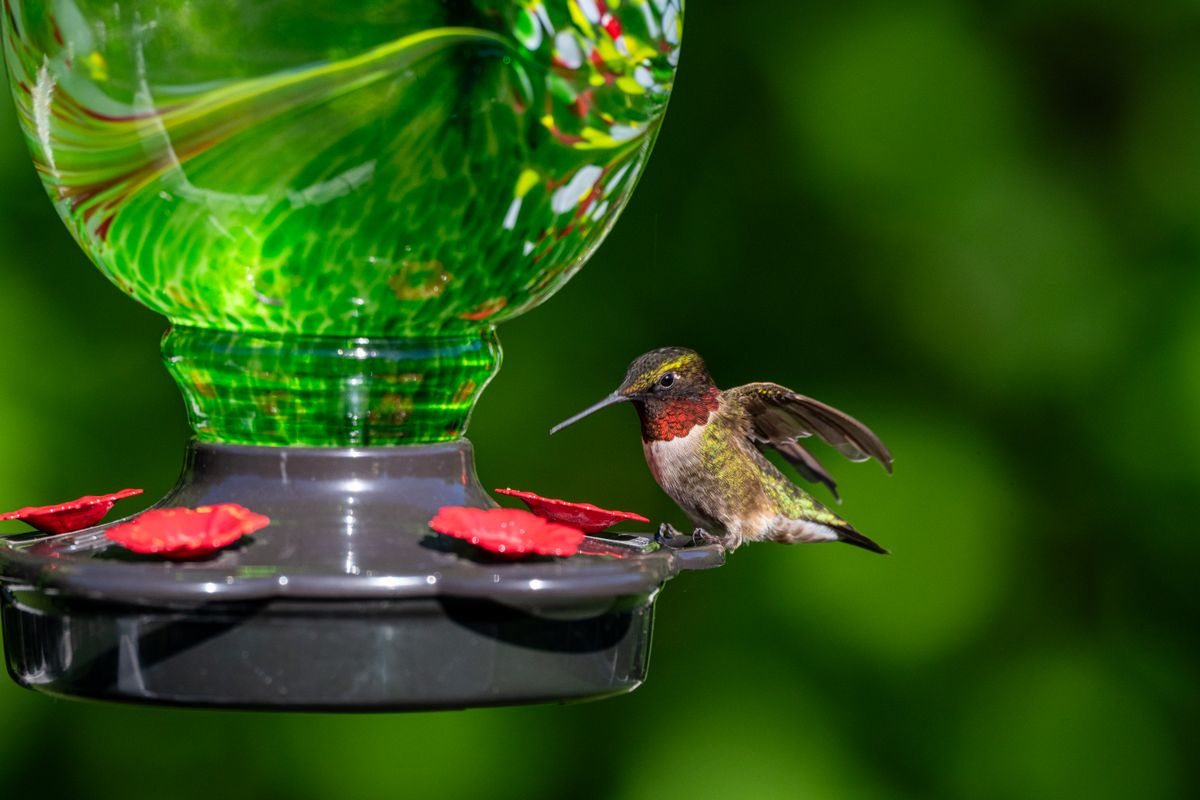
Hand-blown glass is the premier choice for early spring due to its thermal stability against frost, wind resistance, and high-visibility light refraction. Plastic serves best only as a temporary backup feeder during extreme indoor-outdoor transfer cycles.
Best choice for
- Hand-Blown Glass Solar Feeder — Thick hand-blown glass retains day heat longer, preventing early morning nectar slush, while solar RGB light draws early scouts at twilight.
- Hand-Blown Glass Feeder with Metal Base — Heavy glass and solid metal base offer higher weight ballast, preventing tipping and nectar spills during gusty spring storms.
- You live in an area with prolonged sub-20°F temperatures where feeders are left outdoors overnight without monitoring.
- You require an ultra-lightweight feeder for extremely weak plastic hanging hooks or suction mounts.
- Polycarbonate Plastic Feeders — Suitable for temporary backup feeders during extreme freeze events when feeders must be brought indoors rapidly.
Real-World Spring Scenarios: Glass vs. Plastic in Action
Sudden Overnight Spring Frost (28°F Lows) — The thick wall of a hand-blown glass feeder acts as a thermal buffer, keeping 1:4 nectar liquid until dawn. Plastic feeders cool rapidly, causing nectar to form ice crystals by early morning.
March Wind Gusts Exceeding 22 MPH — A heavy glass feeder (approx. 2.5 lbs filled) hangs steadily with minimal sway. Lightweight plastic feeders swing violently, splashing sticky nectar onto surrounding soil and attracting crawling pests.
Dusk Arrival of First Spring Scout Hummingbirds — A solar-charged glass feeder automatically activates colorful RGB lighting at sunset, refracting light through handcrafted patterns to signal nectar availability when natural sunlight vanishes.
Here is how each feeder material handles common early spring backyard challenges.
When early spring arrives across the United States, backyard bird enthusiasts face a unique challenge. Migrating hummingbirds—some having traveled thousands of miles across the Gulf of Mexico—arrive tired, hungry, and dependent on reliable nectar sources. However, early spring weather is notoriously unpredictable, bringing sudden frosts, gusty wind fronts, and damp rainstorms. Choosing between hand-blown glass and standard factory-molded plastic directly impacts how well your feeding station performs under these demanding conditions.
Thermal Density & Frost Protection Mechanics
One of the most critical factors in early spring feeding is nectar temperature. Hummingbirds operate on an extraordinarily high metabolic rate. Consuming near-freezing nectar forces them to expend valuable body heat to warm the liquid internally during cold early mornings.
Hand-blown glass, crafted at extreme temperatures reaching 2,300°F, develops a thick, dense wall structure. This high thermal mass acts as an insulating jacket around the nectar. During sunny spring days, the glass absorbs ambient thermal energy, retaining that warmth into the chilly evening hours. Consequently, the nectar inside a thick glass reservoir cools far slower than nectar inside thin plastic walls. When overnight temperatures drop toward the freezing threshold (32°F), standard 1:4 sugar nectar—which naturally freezes at ~27°F due to sugar concentration—remains fluid and palatable inside glass, while thin plastic models allow liquid to drop to ambient chill almost immediately.
For additional insights on maintaining safe nectar ratios during erratic weather, explore our guide on Early Spring Hummingbird Nectar FAQ: Ratios, Cold Weather Care, and Feeder Prep.
The Science of Light Refraction and Solar RGB Integration
Visual discovery is the primary sense hummingbirds use to find food sources. While adult birds remember past feeding territories, young migrants and expanding scouts search for vivid color flashes and light glints against dormant spring foliage.
Handcrafted glass exhibits unique optical properties that molded plastic cannot replicate. As natural sunlight passes through the swirling patterns of hand-blown glass, it refracts light in brilliant multi-directional beams. When paired with modern top-mounted solar panels, these feeders charge integrated batteries during the day. At dusk, when migrating birds are seeking late evening energy refills before roosting, the solar cap automatically powers soft RGB LED lighting. The light shines downward through the hand-blown reservoir, illuminating the liquid core and turning the feeder into a glowing beacon in the twilight garden.
To learn more about night behavior and garden lighting, read our feature on whether solar lights bother hummingbirds at night.
Durability, UV Stability, and Structural Integrity
While high-impact plastics appear cost-effective initially, extended exposure to seasonal ultraviolet (UV) radiation rapidly degrades synthetic polymers. Over a single season, plastic reservoirs become brittle, cloudy, and prone to microscopic stress fractures. These tiny scratches become ideal breeding grounds for black mold spores and bacterial colonies that resist standard rinsing.
In contrast, 100% hand-blown glass is completely non-porous and chemically inert. It will never yellow, fog, or leach synthetic chemical residues into acidifying sugar solutions. When paired with an anti-rust coated metal base, threaded gasket base seals, and a plastic solar cap shielding the upper electronics, glass feeding stations provide years of reliable service. For step-by-step cleaning protocols, refer to How to Clean and Maintain Your Hand-Blown Solar Hummingbird Feeder.
Essential Early Spring Guides
- Best Solar-Powered Garden Accent Lights for a Magical Evening Glow
- Why Is My Hummingbird Feeder Leaking? How Air Pressure and Base Seals Work
Featured Hand-Blown Solar Hummingbird Feeders
Bring color, night ambience, and premium thermal performance to your garden with our flagship solar glass feeder.
Next Steps & Final Recommendations
Your decision: Choose a hand-blown glass solar feeder for superior durability, wind stability, and dusk attraction during early spring.
Do this next: Hang your glass feeder 2 to 3 weeks before expected regional spring arrivals, filling it with a fresh nectar solution.
Related resource: Download our Early Spring Hummingbird Nectar FAQ & Freeze Chart.Upgrade your garden for spring migration! Explore the handcrafted LUJII Solar Hand-Blown Glass Hummingbird Feeder today.
Take action today to ensure your backyard is ready for early spring arrivals.