What Colors Do Hummingbirds Like Best? A Complete Guide
What Colors Do Hummingbirds Like Best? A Complete Guide
Hummingbirds are among the most colorful and dynamic creatures in the avian world. If you want to attract these brilliant pollinators to your outdoor space, understanding their sensory preferences is essential. Feeder color, material, and visibility play major roles in drawing hummingbirds to your garden.
How Hummingbird Vision Works
Hummingbirds possess extraordinary eyesight compared to humans. While human vision relies on three types of color cones (red, green, and blue), hummingbirds possess a fourth cone type that allows them to perceive ultraviolet light. This tetrachromatic vision enables them to spot bright hues across long distances.
Because their eyes are highly sensitive to long wavelengths, warm shades on the light spectrum catch their eye instantly against green foliage. Their keen sense of sight compensates for a very limited sense of smell, making visual signaling the primary method they use to locate food sources.
Top Colors That Attract Hummingbirds
When choosing backyard feeders or planting flowers, color selection directly dictates how quickly hummingbirds notice your yard.
- Red: Red is undeniably the most effective color for catching a hummingbird's attention. High-contrast red surfaces signal abundant nectar, making red feeders an industry standard.
- Pink and Magenta: Vibrant pinks simulate natural woodland flowers like fuchsias and blazin' stars.
- Orange and Yellow: Warm orange and yellow tones provide strong secondary contrast, easily seen from tree canopies.
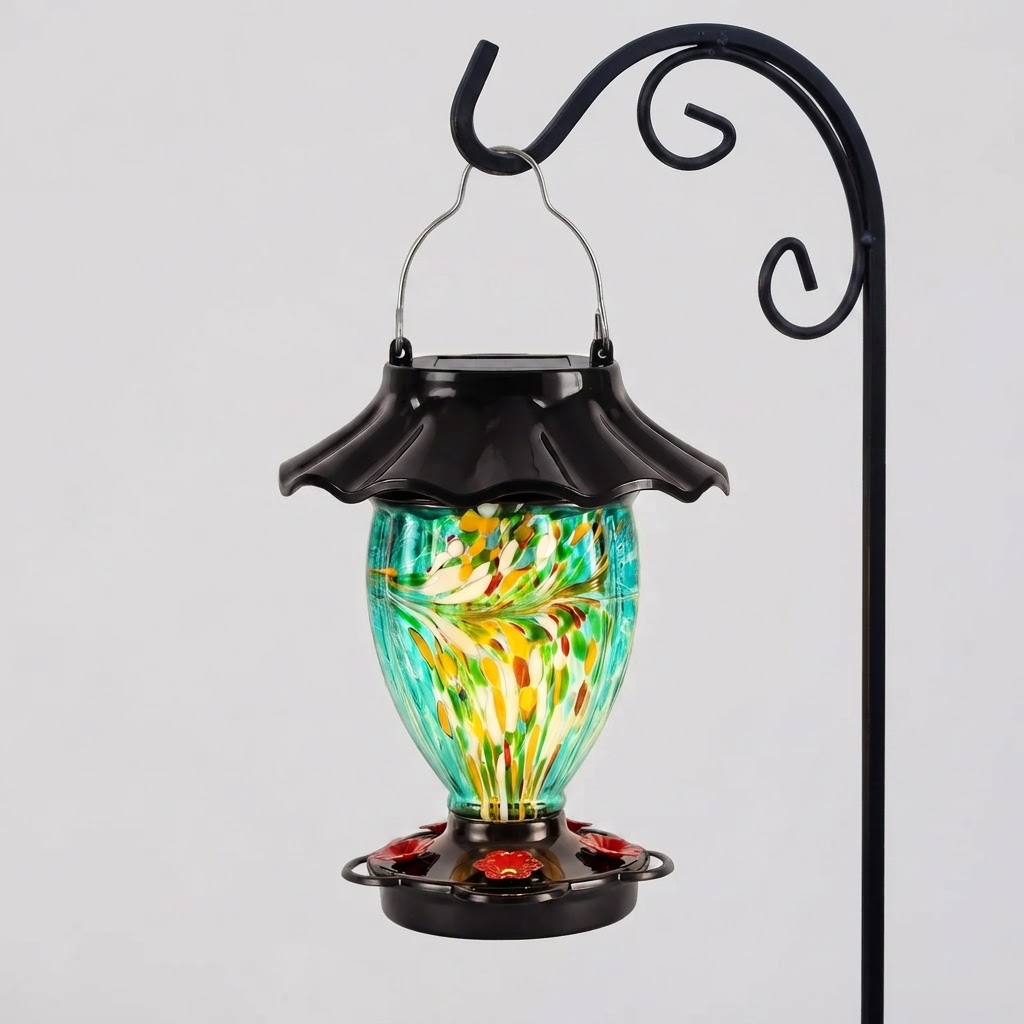
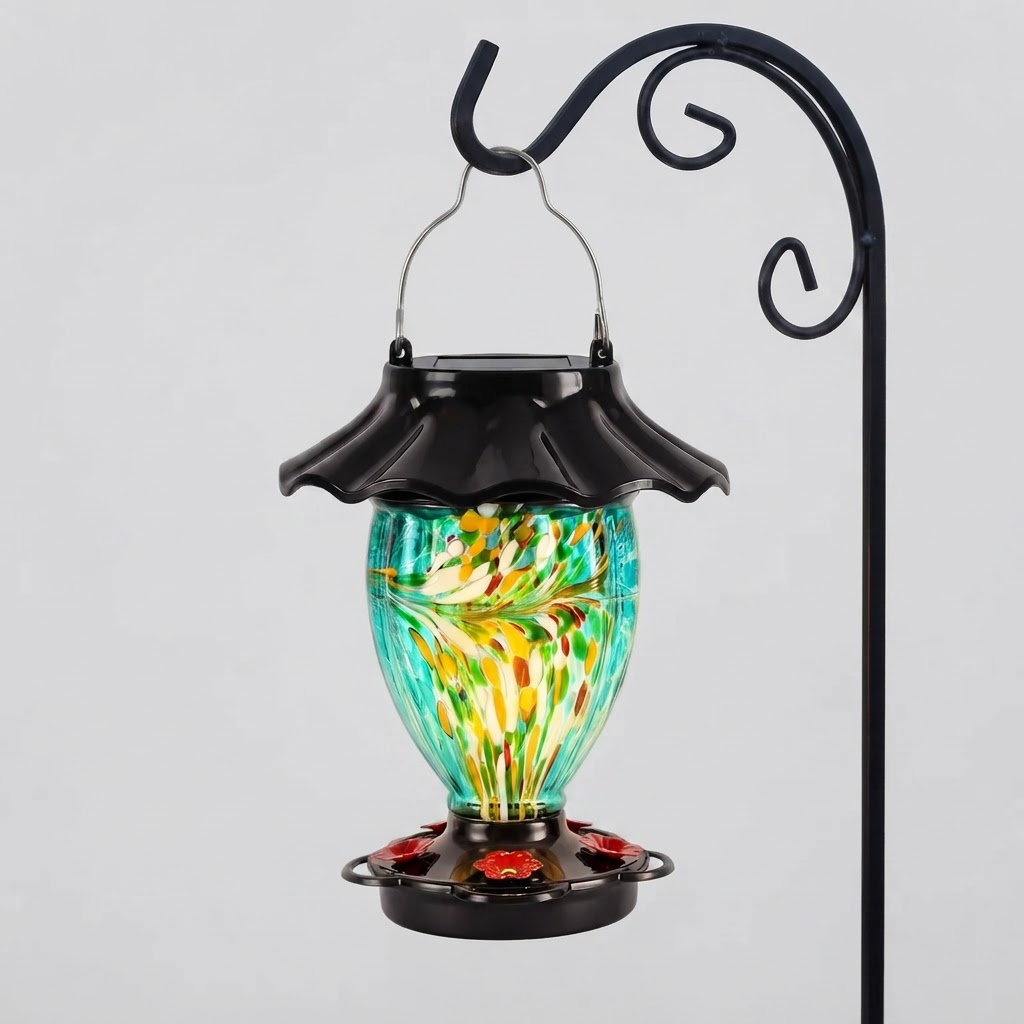
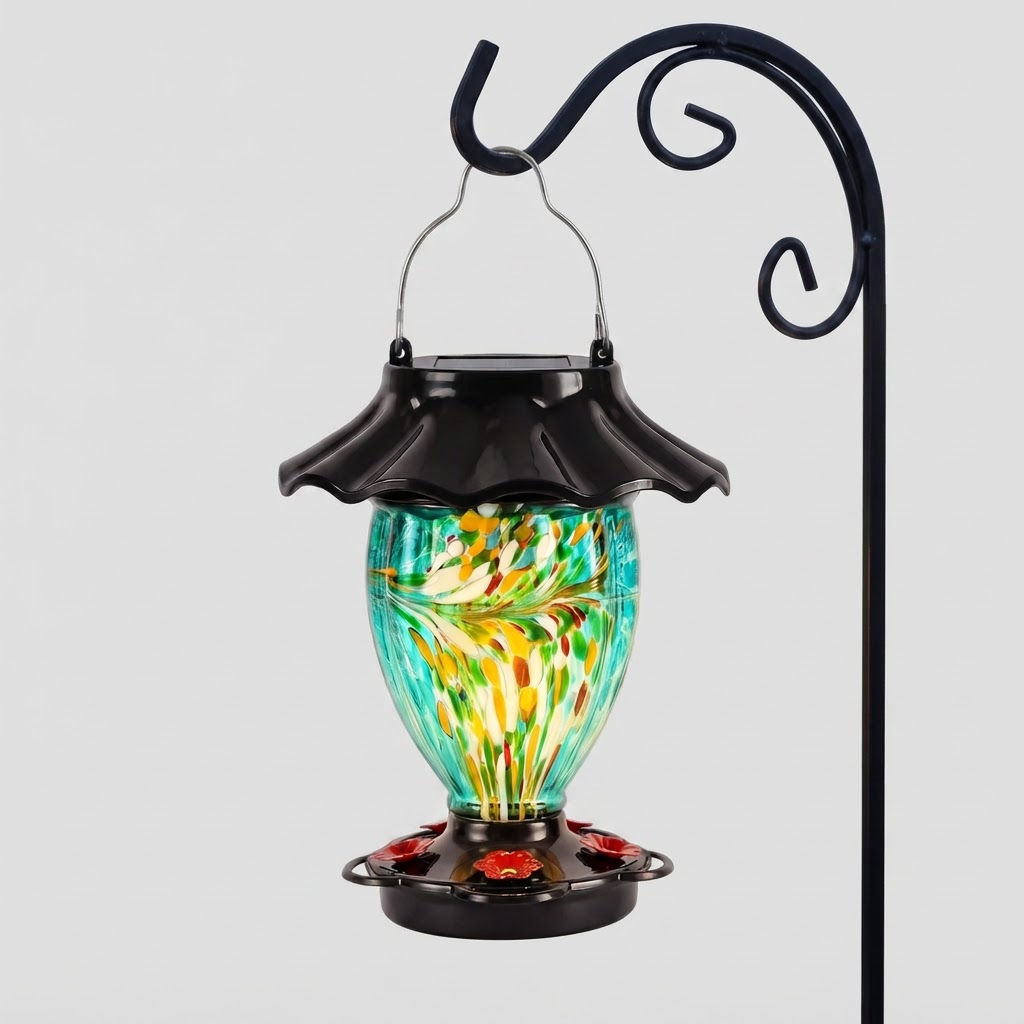
- Multicolor Combinations: Blending multiple vibrant shades through glass artwork mimics natural flower beds, creating a dynamic visual target.
Hand-Blown Glass vs Plastic Color Retention
While red plastic feeders are widespread, they often fade under harsh UV exposure. Hand-blown glass art offers superior color fastness and structural integrity.
Each glass reservoir of the handcrafted feeder is shaped by glass artists who curve and set patterns at 2,300 degrees. This process creates unique, permanent swirls of color that never wash out or degrade in natural sunlight. Furthermore, high-clarity translucent glass allows bird watchers to monitor the 32 fl.oz capacity nectar level easily while offering birds a vivid focal point.
Using Illuminated RGB Feeders to Enhance Visual Appeal
Color attraction does not need to stop when the sun sets. Modern solar-powered hummingbird feeders extend garden aesthetics into twilight hours. Featuring a plastic solar cap that shields against sunlight, rain, and snow, solar feeders collect solar energy throughout the day.
Equipped with RGB lights with multiple lighting mode options, an illuminated solar feeder automatically lights up at night for up to 8 hours after a full recharge. These glowing color patterns elevate garden decor while serving as a unique highlight in your outdoor space.
Ideal Feeder Placement and Care Tips
Properly positioning your colorful feeder maximizes visitor traffic and bird safety.
With durable construction like an anti-rust coated metal base and a sealed leak-proof base, a quality handcrafted glass feeder offers years of vibrant garden enjoyment.
Related in this cluster
- Top 5 Colors That Attract Hummingbirds to Your Backyard
- Glass vs Plastic Hummingbird Feeders: Color, Durability & Clarity
- Why You Need a Solar RGB Lighted Hummingbird Feeder
- How to Hang and Place Your Solar Hummingbird Feeder
- Hummingbird Feeder Colors & Lights: Frequently Asked Questions
- Understanding Hummingbird Vision and Light Spectrum Preferences