Solar RGB Lighted Hummingbird Feeders vs. Traditional Glass Feeders: Which Belongs in Your Yard?
A solar RGB lighted hummingbird feeder and a traditional unlit glass feeder do the same job during the day. The difference is entirely about the hours after sunset: the lighted version turns into a glowing focal point, and the traditional one disappears into the dark. Choose based on whether you spend evenings looking at the yard, because both serve birds identically when the nectar is fresh and the seal is tight.
What actually differs between the two?
Strip away the marketing and there is one functional difference: a solar cap containing a small panel, a battery, and a light. Everything that affects birds, such as the reservoir, the sealed base, the ports, and the capacity, can be identical.
The lighted feeder charges through the day, then switches on automatically at dusk. The feeder sold here runs for up to 8 hours after a full recharge, with RGB lights and multiple lighting mode options, so it stays lit across a normal evening. A traditional feeder has no cap electronics, nothing to charge, and nothing to keep clean up top.
That is the whole comparison. The rest is about what you value and where the feeder hangs.
Side-by-side comparison
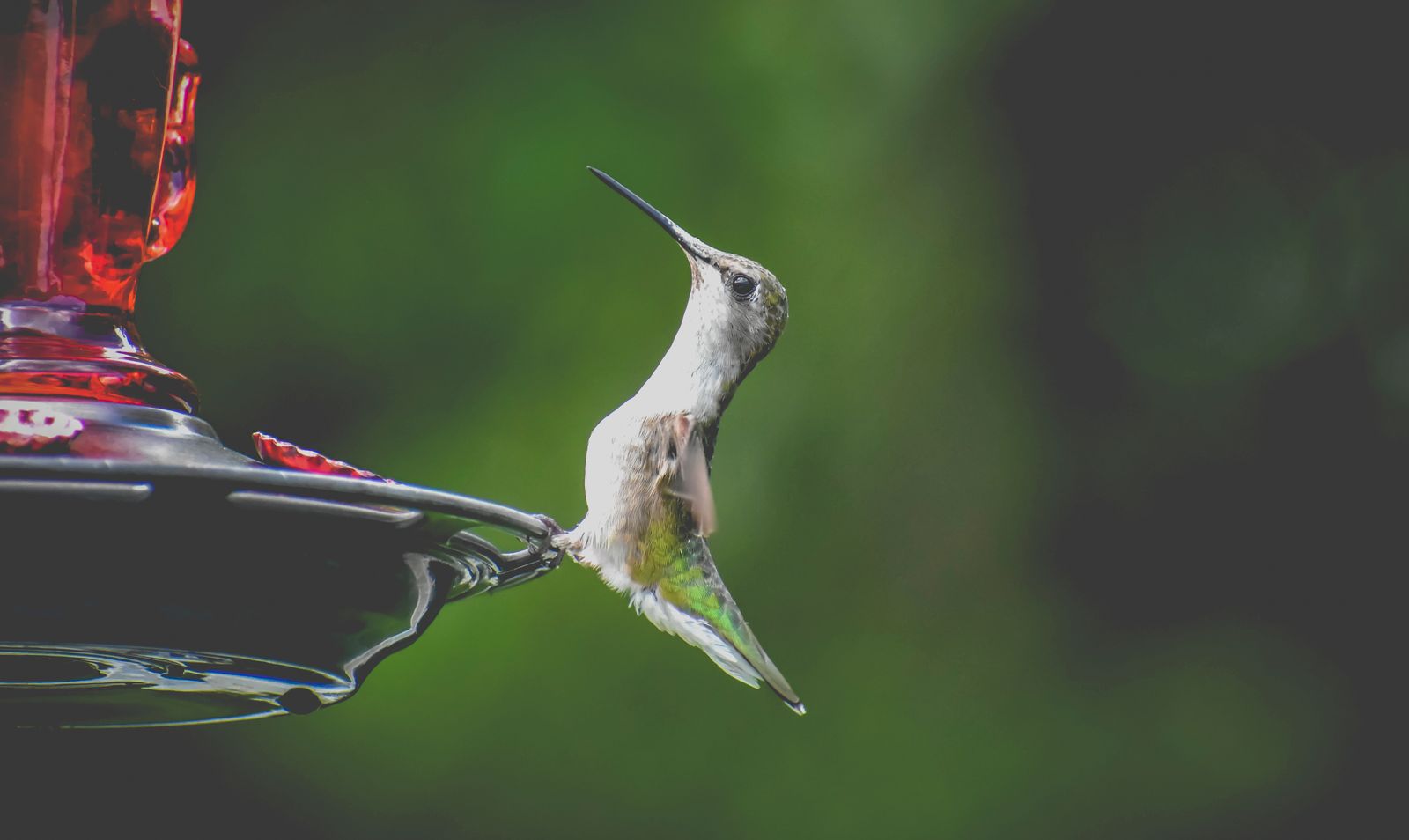
| Consideration | Solar RGB lighted feeder | Traditional glass feeder | |---|---|---| | Daytime function for birds | Identical when nectar and seal are equal | Identical when nectar and seal are equal | | After dark | Glowing garden focal point, automatic at dusk | Not visible | | Setup | Hang it; charging is automatic in sun | Hang it | | Placement constraint | Needs direct sun on the cap to charge | Can hang in full shade if you prefer | | Extra maintenance | Wipe the panel; keep the cap dry inside | None beyond ordinary cleaning | | Failure modes | Light dims or shortens as the battery ages | Nothing electronic to fail | | Cost | Higher for the same reservoir | Lower | | Best fit | Patios, decks, entry paths, anywhere you sit at night | Deep shade, minimalist gardens, budget builds |
Do the RGB lights disturb hummingbirds?
Hummingbirds are daytime feeders. At dusk they leave the feeder and settle into sheltered roosting spots in dense shrubs or tree cover, often well away from where they eat, and many species drop into a deep nightly rest to conserve energy. A small decorative light at the feeder is not where they are sleeping.
Two sensible precautions apply anyway. Aim the effect at the feeder rather than washing light across hedges and dense shrubbery where birds actually roost, and if you have a choice of modes, a steady or slowly shifting color is a gentler thing to have running near a garden all evening than a fast strobe. Neither is a bird-safety emergency; both are simply good garden lighting practice.
The lighting is honestly for people. It does not attract hummingbirds at night, and any product suggesting otherwise is describing something birds do not do.
Where does a lighted feeder actually earn its price?
In the specific case where the feeder is visible from where you spend evenings. On a patio, beside a seating area, along an entry path, or in view of a kitchen window, a lit glass reservoir gives you something to look at for hours after the birds have gone to roost. Colorful translucent glass is what makes it work, because light passing through the reservoir illuminates the whole piece and the nectar inside rather than just showing a lamp.
Where it earns nothing is a feeder hung around the side of the house, in a spot with heavy overhead cover that never charges, or in a yard nobody visits after dinner. In those cases the electronics are cost and maintenance without benefit, and a traditional glass feeder is the better buy.
Does the lighted version compromise the feeding hardware?
It should not, and this is the thing to check before buying. The solar cap adds a component above the reservoir, and a poor implementation puts a loose, water-prone plastic lid where a proper seal used to be.
Good execution looks like this:
- A plastic solar cap that shields the panel and battery from sunlight, rain, and snow rather than merely covering them.
- A sealed base at the bottom that keeps the pressure balance intact, so nectar releases only as birds drink.
- A see-through reservoir so you can read the nectar level and catch cloudiness early.
- A coated metal base that carries the weight of a full reservoir without flexing.
- Ports and threads you can reach with a brush, since anything hard to clean gets cleaned less.
How placement differs between the two
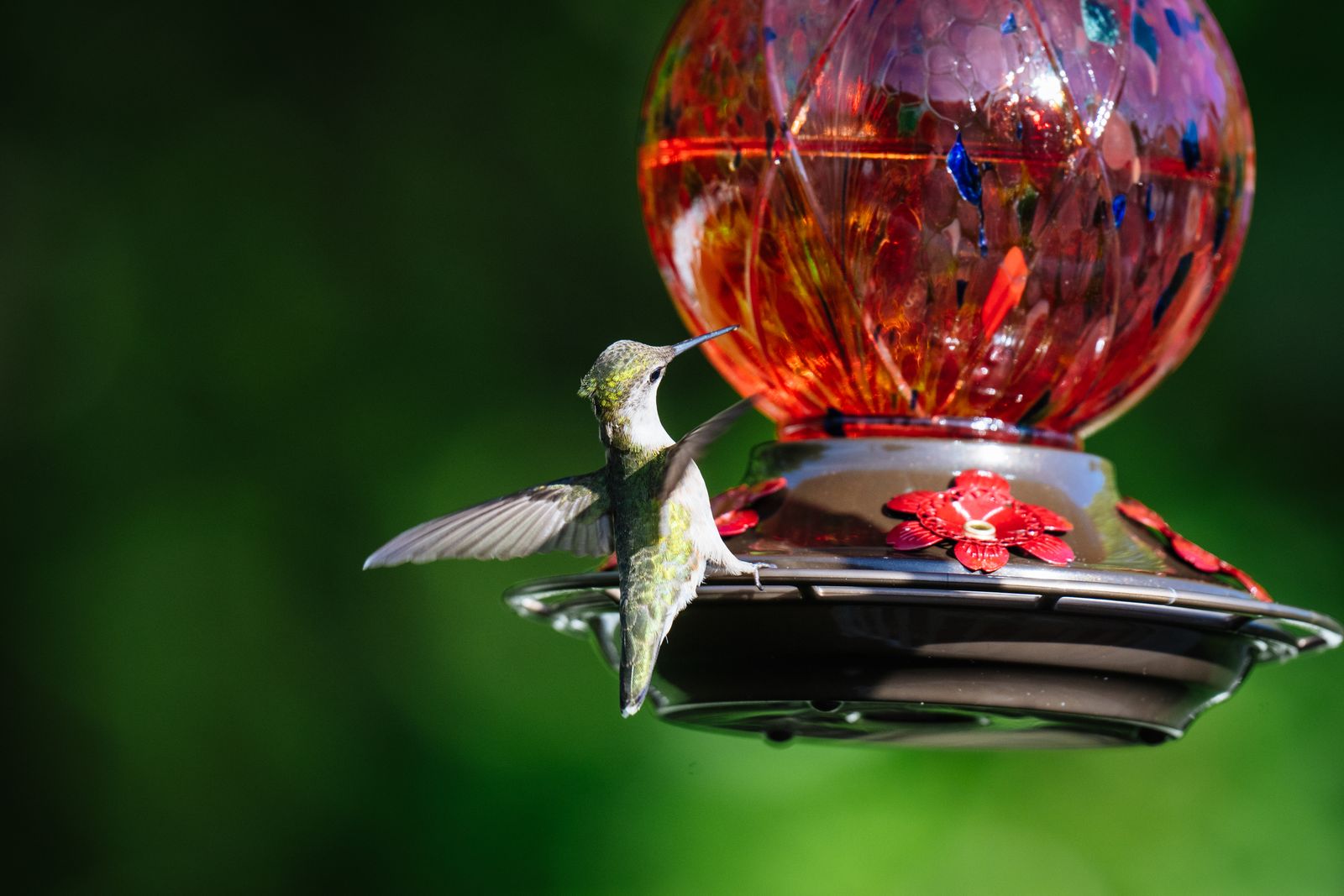
A traditional feeder can hang anywhere convenient, and dappled shade is ideal because cooler nectar stays fresh longer and heat-driven dripping is reduced.
A solar feeder has a competing requirement, since the panel needs real sun. The resolution is morning sun with afternoon shade:
Cleaning and nectar are the same for both
Neither version changes what goes inside. Mix one part plain white granulated sugar into four parts water, stir until fully dissolved, and let it cool before filling. Skip red dye, honey, brown sugar, and artificial sweeteners.
Empty, wash, and refill every few days, and more often in hot weather or any time the nectar looks cloudy or shows dark specks. Hot water and a bottle brush are enough. Scrub the ports and the sealing surfaces and rinse thoroughly, because mold in sugar water is a genuine health risk to hummingbirds.
The only addition on the solar model is keeping water out of the cap during cleaning. Wash the reservoir and base, wipe the cap rather than submerging it, and let everything dry before reassembly.
If you are choosing between spending on hardware or on plantings, that trade-off is covered in this comparison of live nectar plants and glass solar feeders as attractants, and the reasons a glass reservoir ages better than a molded one are laid out in glass versus plastic on aesthetics and durability.
FAQ
Does the light need to be switched on each evening? No. A solar feeder charges during daylight and the light comes on automatically at dusk, so there is nothing to plug in and no switch to remember.
What happens after a cloudy day? The panel collects less energy, so the light runs for a shorter time or comes on dimly. Runtime figures assume a full recharge, and a run of overcast days will show up as shorter evenings.
Is a lighted feeder harder to clean? Only slightly. The reservoir and base wash the same way. The difference is that the solar cap gets wiped rather than soaked, and it should be dry before it goes back on.
Will the light attract insects to the feeder? Some night-flying insects are drawn to light generally, but the far bigger insect magnet is spilled or fermenting nectar. A tight seal, a clean exterior, and fresh nectar do more for insect control than choosing an unlit feeder.
A practical next step
Go outside at the hour you usually sit in the yard and look at where your feeder hangs. If you can see it from your chair and the spot gets strong morning sun, the lighted version will pay off every evening. If you cannot see it, or the spot never gets direct sun, put the money into a better reservoir and seal instead.
Cover photo by Frank Cone on Pexels.