How to Choose the Best Solar-Powered Hummingbird Feeder for Evening Garden Magic
The best solar-powered hummingbird feeder for evening interest is one that gets the daytime job right first: a sealed base that does not drip, a reservoir you can see through, and materials that survive weather. The solar lighting is what turns the feeder into a garden feature after dark, and the things worth checking there are runtime after a full charge, whether the light has multiple modes, and whether the solar cap is genuinely weatherproof. Everything else is preference.
What does the solar part of a solar hummingbird feeder actually do?
The solar panel sits on top of the feeder, charges a small internal battery through the day, and switches the light on automatically at dusk. Hummingbirds themselves are day feeders and go to roost at nightfall, so the light is not there to feed birds after dark. It is there so the feeder reads as a piece of illuminated glass in the yard during the hours you are actually outside on the patio.
That distinction should shape how you shop. Judge the feeding hardware on feeding criteria, and judge the light on lighting criteria, because a feeder that lights beautifully and drips all day is a worse feeder than a plain one.
The feeder on this site is a good illustration of how the two halves combine: a hand-blown glass reservoir does the daytime work, while the solar cap lights it up automatically at night for up to 8 hours after a full recharge, with RGB lights and multiple lighting mode options.
The seven things worth checking before you buy
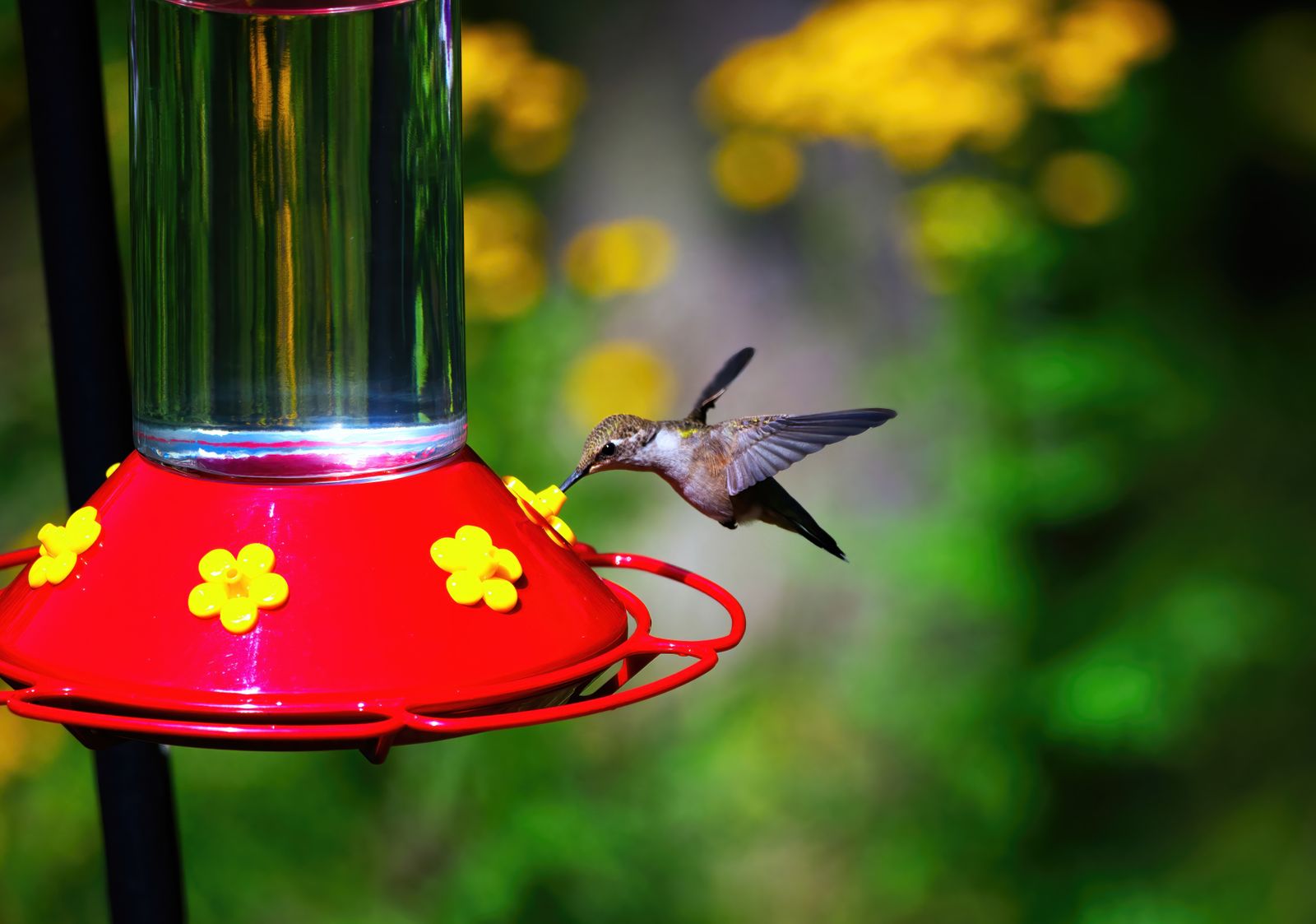
Photo by DANNIEL CORBIT on Pexels
- Seal design. Look for a sealed base rather than a loose collar. This is what separates a feeder that keeps its nectar from one that waters the lawn with sugar.
- Reservoir visibility. A see-through reservoir lets you read the nectar level and spot cloudiness or film early. Opaque bodies hide exactly the problems you need to catch.
- Capacity matched to your yard. A 32 fluid ounce reservoir gives you headroom for a busy season, and you can always fill it partway during quiet weeks.
- Weather protection over the electronics. A solar cap needs to shield the panel and battery from sun, rain, and snow, not just look like a lid.
- Base and hardware material. A metal base with a protective coating holds up better outdoors than thin unfinished parts.
- Light behavior. Automatic dusk activation matters more than brightness. Multiple modes are useful because a color cycle suits a party and a steady single color suits an everyday evening.
- Cleanability. Wide openings, a smooth interior, and a base that comes apart without a fight. A feeder you dread cleaning gets cleaned less often, and that is a bird health issue.
How to compare solar lighted feeders without getting lost in specs
| What you are comparing | Why it matters | What to look for | |---|---|---| | Runtime after a full charge | Determines whether the feeder is still lit during your evening | A stated runtime after full charge, such as up to 8 hours | | Charge conditions | Panels need real sun, not ambient daylight | A mounting spot with several hours of direct sun | | Lighting modes | One fixed color gets old; color changes suit different evenings | RGB with multiple mode options | | Reservoir material | Affects clarity, shape retention, and how it ages in sun | Glass for stability and visibility | | Base construction | Where the seal lives and where weight is carried | Coated metal, clean threads, a seated gasket | | Waterproofing | Rain reaching the electronics ends the light | A plastic solar cap that fully covers the panel |
Does a lighted feeder change how well the feeder attracts birds?
During daylight, what attracts hummingbirds is color, movement, fresh nectar, and a safe perch to watch from. Colorful translucent glass reads well in sunlight and pairs naturally with red and orange plantings, which is the part birds respond to. The nighttime lighting is for you.
If you are weighing feeders against planting more nectar sources, that is a fair question with real trade-offs on both sides. This comparison of live nectar plants and glass solar feeders as attractants walks through what each does well, and the short answer is that a yard with both outperforms a yard with either.
Where to hang a solar feeder so it charges and stays cool
Solar charging and nectar freshness pull in opposite directions, and the resolution is morning sun with afternoon shade.
What good ownership looks like after the purchase
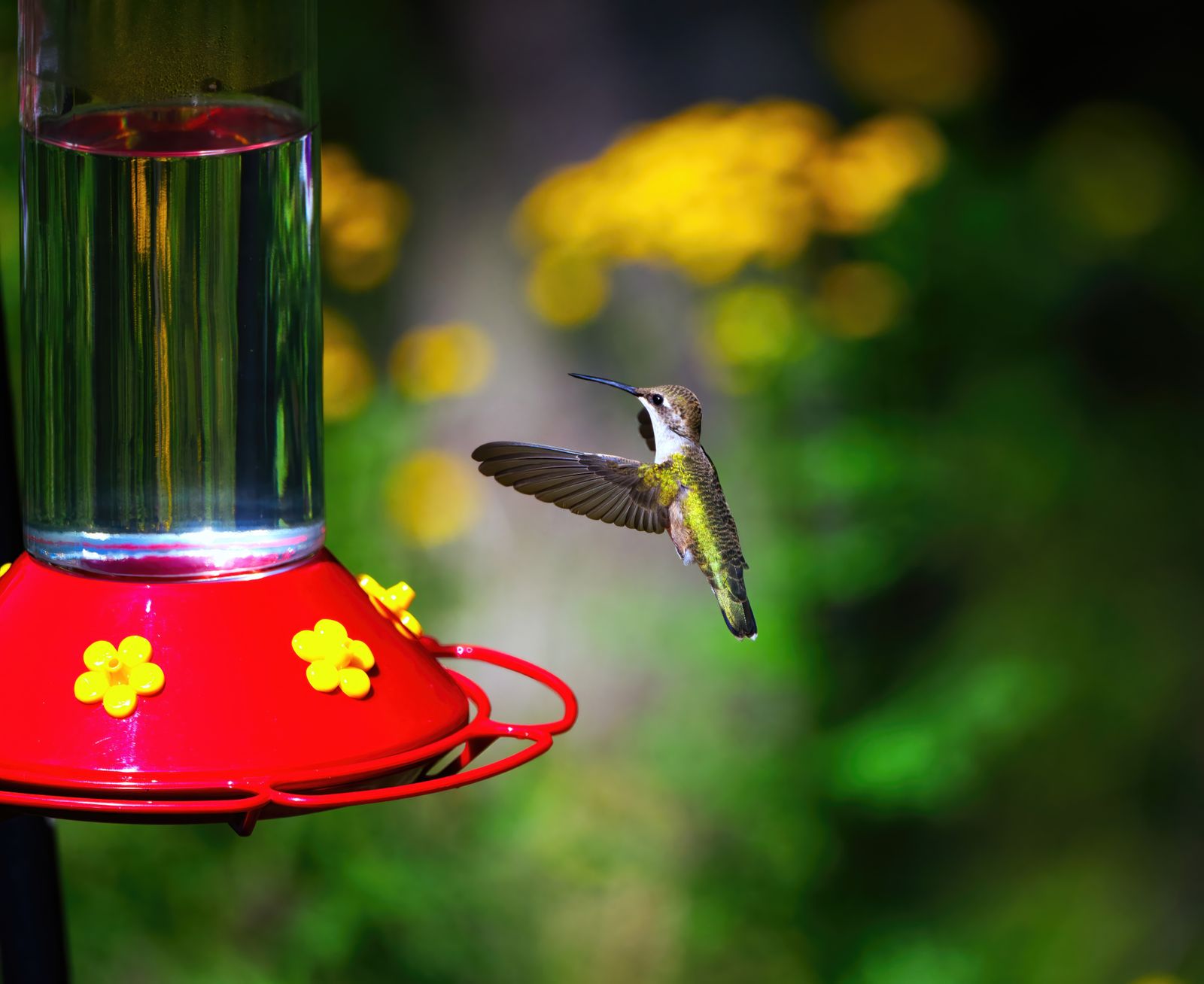
Photo by DANNIEL CORBIT on Pexels
Mix nectar from one part plain white granulated sugar and four parts water, stirred until fully dissolved and cooled before filling. No red dye, no honey, no brown sugar, no artificial sweeteners. Plain sugar water is what the birds want and what stays safest.
Empty and wash the feeder every few days, and more often in hot weather or any time the nectar looks cloudy or shows specks. Use hot water and a bottle brush, pay attention to the ports and the sealing surfaces, and rinse thoroughly. Mold in sugar water is a genuine health risk to hummingbirds, so this is the part of ownership that is not optional.
Wipe the solar cap when you clean the feeder. Dust and pollen on a small panel reduce charging noticeably, and a cloudy panel is the most common reason a working light seems to have gotten dimmer or shorter-lived over a season.
Is a glass reservoir the right choice for a solar feeder?
For most buyers, yes. Glass stays dimensionally stable in heat, keeps its clarity, does not scratch into a haze from brush cleaning the way softer materials can, and it looks like something rather than like equipment. When a light shines through it, translucent glass is also what produces the effect people buy these feeders for in the first place.
Hand-blown glass adds a second dimension: because artists shape the curves and patterns at around 2,300 degrees, no two reservoirs come out identical. That matters if you think of the feeder as garden decor as much as bird hardware. The honest trade-off is that glass can break if it is knocked off a hook, which is a good argument for a secure hanging point. The full comparison of glass against plastic on looks and durability covers where each material genuinely wins.
FAQ
Do solar hummingbird feeders need batteries or wiring? No wiring. A solar panel on the cap charges an internal battery during the day and the light comes on automatically at dusk, so there is nothing to plug in and no switch to remember.
How long does the light stay on? That depends on the model and the charge it received. The feeder on this site runs for up to 8 hours after a full recharge, which covers a normal evening. Expect less on overcast days, since the panel collected less energy.
Will the light keep hummingbirds awake or disturb them? Hummingbirds roost at dusk in sheltered spots away from the feeder, so a small decorative light at the feeder is not where they sleep. Point lighting at the feeder rather than into surrounding shrubs and hedges where birds actually settle.
Does a bigger reservoir mean less work? Fewer refills, yes, but not fewer cleanings. Nectar spoils on a schedule set by temperature, not by volume, so a large feeder in hot weather should be filled partway and changed just as often.
A practical next step
Pick your hanging spot before you pick your feeder. Stand in the yard at the hour you are usually outside, find a place with strong morning sun, afternoon shade, a foot of clearance on all sides, and a clear view from where you sit. That one decision determines how well any solar feeder charges, how long its nectar stays fresh, and whether you actually enjoy the light.
Cover photo by Veronika Andrews on Pexels.