
From 2,300 Degrees to Your Garden: The Craft and Artistry Behind Blown Glass Feeders
A hand-blown glass hummingbird feeder begins as a glowing lump of molten glass gathered on the end of a steel pipe at around 2,300 degrees, and it is shaped entirely by a person's breath, hands, and simple steel tools in the few minutes before the glass stiffens. That single fact explains everything else about these feeders: the slight variation in curve, the swirl of color that never repeats, the thickness that changes subtly from one side of the reservoir to the other. Machines make identical parts. People make related ones.
What "hand-blown" actually means
Hand-blown glass is glass inflated with human breath through a hollow pipe and formed while it is soft, rather than pressed or injected into a closed mold by machine. The distinction matters because the two processes produce different objects. A molded part is a copy of the mold. A blown part is a record of the movements made while it cooled.
The Solar Hummingbird Feeder's glass reservoir is made this way, with glass artists shaping the curves and patterns at 2,300 degrees using skills passed down through generations of a working glass shop. The translucent, colorful result is not just decorative: because the glass is see-through, the nectar level stays visible at a glance without opening anything.
Why glass has to be worked at 2,300 degrees

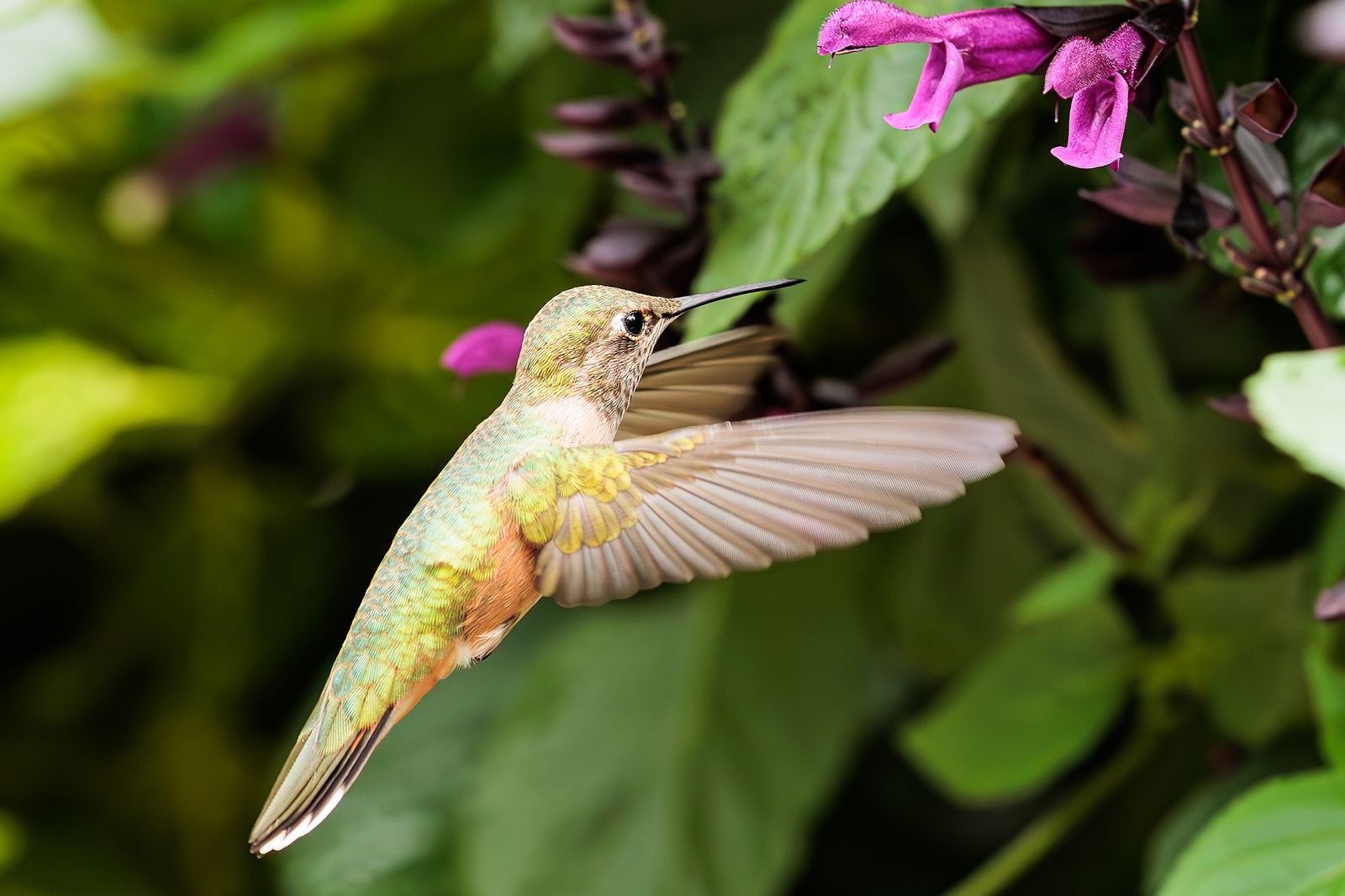
Photo by Veronika Andrews on Pexels
Glass has no single melting point. It softens gradually across a wide temperature range, which is exactly what makes it workable. Around 2,300 degrees it behaves like thick honey — hot enough to gather on a pipe and inflate, viscous enough to hold a shape instead of running off. Cooler than that, it becomes stiff and stops responding to the pipe. Hotter, and it slumps out of control.
That narrow working window is the whole craft. A glassblower is constantly returning the piece to a reheating chamber to keep it in range, then working it in short bursts. The rhythm of heat, shape, heat, shape is why a single reservoir takes a trained pair of hands and cannot be paused halfway through.
The steps a glass reservoir goes through
The sequence varies from shop to shop, but the backbone is consistent:
Step eight is the one buyers never see and the one that decides whether a feeder survives a season outdoors. Glass cooled too quickly holds internal stress and can crack later from nothing more than a temperature swing. Properly annealed glass is stable.
Why every hand-blown feeder is different, and why that is not a defect
Small variations are the signature of the process, not evidence of a flaw. Expect to see:
- Slight asymmetry in the curve of the body
- Color that pools thicker in some areas and stretches thin in others
- Faint spiral or stretch marks where color was pulled during inflation
- A few tiny internal bubbles
- Small differences in overall height or width between two feeders of the same design
Hand-blown, mold-blown, and machine-molded compared
| Method | How it is formed | Piece-to-piece variation | Visual character | Typical use | |---|---|---|---|---| | Free hand-blown | Inflated by breath, shaped with hand tools | High — every piece differs | Soft, flowing curves; layered color | Artisan vessels, garden glass | | Mold-blown | Inflated by breath or air into a shaped mold | Low to moderate | Consistent outline, some hand finishing | Mid-volume glassware | | Machine-molded glass | Pressed or blown mechanically at volume | Very low | Crisp seams, uniform thickness | Jars, bottles | | Injection-molded plastic | Melted polymer forced into a steel mold | Nearly none | Sharp detail, mold lines, opaque or tinted | Mass-market feeders |
If you want to go deeper on how the finished materials hold up in a garden rather than how they are formed, the material breakdown in hand-blown glass versus plastic hummingbird feeders covers durability and appearance side by side.
How the color gets into the glass
Color is not painted on. It is glass. Metal oxides added to the batch produce different hues — cobalt for deep blue, copper compounds for greens and turquoise, and so on. In a hand shop, colored glass usually arrives as rods or as crushed frit that the blower picks up onto the hot clear body and then melts flush.
Because the color layer stretches with the piece as it inflates, it thins where the form expands most. That is why the deepest color often sits near the neck and base, and why the widest part of the reservoir tends to read lighter and more translucent. It is also why the color cannot peel, chip off, or fade the way surface paint on an outdoor object does.
What craftsmanship changes about a feeder that lives outdoors
Artistry gets the attention, but the practical consequences matter more day to day:
- Nectar visibility. Translucent glass lets you see the fill level without unhooking anything, so refills happen on time.
- Cleanability. A smooth, non-porous glass interior gives mold and residue very little to grip compared with a scratched plastic surface.
- Neck geometry. A properly finished opening is what allows the cap and sealed base to control drips on a 32 fluid ounce reservoir.
- Light behavior. Uneven wall thickness acts like a scattered lens, which is the reason the nighttime glow looks like moving color rather than a flat bulb.
- Weight. Glass has real mass. It sits steadier in wind than a light plastic body, and it needs a hook and branch that can carry it.
How to judge quality in a hand-blown glass feeder
- Hold it up to light and look for even, continuous walls with no chalky or cloudy zones
- Check the rim or neck for a smooth finished edge rather than a sharp, raw break
- Look for color that is clearly inside the glass, not sitting on the surface
- Confirm the base assembly seats squarely and holds without wobble
- Treat small bubbles and gentle asymmetry as normal; treat visible surface cracks as a reason to reject
- Confirm the piece can be fully drained and rinsed, since anything hard to clean gets cleaned less
Frequently asked questions
Is hand-blown glass more fragile than plastic? It is more brittle in an impact, and it will break if dropped on stone. In everyday garden use it is more resistant to the slow failures that affect plastic, such as surface scratching, sun-driven yellowing, and stiffening that leads to cracks. The realistic risk with glass is a single hard knock, not gradual decay.
Does the glass color affect whether hummingbirds visit? Hummingbirds are strongly drawn to color, and warm reds and oranges are especially effective at catching their attention from a distance. Color helps them find a new feeder. After that, what keeps them coming back is fresh nectar and a clean feeder. If you are weighing color against planting, the comparison in live nectar plants versus glass solar feeders is a useful next read.
Why do two feeders of the same design look slightly different? Because each one was inflated and shaped by hand in a few minutes of working time. Volume, wall thickness, and color distribution all shift slightly. The pattern the solar lighting throws at night shifts with them.
Does hand-blown glass need special care? Not special so much as sensible. Avoid sudden temperature extremes, such as pouring very hot water into a cold reservoir. Clean with a soft bottle brush rather than anything abrasive, and empty it before a hard freeze so expanding liquid cannot stress the walls.
A practical next step
Before you hang a hand-blown feeder, pick the spot with light in mind as well as birds. Choose a place that gets direct sun for the solar cap during the day and sits where you will actually see the glass in the evening — near a patio, along a walkway, or in view of a kitchen window. Then fill it partway rather than to the top for the first week so you can learn how fast your birds drink before committing the full reservoir.
Cover photo by Veronika Andrews on Pexels.